Can a rosemary plant survive winter? Outdoors, yes in zone 8 and warmer, and in zone 7 for hardier varieties, but sources differ: Penn State Extension lists zones 8 to 10, Nebraska Extension 7 to 10, and UW-Madison 8a. In zone 6 or colder, grow it in a pot and keep it with your other indoor plants until spring. Hibiscus is another shrub that splits into hardy and tender types, and how to overwinter hibiscus sorts out which is which.
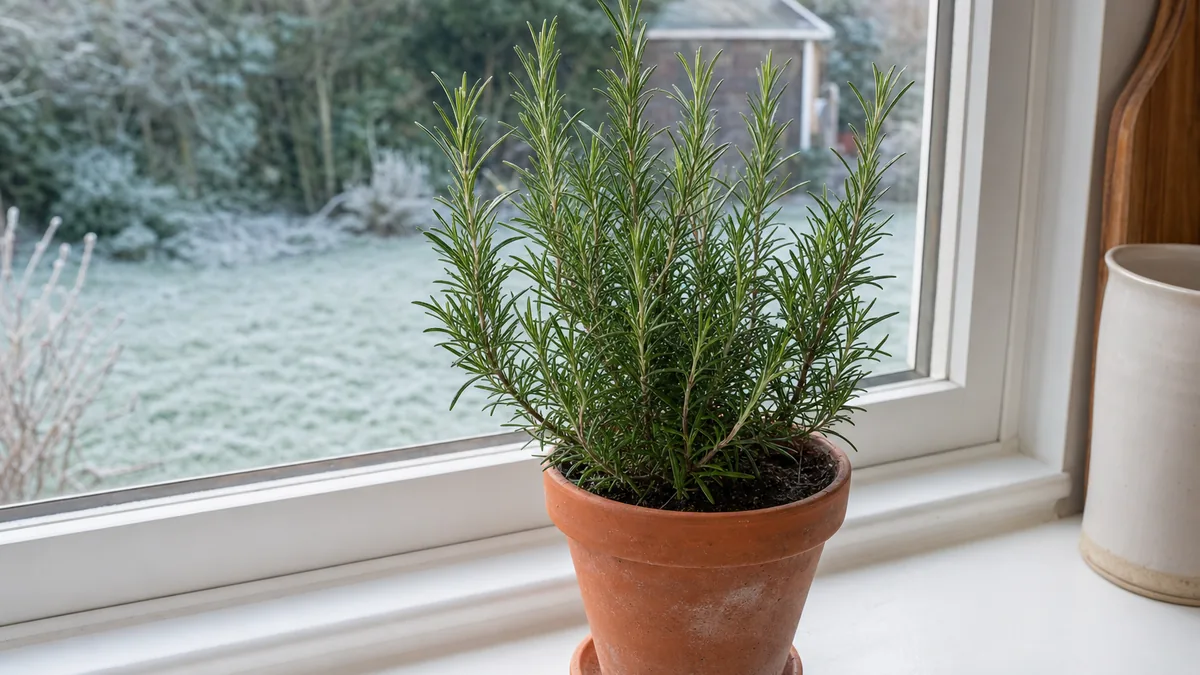
Rosemary Winter Quick Reference
| Situation or variety | Zone limit | What to do | Source |
|---|---|---|---|
| Most rosemary | Zones 8 to 10 (Penn State, UT Gardens); 8a (UW-Madison); 7 to 10 (Nebraska) | Grow outdoors with good drainage; elsewhere use a pot | Penn State, UT, UW-Madison, Nebraska |
| ’Arp’ | Zone 6 (Nebraska, Arizona); 7a, maybe 6a with protection (UW-Madison); 7 (UT) | Mulch the roots and screen it from wind | Nebraska, Arizona, UW-Madison, UT |
| ’Hill Hardy’ / ‘Madalene Hill’ | Zone 7a, or 6a at protected sites (UW-Madison); zone 7 (UT) | Protect in a sheltered spot | UW-Madison, UT |
| Zone 6 and colder | Not reliably hardy | Pot it and move it indoors before frost | Illinois Extension |
| Potted plant | Bring in 2 to 3 weeks before first frost | Sunny window or grow light, cool room, dry-side watering | Penn State, UW-Madison |
| Any zone | Waterlogged soil is a winter killer | Fast drainage, raised bed or pot | UT Gardens, Nebraska |
Can Rosemary Plants Survive Winter? Hardiness by Variety
It depends on your zone and the variety. Penn State Extension calls rosemary a tender perennial evergreen shrub for USDA zones 8 to 10, while Nebraska Extension says plants are winter hardy in zones 7 to 10 and University of Wisconsin-Madison Extension says only to zone 8a. Colorado State Extension adds that USDA lists it as a zone 7 plant while other sites consider it zone 8. Use the range, not a single number. Our guide to how USDA hardiness zones work explains how to read yours, and growing zones lists them by place.
Variety is the second lever. Penn State names ‘Arp’, ‘Athens Blue Spire’, ‘Madalene Hill’ and ‘Miss Jessop’s Upright’ as cultivars that tolerate colder areas, to zone 7 or zone 6b with protection. Nebraska calls ‘Arp’ one of the most winter hardy types (zone 6), and Arizona Extension says it is typically hardy down to zone 6. UW-Madison is more cautious: ‘Arp’ is hardy to zone 7a, possibly 6a with protection, and no cultivar survives Wisconsin winters. UT Gardens rates ‘Arp’, ‘Hill Hardy’ and ‘Salem’ for zone 7.
Temperature numbers are thin. Colorado State says rosemary will probably not survive below about 15°F, with some zone 6 cultivars maybe surviving 0°F, and one trial there survived a night at -6°F inside a water-filled wall. Arizona Extension says it is hardy to 10°F if it hardens off slowly in fall, and Maryland Extension says it tends to suffer once lows reach the single digits.
Can I Leave My Rosemary Plant Outside in the Winter?
Yes in zone 8 and warmer, and in zone 7 for hardy varieties if the site and the soil are right. Water is the bigger threat. UT Gardens says even the hardiest rosemary will not survive a winter in waterlogged soil, and Nebraska Extension names wet, poorly drained winter soil, which causes root rot, as the biggest threat. Our guide to fixing root rot covers the signs. Lavender shares the same dislike of wet feet, so the drainage advice in our lavender how-to applies here too. If your soil is heavy clay, UT recommends a raised bed or container. Lavender faces the same winter test, and our guide on whether lavender plants die in winter gives its zone limits and drainage fixes.
Site, mulch and wind protection
Nebraska Extension suggests a spot close to the house on the south or west side, where the foundation holds and reflects warmth. In fall it recommends mulching the roots with 5 to 6 inches of wood chips, while Maryland Extension suggests 2 to 3 inches of mulch in autumn to insulate the roots. That is a real gap, and Nebraska’s winters are colder than Maryland’s, so choose by climate. Our comparison of organic and inorganic mulch and the list of common mulch mistakes explain how to avoid piling it against the stem.
For wind, Nebraska lists rose cones, burlap, chicken wire cylinders filled with leaves or straw, and commercial protectors. It says to install them after the first hard frost and remove them only when frost danger has passed. Colorado State used a water-filled wall in a sunny south-facing spot, put in late October before temperatures first dropped below 30°F, and removed it in May. For freezes in the South, University of Georgia Extension says to water outdoor herbs well and use frost cloth overnight, plus a layer of pine straw. More methods are in our guide to protecting plants in winter, and the winterize your garden steps help you time the rest of the beds.
Can I Bring My Rosemary Plant Indoors for the Winter?
Yes, and where winters are colder than zone 7 it is the sensible choice. Penn State says that where rosemary is not hardy, grow it as an annual or in pots taken indoors 2 to 3 weeks before the first frost date. UW-Madison gives the same window and offers two routes: keep the pot sunk to its rim in the garden so nothing is disturbed, or dig the plant 2 to 3 weeks before frost and repot it. Check the zone 7a frost dates or your own zone, and see why frost can arrive above 32°F in what temperature frost forms. The timing rules for any potted plant are in when to bring plants inside for winter.
How to move a rosemary pot indoors
- Pick the date. Aim for 2 to 3 weeks before your average first fall frost, per Penn State and UW-Madison.
- Choose the pot. Penn State suggests a clay pot because the soil dries quickly. A container with drainage holes is essential.
- Pick the spot. A south-facing window in full sun, per Penn State, away from heat registers and radiators, per UW-Madison.
- Check for pests. Colorado State’s author reported insects on rosemary kept indoors in winter, so inspect it before it joins your other plants.
- Cut back watering. Water only when the mix is dry to the touch, as covered below.
The same routine works for any tender plant moved indoors, and our guide to overwintering pepper plants shows the pot, pest check and light steps for another crop. For pot sizes, see plant pot sizes explained. Bringing a pot in is only one option, and what is overwintering explains the others.
How to Care for Rosemary Indoors: Light, Water, Air and Humidity
Penn State warns that overwintering rosemary indoors may be difficult, because of low light and too little or too much water.
Light
Iowa State Extension says herbs ideally get four to six hours of direct sun a day and that rosemary, thyme and bay laurel may need grow lights. It suggests running lights on a timer for 12 to 16 hours a day, with full-spectrum LED or fluorescent bulbs. University of Illinois Extension gives 12 to 14 hours for fluorescent lights set 6 to 12 inches above the plant. Our comparison of LED vs. fluorescent grow lights helps you choose a fixture. Iowa State says lanky growth means too little light.
Water, and the sources that disagree
This is where rosemary dies. UW-Madison says the biggest cause of plant decline and death is overwatering, and Penn State says overwatering causes root rot, which is especially fatal in indoor-overwintered pots. Browning tips can signal root rot there, and Illinois Extension says more water is not the fix for browning tips on an indoor plant. See our guide on why plant leaf tips turn brown to tell rot from dry air.
Advice on how dry to go differs. Illinois Extension’s rosemary page says to keep the soil on the dry side, Nebraska says evenly moist to slightly dry, and a University of Illinois indoor herb page says rosemary should never dry out completely. A middle path is Iowa State’s rule for herbs: water when the potting mix is dry to the touch and before the plant wilts, and empty the saucer after. University of Wisconsin Extension in Kenosha County suggests checking the soil once or twice a week. If you already water succulents by soaking and drying, our soak-and-dry watering guide gives the rhythm to borrow, but rosemary should not be left bone dry for long.
Airflow, humidity and temperature
Penn State says rosemary is prone to powdery mildew and that good airflow helps prevent it. UW-Madison says good air circulation is important to prevent foliar disease, with root rot and botrytis the most common problems. Illinois Extension suggests a small room fan for air circulation. Read our guide to identifying and treating powdery mildew if white patches appear.
Dry heated air is the other problem. Wisconsin Extension in Kenosha County warns that warm, dry winter air can wither the leaves and desiccate the twigs, and suggests weekly misting or a humidifier. Illinois Extension suggests pebble-filled water saucers. For temperature, Nebraska says normal indoor temperatures are fine but cooler rooms, in the 50s°F, are preferred. Kenosha County says to keep it where the temperature does not exceed 65°F, or in an unheated garage that stays above freezing.
If you keep several pots indoors, the Houseplant Care App gives each potted plant its own watering, feeding and repotting rhythm.
Can You Harvest Rosemary in Winter?
Yes, lightly. Colorado State’s author cut sprigs for cooking whenever the protective structure was not frozen, and Illinois Extension notes rosemary grows little in winter, so a sprig now and then beats a haircut. UW-Madison says to take no more than 20 percent of the growth at once and to avoid cutting into woody stems unless you are shaping the plant.
Snipping a little at a time is the same habit that keeps cilantro producing, as our guide to snipping cilantro shows. Penn State says to harvest for drying before flowering, hang bundles upside down in an open area, or finely slice the leaves and freeze them in a bag or an ice cube tray with water.
Is My Rosemary Dead or Just Dormant?
Wait before you judge. Maryland Extension advises avoiding trimming until you see signs of new growth, which it expects around April or by May at the latest. It also says to remove only completely dead growth and to make cuts within the leafy part of a branch, because cuts into bare older wood usually do not regrow. One check is to brush the dead leaves: if they do not come off, they are not ready to fall (if the stem is alive) or the whole stem has died.
For a firmer test, use the scratch test described for woody plants. University of Illinois Extension says living branches show light-colored inner tissue when gently scratched, and damaged ones look off color and wrinkled. UF/IFAS Extension says green tissue under the scraped bark is alive and brown or black tissue is dead, and to wait at least 3 to 7 days after a freeze before assessing. These pages cover woody plants generally, not rosemary specifically.
Maryland Extension says a cold snap after a warm spell can cause considerable damage, dry weather can worsen winterburn and soggy soil can cause dieback. If most stems are lost, it says replacing the plant may be more practical than waiting. When you wonder why a houseplant looks poor, our guides to yellowing leaves and to a wilting plant separate overwatering from underwatering.
Can You Plant Rosemary in the Winter?
Mostly no outdoors, and yes indoors. None of the extension pages I read recommends winter planting. University of Georgia Extension says rosemary is best planted in the fall, and a University of Georgia publication lists spring and fall. In mild-winter places such as zone 8 and warmer, fall planting gives roots time to settle before cold; University of Florida Extension notes rosemary can thrive in Florida year-round with protection during freezes. In colder zones, wait for spring and use a pot meanwhile.
Indoors you can start new plants any time from cuttings. Penn State calls cuttings the best method, with seed slow and unreliable, and says to take a 6 inch tip, strip the lower leaves and root it in sterile soilless mix with bottom heat of 70 to 75°F. It says cuttings root in 10 to 20 days. UT Gardens gives 3 to 6 weeks for roots and suggests late summer, and UW-Madison suggests late spring to early summer, so a late-summer cutting taken from your plant is cheap insurance against a hard winter. The steps are similar to those in our guide to propagating roses from cuttings. For what else suits the cold months, see what to plant in winter. UGA lists cilantro among herbs that handle cool weather, and our cilantro growing guide covers it.
Spring Return: When to Move Rosemary Back Outside
Penn State says to return pots outdoors in spring after frost danger has passed, and UT Gardens says to keep it in a sunny window until then. Harden it off gradually by setting it outside for a few hours at a time (a common practice; the pages I read give no schedule). For hardy plants left outdoors, Nebraska says to remove wraps only when frost danger is past, and Colorado State removed its water walls in May. Prune dead growth once new shoots show, as Maryland advises, and fertilize lightly, because UW-Madison says too much fertilizer reduces flowering and fragrance.
Free book · 25 pages, PDF
Rosemary Winter Care FAQ
Can rosemary plants survive winter?
Outdoors, yes in zone 8 and warmer, and in zone 7 for hardy varieties. Penn State lists zones 8 to 10, Nebraska Extension 7 to 10, and UW-Madison 8a. Colder gardens should grow rosemary in a pot and bring it in before frost.
Can I leave my rosemary plant outside in the winter?
Only if you are in zone 7 or warmer and the soil drains well. UT Gardens says even the hardiest rosemary will not survive waterlogged soil. Nebraska Extension suggests a south or west spot by the house, 5 to 6 inches of wood chips over the roots and a wind screen.
Can I bring my rosemary plant indoors for the winter?
Yes. Penn State Extension says to bring pots in 2 to 3 weeks before the first frost, set them in a south-facing window or under supplemental light, and keep air moving. Water sparingly, because overwatering root rot is the main indoor killer.
Can you plant rosemary in the winter?
Not outdoors in frozen ground. University of Georgia Extension says rosemary is best planted in the fall, and none of the extension pages reviewed recommend winter planting. Indoors you can root cuttings: Penn State says they root in 10 to 20 days with bottom heat of 70 to 75°F.
How cold can rosemary tolerate?
It depends on the variety. Colorado State Extension says rosemary will probably not survive below about 15°F, while Arizona Extension says it is hardy to 10°F if hardened off in fall. Colorado State adds that some zone 6 cultivars might survive 0°F.
How do I know if my rosemary is dead or dormant?
Wait for spring growth. Maryland Extension expects live buds to start around April or May, and says to prune only completely dead growth. For a quick check, University of Illinois Extension says living branches show light inner tissue when scratched, and brown tissue means dead.
Sources & further reading
Hardiness and varieties: Penn State Extension, Nebraska Extension, Lancaster County, UW-Madison Extension, UT Gardens, Illinois Extension on rosemary, Arizona Cooperative Extension and Colorado State Extension.
Indoor care: Iowa State Extension, Illinois Extension on indoor herbs and UW Extension Kenosha County. Winter damage and testing: Maryland Extension on winter loss, its answer on browning, Illinois Extension on winter injury and UF/IFAS Miami-Dade. Planting time: UGA Extension Fulton County, UGA’s southern herbs bulletin and UF/IFAS Gardening Solutions.
Free book · 25 pages, PDF
The Indoor Plants Repotting Cheat Sheet
Sent