Part of our Plant Problem Diagnosis series
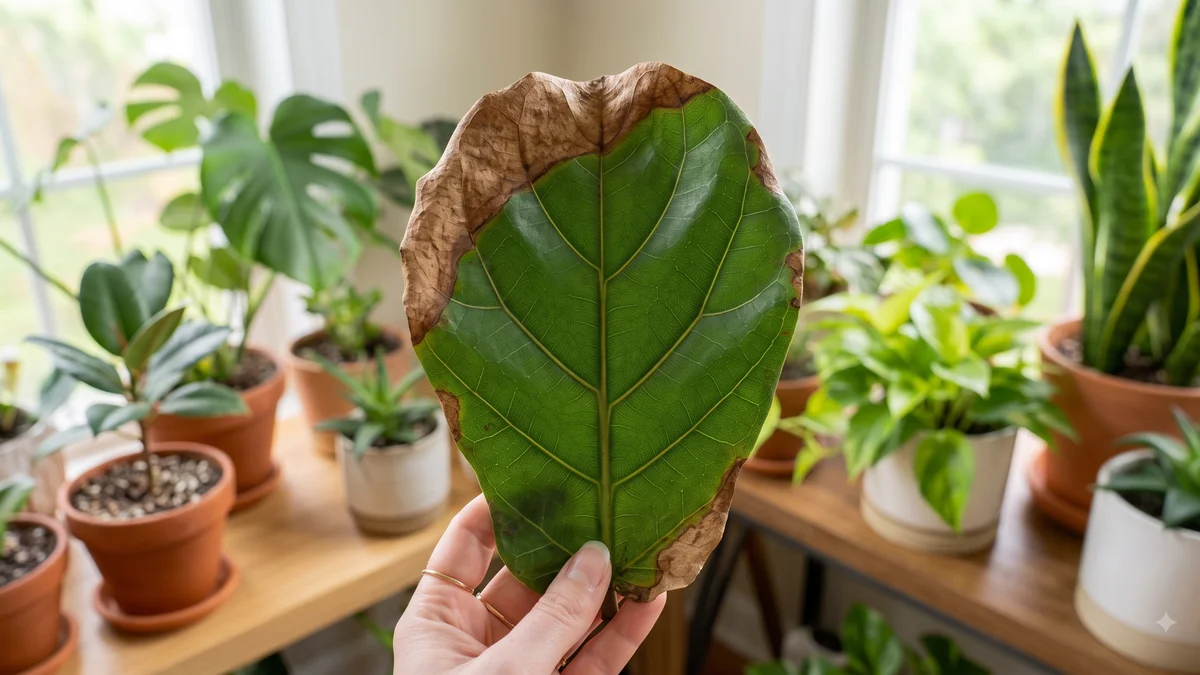
Why are the tips of my plants turning brown? The answer depends on how much of the leaf is actually affected. If you’ve been searching leaf tips turning brown and it’s just the tip or edge that’s brown and crispy while the rest of the leaf stays green, that’s classic tip burn, a slow buildup of stress, not a crisis. If it’s spread further and the whole leaf is browning, wilting, or dying, that’s a different, often more urgent problem covered further down. These two patterns get lumped together in most searches, but the real causes (and the fixes) are genuinely different, so it’s worth sorting out which one you’re looking at first. Our indoor plant calculators can help once you know the cause.
Quick Answer: Why Are the Tips of My Plants Turning Brown?
Two questions sort out which section applies to you.
Just the Tips or Edges: Classic Tip Burn
What causes brown tips on plants? Five real, common mechanisms, usually acting in combination rather than any single one alone. The same causes are also why are the edges of my plant leaves turning brown. Tips and edges are the same tissue-death pattern, just showing up in a different spot on the leaf, so treat them as one diagnosis.
Tap water minerals and fluoride. Many common houseplants (Dracaena, spider plants, prayer plants, and palms in particular) react to fluoride, chlorine, or dissolved mineral salts in tap water with slow tip burn over months of exposure. Per Iowa State University Extension, spider plant, ti plant, dracaena, prayer plant, and calathea are especially sensitive to water quality for exactly this reason. The fix is switching to distilled water or rainwater; letting tap water sit out 24 hours helps chlorine off-gas, but it won’t do anything for fluoride or dissolved mineral salts, so be realistic about that limitation before assuming it’s solved the problem. Chlorine is the easy one to deal with, since it evaporates out of standing water on its own; fluoride and dissolved salts don’t evaporate at all, which is exactly why they build up in leaf tissue over months rather than causing a sudden reaction.
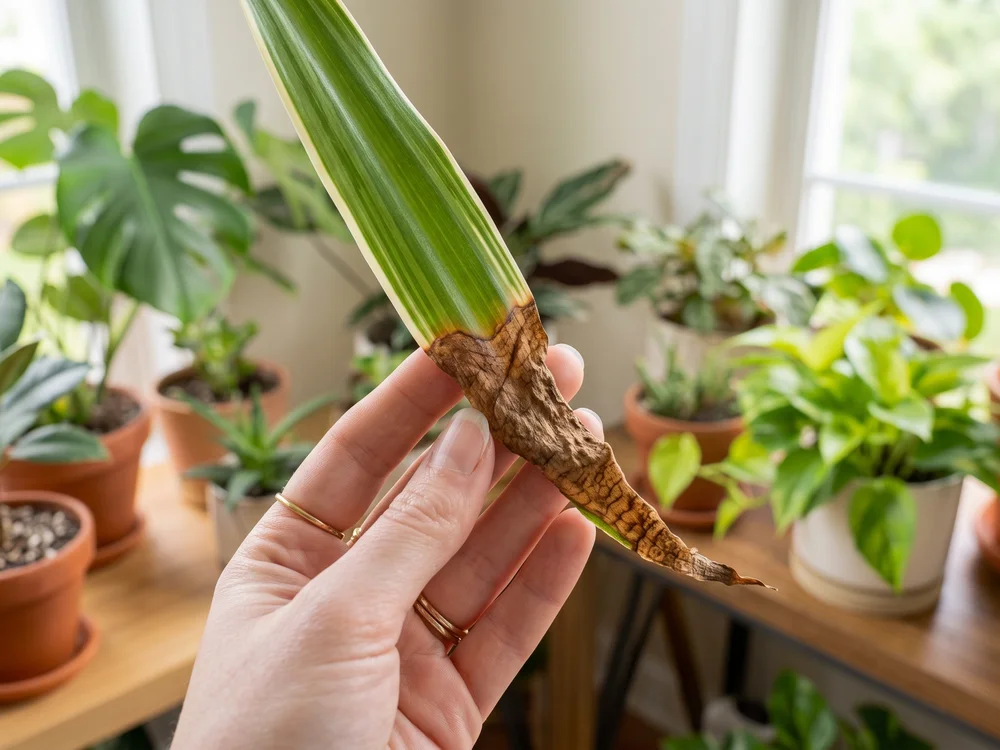
Fertilizer salt buildup. Over-fertilizing, or fertilizing regularly without ever flushing the soil, lets mineral salts accumulate in the potting mix. Per the University of Missouri Extension, those salts draw water back out of root tips and leaf tips rather than letting the plant take water up normally, which is why tipburn often shows up even when watering seems consistent. Flush the soil thoroughly with plain water every few months, and cut fertilizer strength if you see a white crust forming on the soil surface or pot rim.
Low humidity. Many tropical houseplants show tip browning in dry indoor air, especially near heating vents in winter. This is genuinely the most common single cause according to Iowa State Extension’s houseplant FAQ. Raising humidity with a pebble tray, humidifier, or grouping plants together helps, and it’s worth taking a moment to check your watering schedule too, since humidity and watering problems often compound each other.
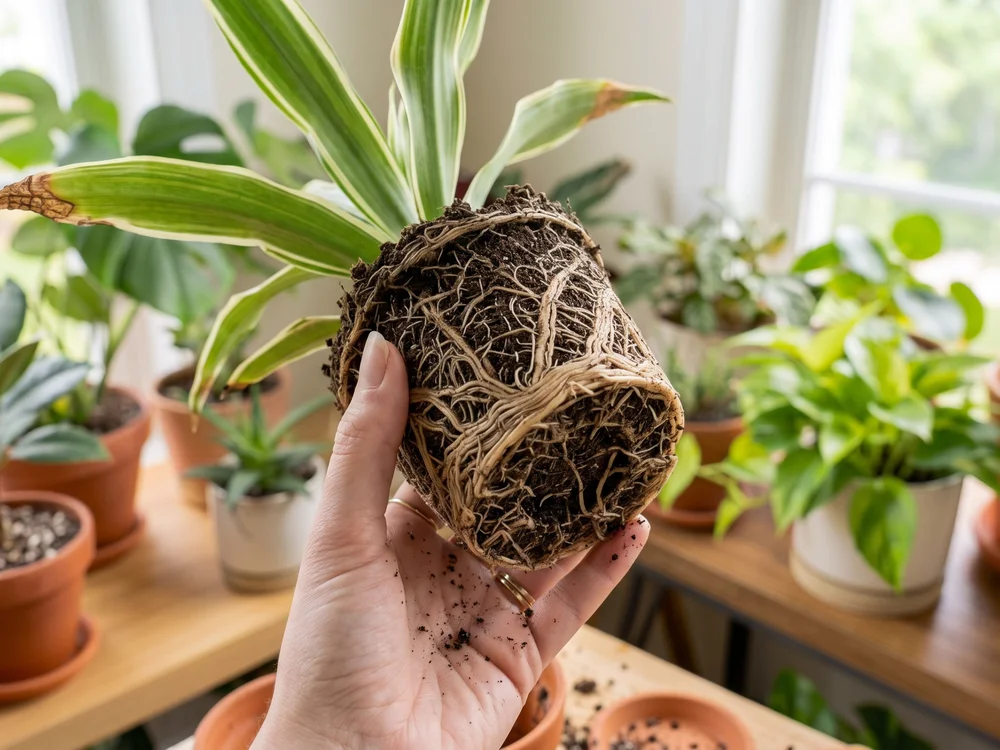
Root-bound plants. Roots that have outgrown their pot and started circling can’t take up enough water to keep the entire leaf hydrated, and tips (being farthest from the roots) show the stress first. If you haven’t repotted in a couple of years and suspect this, use our Pot Size Calculator to find the right next container size before you repot.
Underwatering. The simplest cause on this list: tips are the tissue farthest from the water source, so they’re the first to show stress when the plant isn’t getting enough water consistently. If tip burn shows up alongside dry, pulling-away-from-the-pot soil, this is probably it.
The Whole Leaf Is Browning: A Different, More Serious Problem
Why are my plant leaves turning brown, not just at the tips? This is a genuinely different question from tip burn, and it usually points to something more urgent.
Severe under- or overwatering. Once a watering problem goes on long enough, the whole leaf can brown rather than just the tip. If the leaf is also wilting or drooping before it browns, see our wilting diagnostic guide, since there’s real symptom overlap between the two.
Sunscald or leaf burn. A plant moved outside too abruptly, or suddenly exposed to direct sun it wasn’t acclimated to, can develop bleached or browned patches across the whole leaf within days, not weeks. The mechanism is straightforward: leaves that developed indoors under filtered, indirect light don’t have the protective pigment concentration that outdoor-grown leaves build up gradually, so direct sun essentially cooks the tissue before the plant can adapt. Moving a plant outside for the season should happen over a week or two of increasing exposure, not all at once.
Cold damage or drafts. A leaf pressed against a cold window in winter, or sitting in the path of an AC vent or a drafty door, can brown across large sections rather than just at the tip, since cold damages cell structure broadly rather than starting at the leaf margin.
Natural end-of-life for that leaf. Browning is often the final stage after yellowing, not a separate problem. See our guide to natural leaf aging if the leaf yellowed first and only browned afterward, since that’s a normal progression, not damage.
Disease. Less commonly, a fungal or bacterial leaf disease can cause whole-leaf browning, usually with an uneven or spreading pattern rather than a clean edge, and often accompanied by spots, a fuzzy or powdery texture, or a foul smell near the soil line if roots are involved too. This is the least common cause on this list for typical houseplants, but it’s worth ruling in or out if the browning looks patchy and irregular rather than uniform. A dedicated diagnosis guide for specific leaf diseases is planned for this series; in the meantime, if none of the causes above match, see the fallback link below.
Should I Cut Off Brown Tips?
Yes, generally. Trimming brown tips is safe and often improves the plant’s appearance without doing any harm. The technique matters more than whether to do it at all: follow the leaf’s natural pointed shape when you cut rather than snipping straight across, and stop right at the edge of the dead tissue without cutting into any green. Once tissue has died, it won’t turn green again no matter what you do, but new growth will come in fine once the underlying cause is actually fixed. Trimming is cosmetic, not a cure. One practical note: wipe your scissors with rubbing alcohol between plants if you’re trimming more than one, since it’s an easy, free way to avoid spreading anything you might not have noticed yet from a genuinely diseased plant to a healthy one.
Quick Reference Table
Why do plant leaves turn brown, in one line? Because the tissue is either drying out faster than the plant can replace the water, or it’s been damaged chemically (salts, fluoride) or physically (cold, sunscald) faster than the plant can recover. Match your pattern below.
| Pattern | Likely Cause | Fix |
|---|---|---|
| Tip/edge brown and crispy, rest of leaf green | Tap water minerals or fluoride | Switch to distilled water or rainwater |
| Tip burn plus a white crust on the soil surface | Fertilizer salt buildup | Flush soil; reduce fertilizer strength |
| Tip burn, worse in winter near heat vents | Low humidity | Humidifier, pebble tray, or grouping plants |
| Tip burn, not repotted in 2+ years | Root-bound | Repot; check Pot Size Calculator |
| Tip burn with dry, pulling-away soil | Underwatering | Water more consistently |
| Whole leaf browning, was wilting first | Severe watering problem | See our wilting diagnostic guide |
| Whole leaf browning, moved outside recently | Sunscald | Acclimate gradually to brighter light |
| Whole leaf browning, near a cold window or vent | Cold damage or drafts | Relocate away from the draft |
| Whole leaf browning, yellowed first | Natural aging | Nothing (normal leaf life cycle) |
Not sure if your plant is root-bound? Check the Pot Size Calculator before repotting to confirm the right next container size.
Free book · 23 pages, PDF
Brown Leaf Tips FAQ
Why does my plant have brown tips?
Most often, one of five things: tap water minerals or fluoride, fertilizer salt buildup in the soil, low humidity, being root-bound, or inconsistent underwatering. These frequently overlap, so more than one may be contributing at once, especially fertilizer salts and low humidity together.
Do brown leaf tips grow back?
No. Once leaf tissue has died and turned brown, that specific tissue won't turn green again no matter what you do. The good news is that new growth will come in completely normal once the underlying cause is fixed; the damaged tips are cosmetic history, not an ongoing problem.
Can I cut off brown leaf tips?
Yes, and it's generally a good idea for appearance. Follow the leaf's natural pointed shape when trimming rather than cutting straight across, and stop at the edge of the dead, brown tissue without cutting into any living green tissue.
Is tap water bad for all houseplants?
No. Most common houseplants tolerate normal tap water fine. A specific group of species (spider plants, dracaenas, prayer plants, calathea, and other members of that same sensitivity profile) are unusually reactive to the fluoride and dissolved minerals many municipal water systems contain, which is why tip burn shows up disproportionately on those species specifically.
Why is only one leaf turning brown and not the others?
Usually just normal variation. That particular leaf may be oldest, closest to a heat vent or draft, or simply the first to show a stress that will eventually affect others if the underlying cause (watering, humidity, water quality) isn't addressed. One isolated leaf usually isn't cause for alarm on its own. Watch it over the next few weeks rather than reacting immediately. If it stays isolated to that one leaf, it was likely just that leaf's age or position; if more leaves start showing the same pattern, go back through the tip-burn causes above and look for the common thread.
Sources & further reading
Causes and species sensitivity come from Iowa State University Extension’s guide to brown leaf tips and edges on houseplants and the University of Missouri Extension’s article on leaf tipburn in houseplants. For more on our sourcing approach, see our methodology page. If your plant’s symptom doesn’t match tip burn or whole-leaf browning, see our full Plant Problem Diagnosis guide to find the right one.