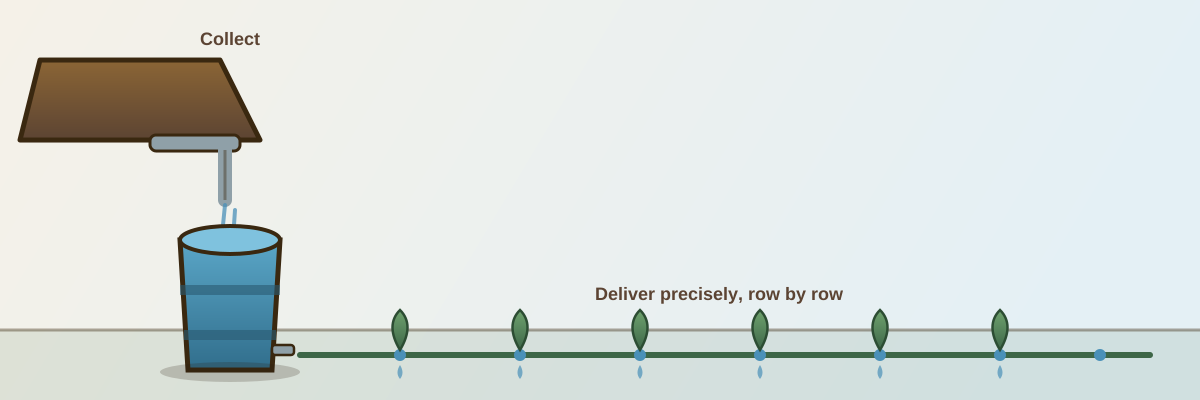
Efficient garden watering comes down to two separate questions: how much water you can source, and how precisely you can deliver it. Sourcing is about supply — rainwater collection reduces how much you draw from a hose or well, and it’s free water that would otherwise run off your roof and down the storm drain. Delivery is about where that water actually goes — a soaker hose or hand-watering can spot dozens of plants inefficiently, while a properly sized drip system delivers a measured amount to each plant’s root zone with far less waste.
This cluster’s two calculators address each side. The Rain Barrel Calculator turns your roof area and local rainfall into gallons collected and the water pressure you’ll get out of the barrel’s spigot. The Drip Irrigation Calculator turns your emitter count and flow rate into a run time and total water delivered. They’re complementary, not competing tools — a rain barrel is a water source, drip irrigation is a delivery method, and a full system commonly uses both together.
Rainwater & Drip Irrigation Calculators
How Much Water Can You Collect?
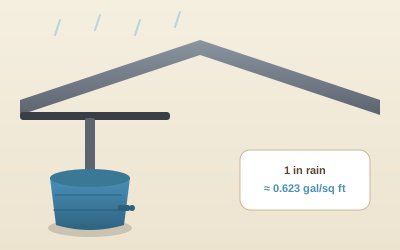
Rainwater harvesting math starts from one conversion: 1 inch of rain over 1 sq ft of roof yields about 0.623 gallons. A modest 1,200 sq ft roof catching just 1 inch of rain produces roughly 750 gallons before any losses — enough to fill more than a dozen standard 50-gallon barrels. Real-world collection efficiency runs around 85% after accounting for evaporation, gutter overflow, and first-flush losses (the initial runoff that carries roof debris and is often diverted away from the barrel).
Whatever you collect also needs somewhere to go under its own pressure — a rain barrel has no pump, so the water pressure at the spigot is purely hydrostatic: 0.433 PSI per foot of water height above the outlet. A barrel elevated 2–3 ft on a stand yields roughly 1–1.5 PSI, enough for gravity-fed drip irrigation but nowhere near the 15–30 PSI a standard sprinkler needs.
Once you know how many gallons you can realistically collect, see our full step-by-step setup guide for connecting a barrel to your downspout, filtering the water, and routing the overflow correctly.
Delivering Water Efficiently
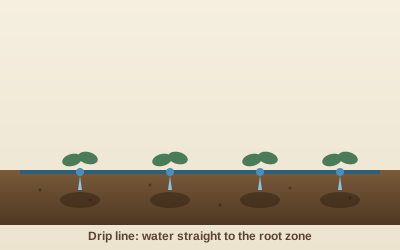
Drip irrigation delivers water at or near the soil surface, directly to the root zone, through low-flow emitters — typically 0.5, 1, 2, or 4 gallons per hour (GPH) each. That precision beats broad watering methods (sprinklers, hand-watering) on three counts that all trace back to the same cause: water goes where it’s needed instead of everywhere. Less waste, since none of it evaporates off bare soil between plants or blows off-target in the wind. Less foliar disease, since leaves stay dry instead of sitting wet for hours, which is what many fungal pathogens need to take hold. And deeper root growth, since slow, consistent moisture at the root zone encourages roots to grow down and out rather than staying shallow chasing surface moisture.
Run time is a simple ratio: target water amount divided by total emitter flow rate. Home garden watering needs typically fall around 1–1.5 inches per week during the growing season, though the right amount always depends on your specific plants, soil, and climate.
How long you can run that drip line before water starts pooling or running off depends heavily on your soil. Not sure what kind of soil you’re working with? Our Soil Type Calculator can tell you — and it directly affects how you should water: clay soil absorbs water slowly, roughly 0.1–0.5 inches per hour, while sandy or loamy soil absorbs much faster, often 1–3+ inches per hour. Running emitters longer than clay can absorb doesn’t water more effectively — it just generates surface runoff that never reaches the root zone. The fix is a “cycle and soak” approach: split the calculated run time into 2–3 shorter cycles with a 30–60 minute pause between each, so water has time to move deeper into the clay before you add more. Overwatered roots that sit too long in saturated soil are also one of the most common (and most counterintuitive) causes of a wilting plant — see our guide to diagnosing why a plant is wilting if yours is drooping despite regular watering.
Putting It Together
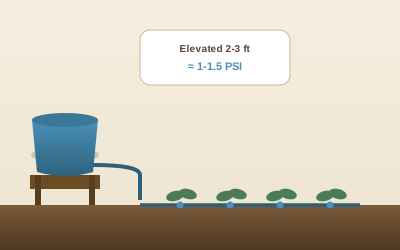
Collection and delivery aren’t separate projects — a rain barrel feeding a gravity-fed drip line is one of the most common low-cost setups in home gardening. The barrel supplies the water, the drip line delivers it precisely, and both numbers connect directly: the 1–1.5 PSI a typical elevated barrel produces is enough to run a gravity-fed drip line (which needs very little pressure), but not enough for a standard sprinkler. If you want to run drip emitters straight off a rain barrel, check the barrel’s pressure output against your emitters’ rated operating pressure before relying on gravity alone — some emitter designs need a minimum of a few PSI to deliver their rated flow consistently.