Part of our Plant Problem Diagnosis series
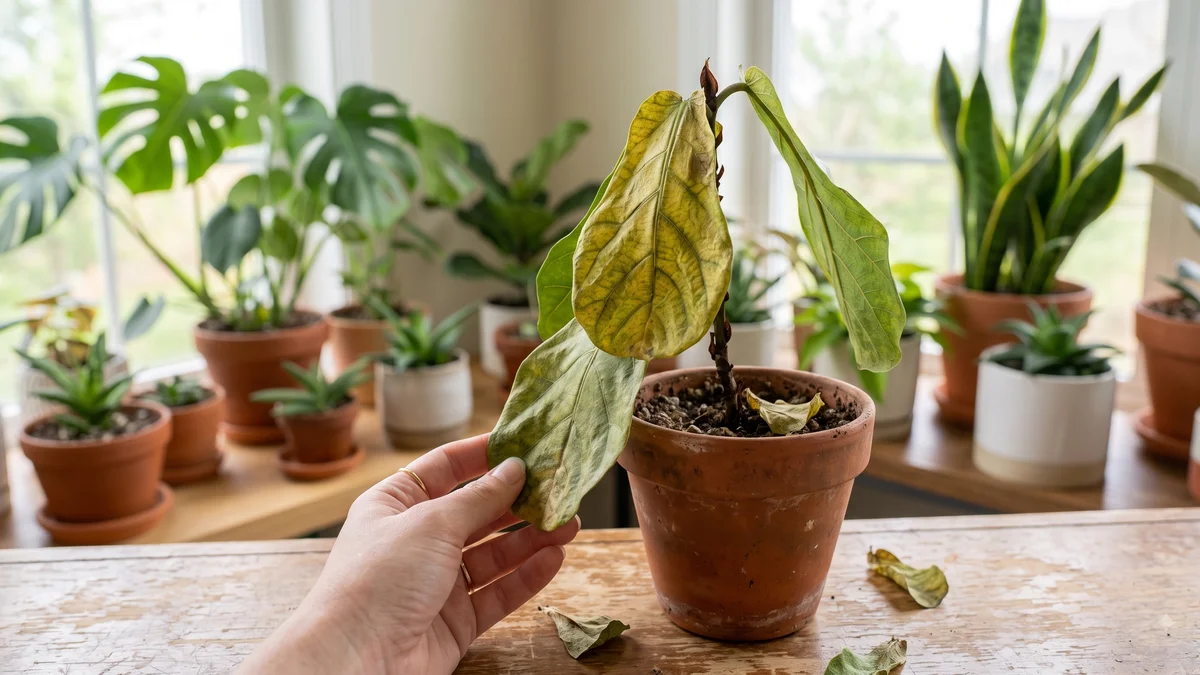
Why is my plant wilting? The frustrating part is that wilting looks nearly identical whether a plant is desperately thirsty or drowning in soil that’s still soaking wet. Droopy leaves are droopy leaves, whether you’d describe it as why is my plant shriveling up from drought or why it’s collapsing despite regular watering. Two quick checks (what the soil actually feels like right now, and how fast the wilting happened) sort out the real cause before you reach for the watering can and make things worse. If your plant is wilting as well as yellowing, the causes often overlap; see our yellow-leaves diagnostic guide for that side of it, or keep reading for wilting specifically. And if the tips or edges are also browning rather than just wilting, see our guide to diagnosing brown leaf tips for that side of it.
Quick Answer: Why Is My Plant Wilting?
Two questions get you to a real answer faster than scrolling through photos hoping one looks like your plant.
What Causes Wilting in Plants?
Wilting leaves trace back to one of six causes, each covered in its own section below:
- Underwatering: dry soil leaves the roots with nothing to replace the water the leaves lose.
- Overwatering: saturated soil starves roots of oxygen, so they stop taking up water.
- Root rot: roots left wet too long turn soft, dark, and mushy and can no longer supply the plant.
- Heat or drying wind: leaves lose water faster than the roots can take it up, even in moist soil.
- Transplant shock: roots disturbed during a move need one to two weeks to reestablish.
- Vascular wilt disease: fusarium, verticillium, or bacterial wilt blocks the water-carrying tissue in the stem.
Most causes of wilting in plants are fixable once you know which one you’re dealing with. Vascular wilt disease is the exception, since there’s no cure once a plant is infected.
The Mechanism: Why Wilting Happens At All
Per Britannica, wilting is a loss of turgor pressure inside plant cells (the water pressure that normally keeps stems and leaves rigid) when water loss through the leaves outpaces water uptake by the roots. A plant is constantly losing water through its leaves as part of normal function, and as long as the roots can keep up, cells stay firm and the plant stands upright; once that balance tips, cells lose rigidity and the plant droops. That single mechanism is the reason both too little water and too much water (which damages roots and blocks uptake) end up looking the same from the outside: a wilted plant, a wilting plant, or a plant wilt caused by root damage all start from this same loss of turgor pressure, even though the underlying cause is different in each case.
Soil Is Dry: Underwatering
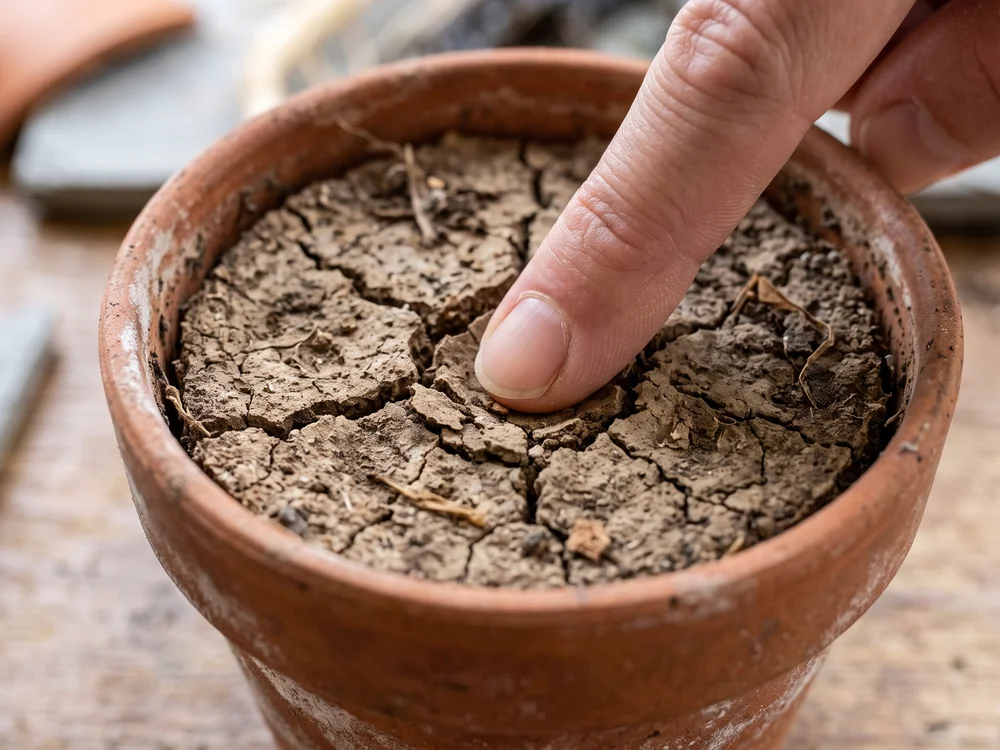
Why do plants wilt from underwatering specifically? Not enough water is reaching the roots, so the plant can’t replace what it’s losing through its leaves, and cells throughout the stem and leaves lose turgor pressure and go limp. A wilted plant, wilting plant, or set of drooping leaves that perks back up within a few hours of a deep watering is about as clear a confirmation as you’ll get. That fast recovery is itself a diagnostic clue, not just a relief.
The fix is a deep, thorough watering rather than a quick splash on the surface, and checking your actual watering frequency against the plant’s real needs (pot size, light, and season all change how fast soil dries out) rather than sticking to a fixed schedule regardless of conditions. Checking moisture an inch or two below the surface, not just the top, gives a more accurate read. The surface can look and feel dry while the root zone underneath is still holding plenty of water, especially in larger containers.
Soil Is Wet: Overwatering and Root Rot
This is the counterintuitive one: plant leaves drooping despite soil that’s already wet, sometimes visibly waterlogged. Per the University of Maryland Extension, roots sitting in saturated soil are starved of oxygen, and roots that can’t function properly can’t take up water either, functionally mimicking drought even though the pot is holding more than enough. Heavy, slow-draining soil makes this worse, since it stays saturated far longer after watering or rain than a looser mix; our Soil Type Calculator can help confirm whether that’s working against you.
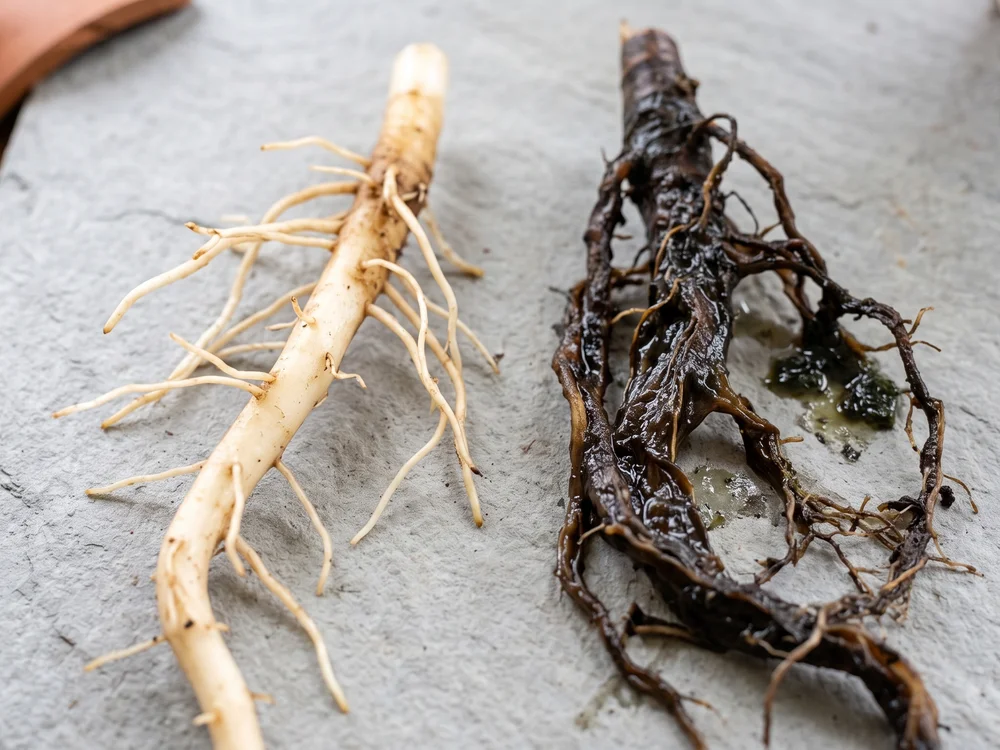
A pot without a drainage hole is one of the most common hidden causes of this: water has nowhere to go, so the bottom of the root ball stays saturated indefinitely even if the surface looks dry between waterings. Root rot is the more serious version of the same problem. Healthy roots are firm and typically white or light tan; rotted roots turn soft, dark, and mushy, often with a distinct foul smell when you pull the plant to check. The fix for both is letting soil dry out between waterings and improving drainage: a pot with an actual drainage hole, a looser mix, or fewer waterings on a real schedule rather than a fixed one; it’s worth checking your watering schedule against the plant’s actual needs rather than watering out of habit.
Heat and Transplant Stress
Midday wilting on a hot day that recovers on its own by evening is a normal, temporary response, not a real problem: the plant is losing water through its leaves faster than its roots can keep up in the heat, and it catches back up once temperatures drop. Resist the urge to water again in response; extra water doesn’t fix a heat-driven wilt that’s already recovering on its own, and it can set up the overwatering problem above instead.
Wilting shortly after repotting or transplanting outdoors is usually transplant or root shock rather than disease. Roots disturbed during the move take time to reestablish contact with the surrounding soil and recover full function. Most plants bounce back within one to two weeks with steady, not excessive, watering and no fertilizer until new growth resumes. Hardening off seedlings gradually before a permanent move outdoors, and avoiding transplanting during the hottest part of the day or a heat wave, both reduce how hard the shock hits in the first place.
Disease and Vascular Wilt
Fungal and bacterial vascular wilts (fusarium wilt, verticillium wilt, and bacterial wilt in particular) physically block the tissue that carries water up through the stem, so the plant wilts no matter how much water is available. Squash (Cucurbita pepo) and cucumber (Cucumis sativus) plants are especially prone to bacterial wilt, spread by cucumber beetles, and squash plants wilting suddenly in mid-season with no obvious water problem is a common real-world version of this. The distinguishing tell: wilting that doesn’t recover even after confirmed adequate soil moisture, especially if it’s one-sided or starts on a single branch or stem rather than the whole plant evenly. Tomatoes (Solanum lycopersicum) are especially prone to fusarium and verticillium wilt as well. Both fungi persist in soil for years, which is part of why crop rotation matters for wilt in the same way it matters for the early blight and septoria covered in our tomato leaf diagnostic guide. There’s no cure once a plant is infected with a vascular wilt disease. Leaf wilt that spreads steadily despite everything looking normal below ground is the clearest sign you’re dealing with one of these rather than a watering problem. Removing the affected plant and avoiding the same spot for susceptible crops for a few seasons is the practical response.
Sudden vs. Gradual Wilting: Quick Reference Table
Sudden wilting is almost always water-related in one direction or the other; gradual wilting that persists despite normal watering points more toward disease or root damage. Match your symptom pattern below.
| Symptom pattern | Likely cause | Fix |
|---|---|---|
| Dry, cracked soil; perks up within hours of watering | Underwatering | Deep, thorough watering; check your schedule |
| Wet or waterlogged soil; wilting despite moisture | Overwatering / oxygen-starved roots | Let soil dry; improve drainage |
| Soft, dark, mushy roots with a foul smell | Root rot | Trim rotted roots; repot in fresh, well-draining soil |
| Wilts in midday heat, recovers by evening | Normal heat response | No action needed; don’t overwater in response |
| Wilts after repotting or transplanting | Transplant or root shock | Steady watering, no fertilizer, wait 1-2 weeks |
| Doesn’t recover despite confirmed adequate watering | Vascular wilt disease | Remove affected plant; rotate planting site |
| One-sided wilting, starting on a single branch | Localized vascular wilt | Confirm diagnosis before removing the whole plant |
Free book · 23 pages, PDF
Wilting Plants FAQ
What is wilting in plants?
Wilting is when leaves and soft stems go limp because their cells have lost turgor pressure, the internal water pressure that keeps them firm. It happens whenever the roots can't supply water as fast as the leaves lose it, whether the reason is dry soil, damaged roots, heat, or disease.
Can wilting plants recover?
Usually, yes, if the cause is water-related and caught early: a wilted plant that's actually just thirsty typically perks back up within hours of a deep watering. Recovery is less certain with root rot or vascular wilt disease, since the damage is more structural and doesn't reverse on its own the way simple dehydration does.
What causes a plant to wilt?
Most often too little or too much water, both of which stop cells from staying firm (the technical term is losing turgor pressure). Less commonly, heat stress, transplant shock, or a vascular wilt disease that physically blocks water movement inside the stem can cause it too. Checking the soil and how fast the wilting happened narrows it down.
Why is my plant drooping even after watering?
This usually means the soil was already wet, not dry: overwatering and root rot both leave a plant unable to take up the water that's right there, since damaged or oxygen-starved roots can't function. Check the soil directly rather than assuming more water is the fix; if it's already wet, let it dry out instead.
Should I cut off wilted leaves?
For leaves that are fully collapsed and won't recover, yes, since they've lost turgor pressure permanently and removing them lets the plant focus energy elsewhere. For a whole plant that's mid-wilt from a fixable cause like dry soil, it's worth watering first and giving it a few hours before deciding anything is beyond recovery.
Why do leaves wilt in the afternoon and perk up by evening?
That's usually a normal heat response, not a problem. On a hot afternoon, leaves can lose water faster than the roots take it up, and if the soil still holds enough moisture, the plant rehydrates in the evening. If the wilting is still there the next morning, the plant is short on water, so check the soil.
What is the difference between wilting and withering?
Wilting is a droop caused by lost water pressure, and leaves often recover once water reaches them again. Withering is what follows if the water shortage goes on too long: the leaf tissue itself dries out, usually scorching brown at the margins and on older leaves first, and those leaves tend to drop rather than recover. Withering of plants can come from prolonged drought, failed roots, or vascular disease. At the extreme, soil dries to the point where it can't supply any water at all (the permanent wilting point), and the plant dies.
Sources & further reading
The turgor-pressure mechanism behind wilting comes from Encyclopedia Britannica’s explainer on why plants wilt. The underwatering-versus-overwatering distinction and the oxygen-starvation mechanism behind waterlogged roots come from the University of Maryland Extension’s guide to wilting in vegetable plants, which is also the source for wilting from hot, drying winds and for the leaf scorch, browning, and leaf drop that prolonged drought causes. The afternoon heat-wilt pattern and the next-morning check for real water stress come from N.C. Cooperative Extension’s article on heat stress versus water needs. The description of withering foliage and its causes comes from Texas A&M AgriLife Extension’s Texas Plant Disease Handbook, and the permanent wilting point definition comes from University of Minnesota Extension’s basics of irrigation scheduling. For more on our sourcing approach, see our methodology page. And for the tools that turn a diagnosis into an actual watering plan, see our Watering & Irrigation cluster, or our Soil & Amendments cluster if drainage is the real culprit.