Every raised bed, lawn repair, or new planting starts with the same question: what actually goes in the ground? Four materials do almost all of the work — topsoil, garden soil, compost, and mulch — and they are not interchangeable, even though garden centers sometimes blur the lines between them.
Topsoil is unamended native soil, the uppermost layer of the ground with no compost or other organic matter added. It’s a raw material, used mainly for bulk fill: leveling low spots, building volume under a raised bed, or grading before sod goes down. Garden soil starts from topsoil and adds compost and other organic matter specifically so plants can root and grow in it — it’s the material that actually goes where seeds and transplants will live. Compost is a soil amendment in its own right: fully decomposed organic matter that feeds soil biology and improves structure, whether it’s blended into a bed at planting time or spread as a thin top-dressing on an established one. Mulch sits on top of the soil rather than in it — bark, wood chips, or a similar material spread over the surface to hold moisture, block weeds, and moderate soil temperature.
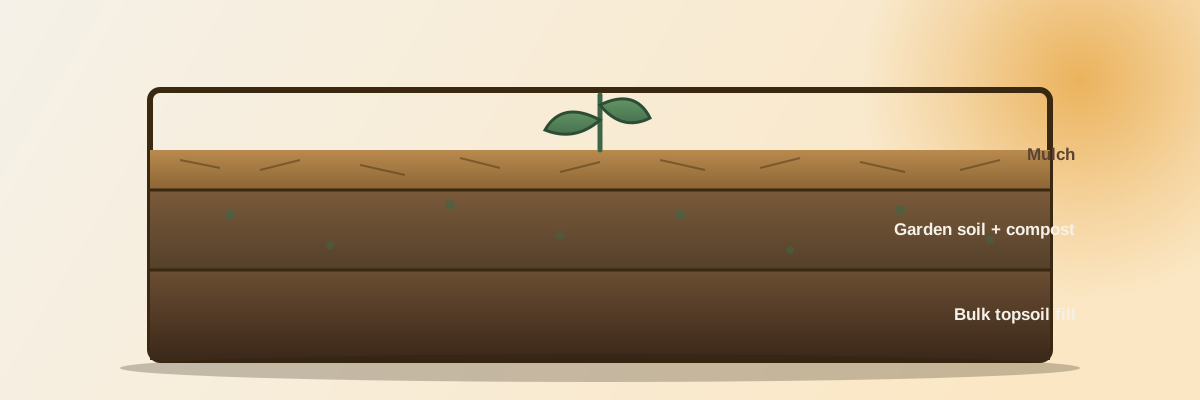
A real project usually uses more than one of these in sequence. A new raised bed gets filled with bulk topsoil for depth, then a topsoil-compost blend near the surface for planting; compost gets worked in seasonally to keep feeding the soil; mulch goes on top once everything’s planted to cut down on watering and weeding. Knowing which material does which job — and how much of it you actually need — is most of what separates a bed that thrives from one that fights you all season. That’s what the tools and guides below are built to answer.
Soil, Compost & Mulch Calculators
Choosing the Right Material
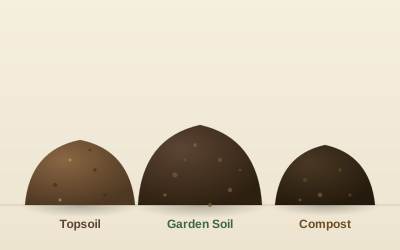
The short version: use topsoil for bulk fill where roots won’t be growing directly — leveling, grading, building volume under a bed. Use garden soil (topsoil blended with compost) anywhere you’re planting directly, since straight topsoil alone compacts too hard and holds too few nutrients for most vegetables and ornamentals. Use compost on its own when you’re feeding soil that’s already in place — worked into the top few inches of an existing bed, or blended into new soil at a lower ratio than a full garden-soil mix.
For the full breakdown, including a side-by-side comparison and specific blend ratios, see our complete guide to topsoil vs. garden soil. Once you know which material you need, the Topsoil Calculator and Raised Bed Soil Calculator convert your area and depth into the cubic yards, tons, or bags you’ll actually order.
Filling a Raised Bed
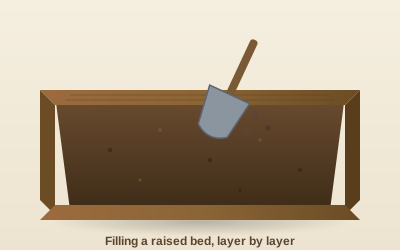
Depth is the first decision: most raised beds want 8–12 inches of soil, though shallow crops can get away with less if the bed sits on native ground rather than a hard surface. From there it’s a volume problem — length × width × depth, converted into whatever unit your supplier quotes in.
The Raised Bed Soil Calculator handles standard bed sizes and the topsoil-compost-perlite blend ratio directly. For containers, pots, or any bed that isn’t a simple rectangle, the Soil Volume Calculator covers rectangular and cylindrical spaces alike, including irregular footprints you can break into simpler shapes. For the full picture on what to fill a bed with, cost-saving methods for deep beds, and why a gravel layer at the bottom doesn’t actually help drainage, see our guide to filling a raised garden bed.
Mulching and Top-Dressing
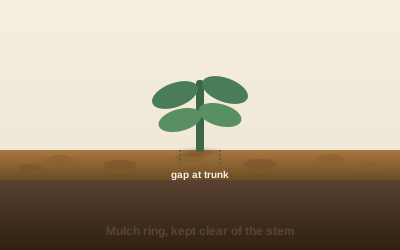
Once a bed is planted, both mulch and compost can go on top of the soil rather than into it — mulch mainly for moisture retention and weed suppression, compost top-dressing to feed soil biology without disturbing roots. A standard mulch layer is 2–3 inches of bark or wood chips, kept a few inches clear of any trunk or stem. A compost top-dressing is thinner, usually 1–3 inches, since it’s meant to be worked in gently rather than piled deep.
The Mulch Calculator converts your bed size and depth into cubic yards and bags for a mulch layer. We’re also working on a dedicated guide comparing organic mulches like bark and wood chips against inorganic options like rubber and stone — check back soon.
Composting Basics
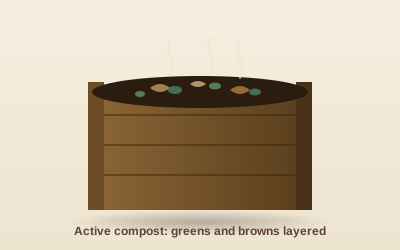
Finished compost is fully decomposed organic matter — dark, crumbly, and earthy-smelling — that improves soil structure and feeds plant-available nutrients as it continues breaking down. It’s built from a rough mix of nitrogen-rich “greens” (kitchen scraps, fresh grass clippings) and carbon-rich “browns” (dry leaves, cardboard, straw), generally 2–3 parts browns to 1 part greens by volume. Unfinished compost — still actively decomposing — should go into the soil weeks before planting, not right at transplant time, since the decomposition process temporarily ties up soil nitrogen.
Compost gets used two ways in this cluster: blended into new bed soil at roughly 30% of the total volume, or top-dressed onto an existing bed at 1–3 inches. The Compost Calculator handles both, along with bag counts and estimated weight for whatever you’re hauling.