How to Use This Calculator
- Toggle “Fill a Bed” or “Topdress a Lawn.”
- Enter your area (length × width, or total sq ft).
- Set your desired depth.
- Read your cubic feet, cubic yards, and estimated tons.
How Much Topsoil Do I Need?
To work out how much topsoil you need, multiply the area in square feet by the depth in inches, divide by 12 for cubic feet, then divide by 27 for cubic yards. A 500 sq ft area at 4 inches deep needs about 6.2 cubic yards. The calculator above does this as you type and adds the weight in tons, which is how many suppliers price a delivery.
The right amount of topsoil depends entirely on what you’re doing with it. A raised bed needs to be filled almost to the rim, usually 8 to 12 inches deep. A lawn topdressing is a thin dusting, a quarter to half an inch, just enough to level low spots and work organic matter into the surface. These are wildly different volumes, and mixing them up is the most common reason people order the wrong amount.
Quick reference: 1 cubic yard covers about 324 sq ft at 1 inch deep, or 108 sq ft at 3 inches deep. Coverage drops fast as depth increases, which is why getting the depth right before you order matters more than getting the area exactly right. Cubic yards is the unit bulk suppliers quote when you call to order.
One distinction worth making before you order: topsoil is not the same thing as fill dirt. Fill dirt is typically subsoil or excavation spoil dug from well below the surface, largely sterile mineral material with little to no organic matter or biological activity, sold cheap because its only job is occupying volume. Topsoil, even unscreened, comes from the biologically active surface layer and retains some organic matter that supports plant growth. If a listing doesn’t specify which one you’re getting, ask, fill dirt is fine for a low spot nobody will plant in, but a poor substitute anywhere roots need to grow.
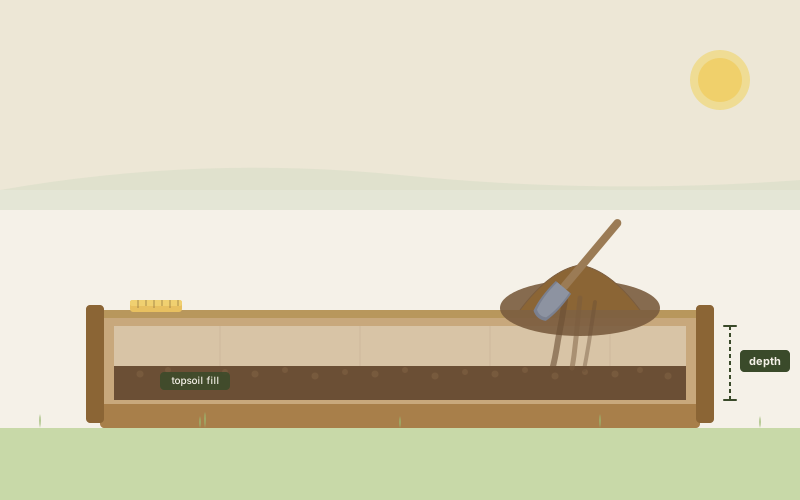
The calculator above has a toggle for exactly this: “Fill a bed” sets a default depth of 10 inches, and “Topdress a lawn” sets 0.375 inches. Adjust the depth to match your project and the result updates live. You get cubic feet, cubic yards, and an estimated weight in tons, the number your supplier will quote you for a bulk delivery.
The weight estimate matters because topsoil is sold by the truckload, and trucks are weight-limited, not volume-limited. Rather than a single flat number, it’s more honest to think of it as a range: loose or dry topsoil typically runs about 1.0–1.3 tons per cubic yard, while wet or compacted topsoil can climb to 1.5–1.7 tons per cubic yard. For a sense of the dry weight, a loam at the USDA NRCS ideal bulk density of under 1.40 g/cm³ works out to under about 1.18 tons per cubic yard before any water is added. Moisture content is by far the biggest factor, a truckload pulled from a stockpile the morning after rain can weigh noticeably more than the same material bone-dry. The calculator uses 1.2 tons as a reasonable middle-of-the-range estimate and labels it clearly as approximate. If your supplier quotes by weight, ask what moisture condition their figure assumes. If a supplier quotes you a delivery in tons instead of yards, our soil cubic yard calculator converts that weight straight into cubic yards.
Topsoil Coverage Chart
One cubic yard is 27 cubic feet, so its coverage is 324 square feet divided by the depth in inches.
| Depth | Area covered by 1 cubic yard |
|---|---|
| 1 inch | 324 sq ft |
| 2 inches | 162 sq ft |
| 3 inches | 108 sq ft |
| 4 inches | 81 sq ft |
| 6 inches | 54 sq ft |
| 8 inches | 40.5 sq ft |
| 12 inches | 27 sq ft |
Working the other way, here is how many cubic yards common areas need:
| Area | 2 in deep | 4 in deep | 6 in deep |
|---|---|---|---|
| 100 sq ft | 0.6 yd³ | 1.2 yd³ | 1.9 yd³ |
| 250 sq ft | 1.5 yd³ | 3.1 yd³ | 4.6 yd³ |
| 500 sq ft | 3.1 yd³ | 6.2 yd³ | 9.3 yd³ |
| 1,000 sq ft | 6.2 yd³ | 12.3 yd³ | 18.5 yd³ |
| 2,000 sq ft | 12.3 yd³ | 24.7 yd³ | 37 yd³ |
How Deep Should Topsoil Be?
| Project | Typical depth |
|---|---|
| New lawn (seed or sod) | 4 to 6 inches, settled |
| Raised bed | 8 to 12 inches, or the bed’s full depth |
| Filling low spots in a lawn | Up to about 0.5 inch at a time, so grass grows through |
| Topdressing an existing lawn | 0.25 to 0.5 inch |
For a new lawn, Penn State Extension recommends a minimum of 4 to 6 inches of good topsoil, measured after it settles, and suggests working the first 2 inches into the top 2 to 3 inches of the soil underneath so there is no sharp layer between them. That is why the 4 and 6 inch columns above are the ones most lawn projects use.
Bags or Bulk: How to Compare
Divide 27 by the bag size in cubic feet to get bags per cubic yard: 36 bags of 0.75 cu ft, 27 bags of 1 cu ft, or 18 bags of 1.5 cu ft. Multiply by the bag price and compare that with the per-yard bulk price plus the delivery fee. Bags usually make sense for a raised bed or two; past about 2 cubic yards, bulk delivery is almost always cheaper and saves hauling dozens of bags. Prices vary a lot by region, so get a local bulk quote before deciding.
Worked Example
Let’s say you have a 10 × 10 foot raised bed and you want to fill it 4 inches deep with topsoil. Here’s the math, step by step:
- Area: 10 ft × 10 ft = 100 square feet.
- Convert depth to feet: 4 inches ÷ 12 = 0.333 feet.
- Cubic feet: 100 sq ft × 0.333 ft = 33.3 cubic feet of topsoil.
- Cubic yards: 33.3 ÷ 27 = 1.23 cubic yards (round to 1.5 yards if you’re buying bulk).
- Estimated tons: 1.23 × 1.2 = ~1.48 tons (approximate).
So for a 10×10 bed at 4 inches deep, you need 33.3 cubic feet, 1.23 cubic yards, or roughly 1.5 tons of topsoil. If you’re buying bulk, round up to 1.5 yards, it’s always better to have a little extra for settling and uneven ground than to come up short and pay a second delivery fee.
Common Mistakes
- Confusing fill depth with topdressing depth. A raised bed needs 8–12 inches. A lawn topdressing needs 0.25–0.5 inches. Using the wrong depth is the #1 reason for ordering the wrong amount. Use the toggle above to start with the right default.
- Forgetting that topsoil settles. Loose topsoil settles 10–15% after the first rain. Round up, not down, or you’ll be a few inches short once it compacts.
- Assuming all topsoil weighs the same. The 1.2 tons-per-yard figure is a middle-of-the-range estimate, not a fixed number, loose or dry topsoil often runs 1.0–1.3 tons per yard, while wet or compacted topsoil can reach 1.5–1.7 tons per yard. If your supplier quotes by weight, ask what moisture condition their figure assumes.
- Ordering exactly the calculated volume. Round up 5–10% for settling, uneven ground, and spillage on most topsoil orders. But that’s a starting point, not a guarantee, looser or unscreened topsoil can settle noticeably more than that once it’s watered in, so round up further if you’re unsure what you’re getting. A small surplus is easy to spread; a shortfall means a second delivery charge.
- Not accounting for existing soil. If your bed already has 4 inches of soil and you want 10 inches total, you only need 6 inches of new topsoil, not 10. Measure the gap, not the bed depth.
Topsoil Calculator FAQ
How do I calculate cubic yards of soil?
The formula is: area in square feet × depth in feet, divided by 27. Measure length × width for your area, convert your depth from inches to feet by dividing by 12, multiply the two together for cubic feet, then divide by 27 to get cubic yards. The calculator above does all three steps live as you type, so you don’t have to do the division by hand.
How do I calculate how much topsoil I need?
Measure your area in square feet (length × width), multiply by your depth in inches divided by 12 to get cubic feet, then divide by 27 for cubic yards. The calculator above does this live as you type and also gives you an estimated weight in tons.
How much topsoil do I need?
It depends on the depth. A 4×8 raised bed at 10 inches deep needs about 26.7 cubic feet (roughly 1 cubic yard). A 1,000 sq ft lawn topdressed at 0.25 inches needs about 2.1 cubic feet, less than a single bag. Use the toggle above to switch between “fill a bed” and “topdress a lawn” to get the right default depth.
How do you calculate topsoil coverage?
Coverage is area × depth. One cubic yard of topsoil (27 cubic feet) covers 324 square feet at 1 inch deep, 162 sq ft at 2 inches, 108 sq ft at 3 inches, and 81 sq ft at 4 inches. The calculator handles this for you in real time as you change the depth.
How much topsoil do I need for 1,000 square feet?
About 6.2 cubic yards at 2 inches deep, 12.3 cubic yards at 4 inches and 18.5 cubic yards at 6 inches. Add 5 to 10% for settling. A new lawn usually needs 4 to 6 inches of settled topsoil, so plan on roughly 13 to 20 cubic yards for 1,000 sq ft.
How much does a yard of topsoil weigh?
Roughly 1 to 1.3 tons when it is fairly dry, and up to about 1.5 to 1.7 tons when it is wet or packed. A loam at the USDA NRCS ideal bulk density of under 1.40 g/cm³ weighs under about 1.18 tons per cubic yard dry; water adds the rest. The calculator uses 1.2 tons per yard as a middle estimate.
Should I buy topsoil in bulk or in bags?
Bulk (sold by the cubic yard, delivered by truck) almost always wins past about 2 cubic yards. Below that, bagged topsoil (typically 1–1.5 cu ft bags) is easier to transport and not much more expensive. For a full raised bed that needs 3+ yards, get a bulk quote, you’ll save on both the material and the bag-hauling. Check the cubic yards figure above before you decide.
Can I use this to level or topdress my lawn?
Yes. Switch the toggle above to “Topdress a lawn” and the calculator sets a default depth of 0.25–0.5 inches, which is the right range for a thin topdressing layer. Enter your lawn area and adjust the depth if you’re filling deeper low spots. Keep it under 0.5 inches per application so the grass can breathe and grow through.
How many bags of topsoil are in a yard?
One cubic yard is 27 cubic feet. A standard 40 lb bag of topsoil holds about 0.75 cubic feet, so you need approximately 36 bags per cubic yard. Bag sizes vary, some are sold as 1 cu ft or 1.5 cu ft bags. Check the label and divide 27 by the bag volume to get an exact count for whatever product you’re buying. Past about 2 yards, bulk delivery almost always costs less than buying bags.
How many wheelbarrows is a yard of topsoil?
Plan on 8–9 wheelbarrow loads per cubic yard with a standard contractor wheelbarrow (3–3.5 cu ft capacity). Smaller garden wheelbarrows hold 2–2.5 cu ft, putting you closer to 11–14 loads per yard. Knowing this helps you plan your time and decide whether it’s worth paying for dump-and-spread delivery instead of unloading by hand.
Can I use this for soil excavation, not just fill?
Yes, the same volume math works whether you’re adding soil or removing it. Enter the same length, width, and depth you plan to dig, for a pond, a footing, a drainage trench, or a bed you’re digging out rather than filling, and the tool gives you the cubic feet, cubic yards, and estimated weight of what’s coming out. The only real difference is which number you’re solving for: material to bring in, or material to haul away.
Need mulch too?
If you’re filling a bed with topsoil and topping it with mulch in the same project, do it in two steps: use this page for the topsoil volume, then switch to our Mulch Calculator for the top layer. It’s the same footprint, just a different material and a much shallower depth, typically 2–3 inches of mulch on top of 8–12 inches of soil.
Sources & further reading
Topsoil depth and coverage guidance in this article draws on general recommendations from university cooperative extension services (such as your state’s land-grant extension office) and the USDA Natural Resources Conservation Service. Lawn topsoil depth follows Penn State Extension’s lawn establishment guide (a minimum of 4 to 6 inches, settled). The dry-weight figure uses the ideal bulk density values in the USDA NRCS soil health guide to bulk density. For more on how we source and review the formulas behind every calculator, see our methodology page. For region-specific guidance on soil type, compaction, and drainage, search “topsoil” on Extension.org or your local extension office’s website. For how topsoil compares to garden soil and where it fits in a larger project, see our topsoil vs. garden soil guide or our complete guide to soil and amendments.