Trees and shrubs live on a different timescale than the rest of a garden — decisions made (or skipped) in year one can show up as problems a decade later, and a tree’s needs change substantially as it matures. Four things matter most in a home landscape: knowing roughly how old a tree is (since age drives everything else), watering correctly for its stage of establishment, mulching without smothering the trunk, and only feeding when a tree actually needs it rather than on a routine schedule.
This cluster centers on the Tree Age Calculator, but age is really the starting point for the other three decisions, not a standalone fact — a newly planted sapling and a 40-year-old oak get different water schedules, different mulching attention, and different (if any) fertilizer. This page walks through all four, with the calculator as one practical tool inside that broader picture rather than the whole story.
The Tree Height Calculator rounds out the pair — age and height are the two things most people want to know about a tree they aren’t planning to cut down, and the two calculators answer them the same non-destructive way: trunk circumference for age, a sighted angle (or a shadow, or a stick) for height. Neither requires touching the tree.
Tree Age & Care Calculators
Get the Spacing Right First
Knowing Your Tree’s Age
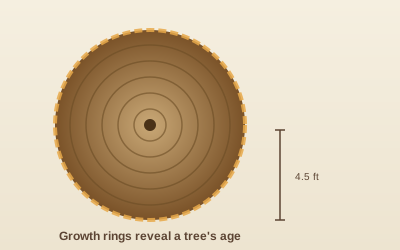
A tree’s age changes what it needs. A young tree, still building its root system, depends on you for consistent water and is more forgiving of corrective pruning. A mature tree has largely finished establishing itself — it can go longer between waterings, but a pruning cut that would heal quickly on a young tree can open a much larger wound on an old one, and its root system may already be pushing against foundations, sidewalks, or utility lines. Age also matters for risk assessment: a very old tree of a species with a naturally shorter lifespan is more likely to have internal decay, which changes how you think about limb failure or storm risk near a house or driveway.
None of this requires guessing. The Tree Age Calculator estimates a tree’s age from its trunk diameter and species’ growth rate, so you’re making watering, pruning, and risk decisions based on an actual number instead of a visual guess. It's one of three real ways to age a tree — see how tree aging methods compare for the other two and when each one actually makes sense.
Watering Mature vs. Young Trees
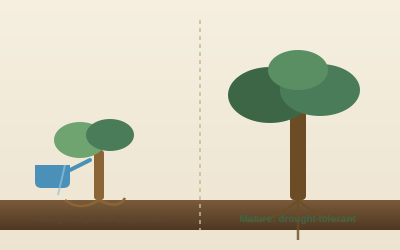
A newly planted or young tree needs regular, deep watering for its first 2–3 years in the ground — this is the establishment period, when its root system is still spreading out from the original root ball and can’t yet reach much water on its own. During this window, water deeply enough to soak the root zone rather than just the surface, and don’t rely on rain alone during dry stretches.
Once a tree is established (past that 2–3 year mark), its root system is usually wide and deep enough to find water on its own, and most established trees are largely drought-tolerant except during extended dry spells, when even mature trees benefit from a deep soak.
Whether you’re watering a new tree by hand or on a schedule, the goal is the same as it is for any deep, slow watering job: get water into the root zone without runoff. Our Drip Irrigation Calculator and Rain Barrel Calculator (Watering & Irrigation cluster) are built for exactly this kind of deep, efficient watering — useful for young trees during establishment and for mature trees during drought.
Mulching Around Trees
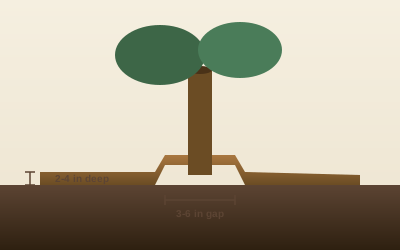
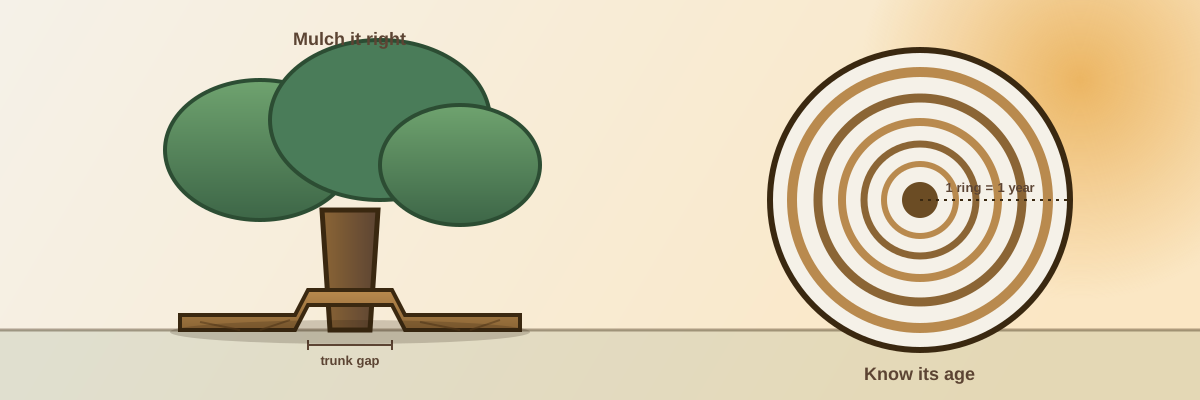
Mulch around a tree should sit in a flat ring, not a mound. Keep a 3–6 inch gap between the mulch and the trunk itself — mulch piled against the bark (“volcano mulching”) traps moisture against the trunk, invites rot and pests, and encourages the tree to send out adventitious roots into the mulch instead of down into the soil, which can eventually circle back and girdle the trunk as it grows. Spread the mulch 2–4 inches deep in a ring extending out to the tree’s drip line (the edge of its canopy) rather than piling it deeper close to the trunk.
Done correctly, mulch conserves soil moisture and moderates root-zone temperature without any of the downsides of a mulch volcano. Our Mulch Calculator (Soil & Amendments cluster) will tell you exactly how much mulch to buy for a ring of a given width and depth around your tree.
Feeding Trees and Shrubs
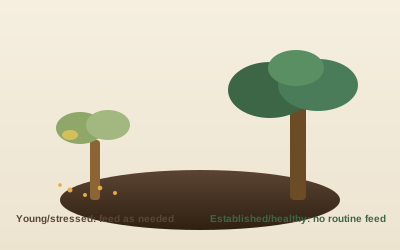
Most established, healthy trees don’t need routine fertilizing — they draw what they need from the surrounding soil, and over-fertilizing can push soft, rapid growth that’s more vulnerable to pests and cold damage. Supplemental feeding is worth doing when a tree is young and pushing hard to establish, showing visible signs of nutrient deficiency (pale or yellowing leaves not explained by watering or season, stunted growth), or recovering from stress like storm damage, drought, or construction root disturbance.
When feeding is warranted, matching the right nutrient ratio to the actual deficiency matters more than applying a generic all-purpose feed. Our NPK Calculator (Fertilizer & Nutrients cluster) helps you work out the right nitrogen-phosphorus-potassium blend and application rate for the situation, rather than guessing.