How to tell the age of a tree really has three different real answers, not one, and which one is right depends entirely on what you have access to. Counting growth rings is the most accurate method there is, but it requires a cut stump or cross-section. Increment boring gets you a ring count from a living tree, but it’s a professional forestry tool that leaves a real wound. And measuring trunk circumference (the method behind our own Tree Age Calculator) gets you a solid estimate without touching the tree at all, which is what most people actually need. This guide compares all three honestly, including where each one falls short.
Method 1: Ring Counting (Dendrochronology)
Counting growth rings is the only method that gives an exact, not estimated, age, and it’s the basis of an entire scientific field, dendrochronology, the dating of tree rings to the exact year they formed. Each ring is really two bands: a lighter “earlywood” band laid down in spring when growth is fast, and a darker, denser “latewood” band formed as growth slows toward fall. In most temperate climates, one full light-to-dark cycle represents one year of growth, so counting the ring boundaries from bark to center gives you the tree’s age in years.
Physically, that banding comes from the cambium, the thin layer of dividing cells just under the bark that adds new wood and widens the trunk each season. As Penn State Extension explains it, earlywood cells go down with thin walls while spring growth is fast, and as photosynthesis ramps up through summer “the cell walls begin to get thicker due to the abundance of available sugars,” which is what darkens the latewood band. Ring width then records how good that particular year was: a smaller tree outcompeted for sunlight by a larger neighbor lays down a narrow ring, while a tree in full sun producing plenty of sugar lays down a wide one. One thing worth knowing before you start counting: some hardwoods, oak and ash among them, show almost no light-to-dark color contrast at all. Those are read instead by pore structure: large, open pores in the earlywood giving way to much smaller pores in the latewood.
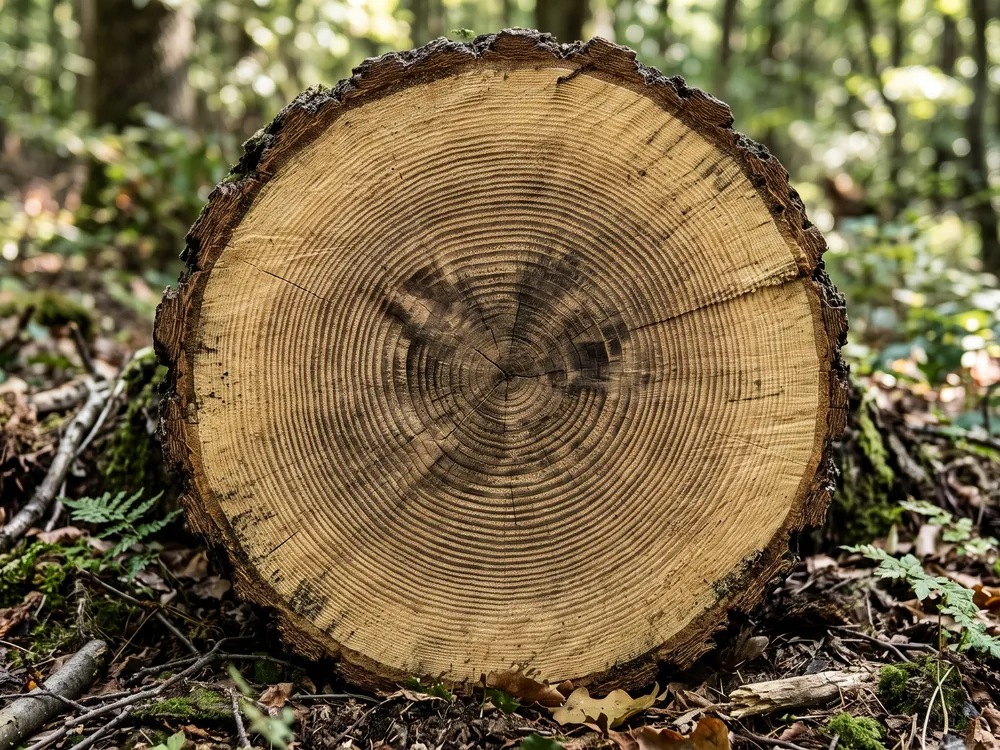
The real catch: reading tree age rings this way requires either a cut stump or a full cross-section of the trunk, not something you can do to a living tree you want to keep. And counting isn’t quite as simple as it sounds. As NIST explains, a tree can sometimes lay down more than one ring in a single year if a mid-summer drought is followed by a wet spell, and in very dry years it can skip a ring entirely. Dendrochronologists correct for this with cross-dating: comparing a core or slice against other trees from the same area to confirm which rings correspond to which calendar years.
There’s also a real caveat worth knowing: not every tree forms clear annual rings. Species growing in tropical or non-seasonal climates, where there’s no sharp spring-to-fall growth transition, often don’t produce distinct rings at all. For those trees, scientists sometimes turn to radiocarbon dating instead: a real technique, but one that produces a much less precise age range than a clean ring count.
Method 2: Increment Boring
Increment boring is the middle ground between cutting a tree down and leaving it untouched. An increment borer is a T-shaped, hollow steel drill bit that a forester or arborist cranks by hand into the trunk until it reaches the center (the pith), then withdraws along with a pencil-thin core of wood containing a cross-section of every growth ring. Counting those rings under a hand lens or microscope gives the same exact-year accuracy as a full stump, without felling the tree.
It’s genuinely less destructive than cutting the tree down, but it isn’t nothing: as forestry-measurement guidance from Oregon’s Open Educational Resources forestry program notes, coring is classified as “non-destructive sampling,” but it still creates a real puncture wound that can become an entry point for insects or disease, which is exactly why field technique calls for disinfecting the borer between trees. NIST describes the process bluntly as “essentially an arboreal biopsy”: hard, physical work that leaves the tree to heal over a small hole rather than a stump.
Be honest with yourself about this one: an increment borer is a specialized, not-cheap professional tool, and using it correctly (and without damaging a tree you care about) takes real technique. This is the method to hire a certified arborist or forester for, not a weekend home-gardener project.
Method 3: Circumference and Growth Factor (No Cutting Required)
This is the real, practical answer to how to tell age of tree without cutting it down, and honestly, it’s the method most people asking “how can you tell how old a tree is” actually need, since it works on a living tree you want to keep exactly as it is.
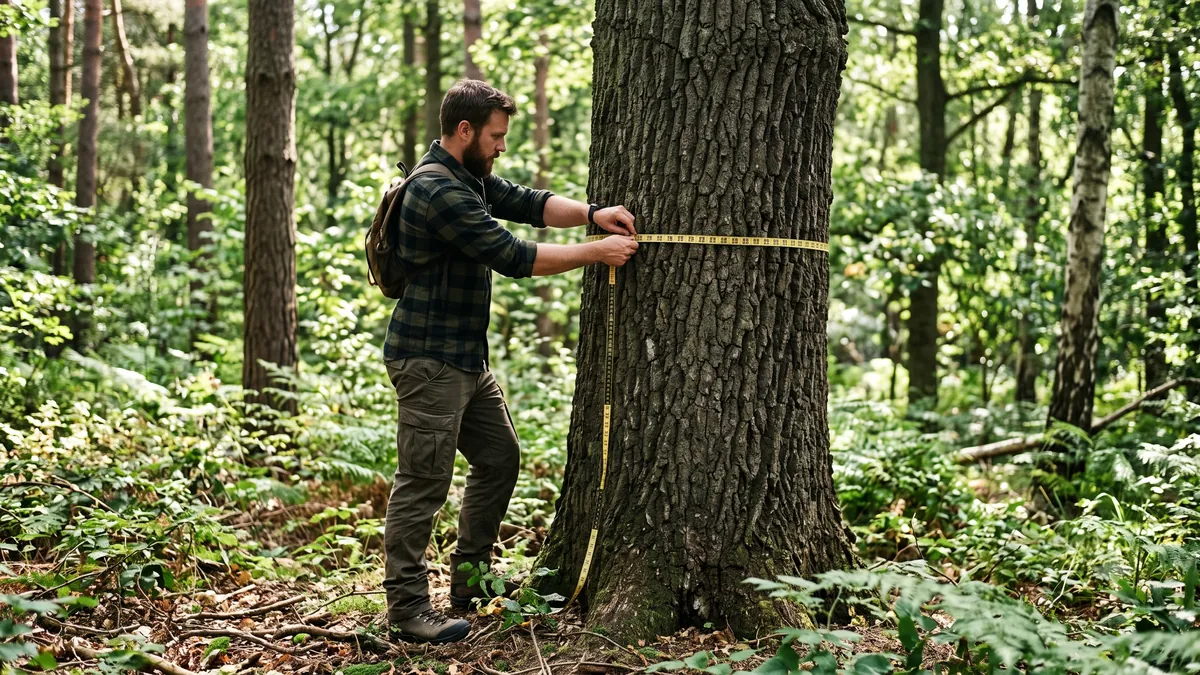
The math itself is simple. Measure the trunk’s circumference at 4.5 feet above the ground, the standard forestry point foresters call “breast height,” or DBH (diameter at breast height). Divide that circumference by π (about 3.14159) to get the trunk’s diameter. Then multiply that diameter by a species-specific growth factor: a number, in years per inch of diameter, that reflects how fast that species typically thickens. As Purdue’s Landscape Report lays out with a worked white oak example, this three-step chain (circumference → diameter → growth factor) is the standard non-destructive estimation method taught in forestry and arboriculture.
Growth factor is where species really matters. A fast grower like cottonwood packs on an inch of diameter roughly every 2 years; a fast-growing landscape tree like silver maple isn’t far behind. A slow grower like oak or beech can take 5 to 7+ years to add that same inch. Our own tree growth factor chart lists verified figures for common landscape and forest species, from Pecan (growth factor 1) up to Hemlock (growth factor 7). Using the wrong species for this calculation can throw an age estimate off by decades.
It’s important to be honest about what this method actually is: an estimate, not a measurement. Growth factors are averages from typical trees of a species; any individual tree’s real growth rate depends on soil, water, sunlight, competition, and stress history, not species alone. Purdue’s own write-up is candid about this too: woodland trees and urban trees of the same species can differ meaningfully in growth rate, urban trees usually growing slower under more stress. That’s exactly why a good tree age calculator shows a range instead of one falsely precise number.
This is the method our Tree Age Calculator automates: enter your trunk circumference and species, and it runs this exact circumference-to-diameter-to-growth-factor chain for you, range included.
Which Method Should You Actually Use?
Living tree you want to keep: use Method 3 (circumference and growth factor). It’s the only one of the three that doesn’t touch the tree at all, and for the vast majority of “how old is my tree” questions, an honest estimate range is exactly what you need.
Already-cut stump or a fallen tree: use Method 1 (ring counting). You have the cross-section already. Counting rings gives you a genuinely exact age, not an estimate, at no extra cost.
Need real accuracy on a living tree without felling it: use Method 2 (increment boring), but hire a certified arborist or forester rather than attempting it yourself. It’s the only way to get ring-count-level precision without cutting the tree down, and it’s specialized enough to be worth paying a professional for.
How Old Are the World’s Oldest Trees?
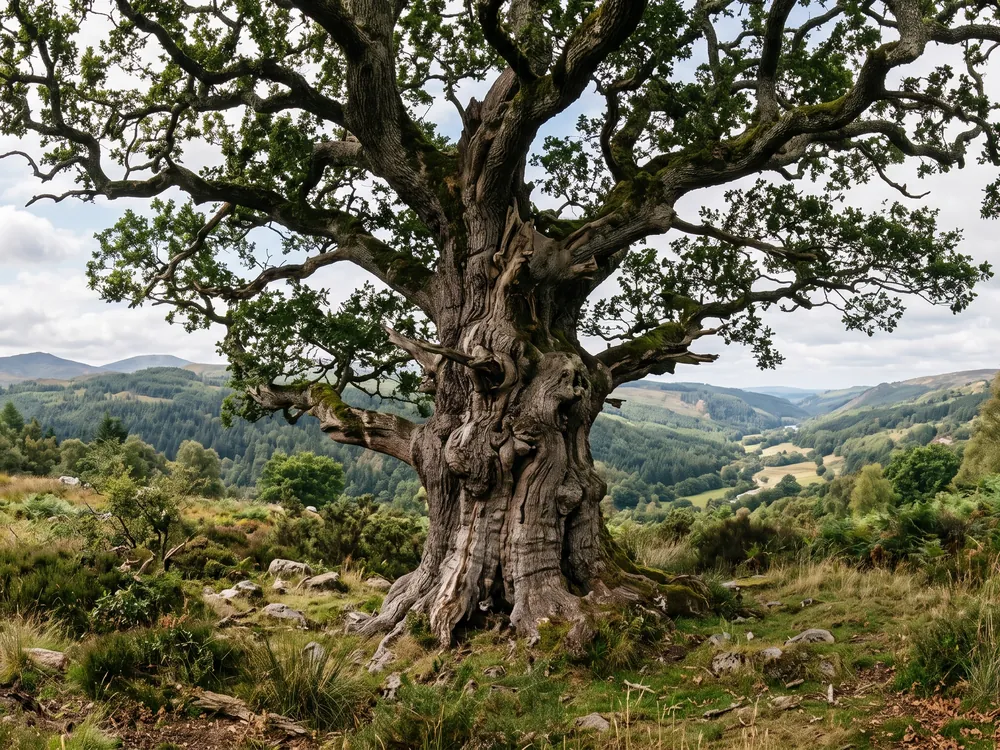
The question of what is the oldest tree on earth has a real, documented answer, and it’s exactly these two methods, ring counting and increment boring, that produced it. A bristlecone pine named Methuselah, growing in the White Mountains of eastern California, was aged at roughly 4,853 years old from a core sample taken in 1957, according to the USDA, old enough that the tree started growing before the pyramids of Giza were built. Its exact location is kept undisclosed by the U.S. Forest Service to protect it.
A cautionary example on the other side of this: in 1964, a researcher in Nevada cut down a bristlecone pine called Prometheus to study its rings, only to discover afterward that he’d killed the oldest tree ever directly measured. As NIST recounts it, Prometheus had 4,862 countable rings, but its innermost rings were missing, meaning the tree was likely over 5,000 years old, felled for a ring count that an increment borer could have gotten just as accurately without killing it.
Tree rings do more than tell age: their width records the growing conditions of the year they formed, wider in wet years and narrower in drought. Using ring patterns from living and dead trees, researchers have reconstructed detailed climate records stretching back thousands of years.
Free book · 23 pages, PDF
Quick Reference Table
| Method | Accuracy | Invasiveness | Best Use Case |
|---|---|---|---|
| Ring counting | Exact (single year) | Full stump or cross-section required | Already-cut stumps, fallen trees, lumber |
| Increment boring | Exact (single year) | Small core wound; professional tool | Living tree, need exact age, hire an arborist |
| Circumference & growth factor | Estimate, roughly ±20% | None: no cutting or coring | Living tree you want to keep; most home situations |
For most people, that last row is the practical answer, which is exactly why the Tree Age Calculator automates it.
How to Tell the Age of a Tree FAQ
Does every tree ring equal one year?
Usually, in temperate climates with a clear spring-to-fall growing season, but not always. A tree can lay down more than one ring in a single year if a mid-summer drought is followed by renewed wet-season growth, and in an unusually dry year it can skip forming a ring altogether. Dendrochronologists correct for this with cross-dating, comparing a core against other trees from the same area to confirm which ring belongs to which calendar year. Species from tropical or non-seasonal climates often don't form distinct annual rings at all.
How accurate is the circumference method?
Expect roughly ±20% accuracy for a healthy, typically-grown tree, which is why a good tree age calculator shows a range rather than a single number. The main source of error is growth-rate variation: soil quality, water availability, sunlight, competition from nearby trees, and past stress can all push an individual tree's real growth rate away from its species' average. Urban and yard trees, specifically, tend to grow more slowly than the same species in open woodland, so the true age often runs toward the older end of the estimated range.
Can I count tree rings without cutting my tree down?
Yes, an increment borer extracts a small, pencil-thin core sample containing a cross-section of every ring, without felling the tree. It's a real, established forestry technique, but it does leave a small puncture wound and requires a specialized tool most home gardeners don't own. This is the method to hire a certified arborist or forester for, rather than attempting it yourself.
What is the most accurate way to tell how old a tree is?
Ring counting on a full cross-section or increment core, cross-checked against nearby trees (cross-dating), is the only method that gives an exact age rather than an estimate. Its real limitation is access: it requires either a cut stump/cross-section or a core sample pulled by a professional with an increment borer. It isn't something you can do casually on a living tree you want to keep intact.
What is the oldest tree on earth?
Bristlecone pines hold the record. A tree named Methuselah, in California's White Mountains, was aged at roughly 4,853 years from a 1957 core sample. A second bristlecone, Prometheus, was found in 1964 to have at least 4,862 rings before it was accidentally cut down, with its innermost rings missing, it was likely over 5,000 years old, making it the oldest tree ever directly measured.
Sources & further reading
Ring-counting mechanics and the Prometheus/dendrochronology background come from NIST’s “How Do You Measure the Age of a Tree?” and Wikipedia’s Dendrochronology entry. How growth rings physically form (cambium, earlywood, latewood, and the pore structure that stands in for color contrast in oak and ash) comes from Penn State Extension’s “What Exactly Are Growth Rings?”. Increment boring technique and field practice come from Oregon’s Open Educational Resources forestry measurements program. The circumference-to-growth-factor method is drawn from Purdue Landscape Report’s “How Old Is My Tree?”. Methuselah’s age comes from the USDA, and the climate-record use of tree rings from NOAA Climate.gov. For more on how we build and verify the formulas behind every calculator and guide on this site, see our our sourcing approach. For the full picture on tree care by age, see our tree and shrub calculators.