A soil test report can look like a wall of meaningless numbers and letters: pH, ppm, CEC, a handful of nutrient abbreviations. Here’s how to read soil test results and turn each part into something you can actually act on in the garden, whether you’re learning how to read a soil test results for the first time or just need a refresher.
What Does a Soil Test Actually Measure?
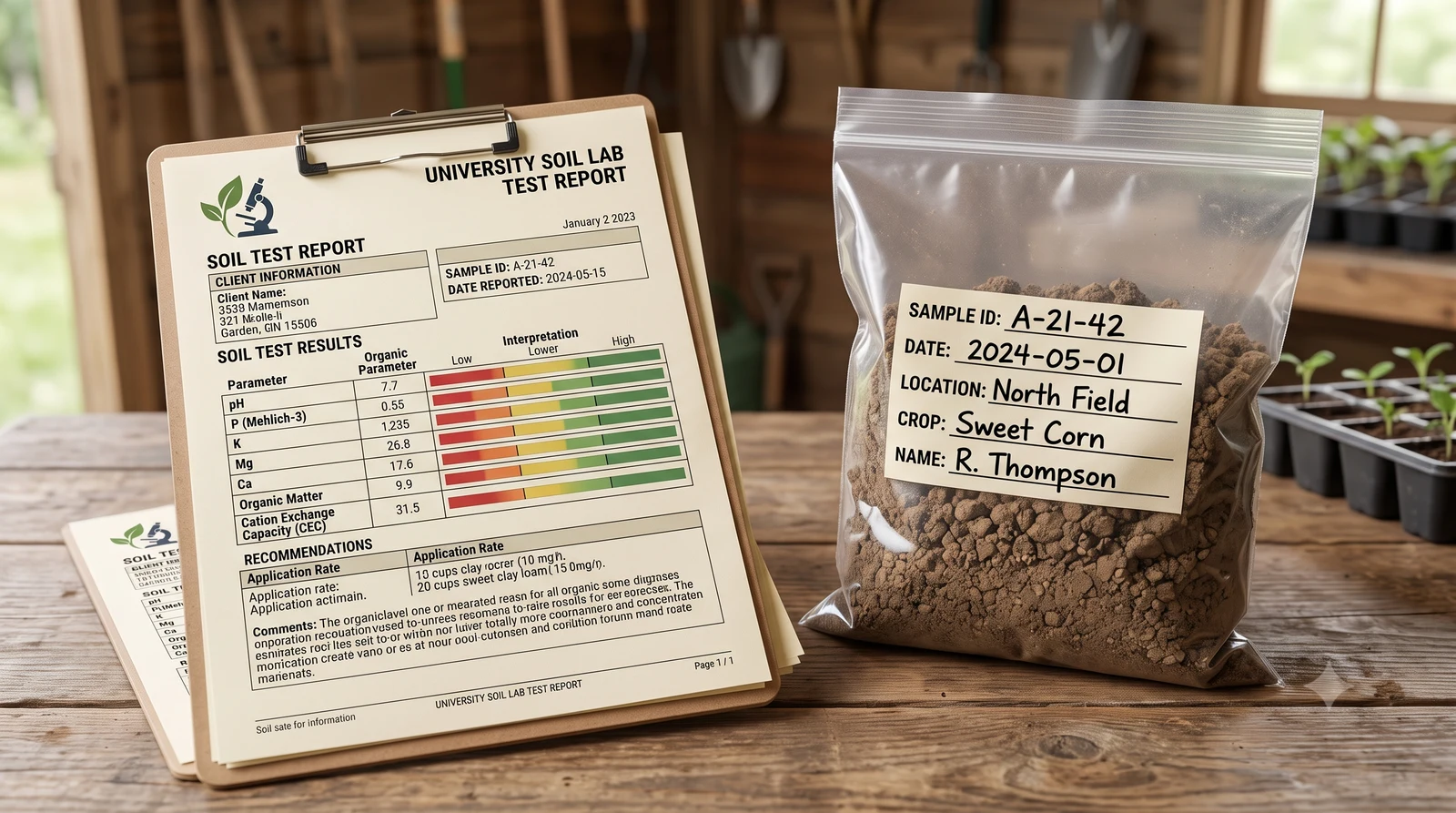
Every standard soil test covers the same core set of measurements, even though the exact layout differs from lab to lab. pH tells you how acidic or alkaline the soil is. Organic matter is the percentage of the soil made up of decomposed plant and animal material. N-P-K (nitrogen, phosphorus, and potassium) are the three nutrients plants need in the largest amounts. And most reports also include micronutrients like zinc and manganese, needed in much smaller amounts but still capable of limiting growth if they run short. Everything below walks through what each of these numbers actually means and what to do about it.
Understanding Your Soil pH Number
pH measures acidity on a 0–14 scale, with 7 being neutral, lower numbers more acidic, and higher numbers more alkaline. The number matters because it directly controls how available nutrients are to plant roots, regardless of how much of that nutrient is actually in the soil: a soil can be nutrient-rich on paper and still leave plants deficient if the pH locks those nutrients up chemically. Most nutrients are at their most available somewhere in the 6.0–7.0 range, which is why that window is the general target for most garden crops. Outside that range in either direction, specific nutrients start becoming harder for roots to take up even when the raw amount in the soil is fine.
Understanding Organic Matter Percentage
Organic matter is reported as a percentage of the soil’s total makeup, and as a general estimate, most productive garden soil falls somewhere in the 3–6% range. Below that, soil tends to drain too fast, hold less water and nutrients, and support less biological activity. Above it, that’s rarely a problem on its own for a garden bed. This is a general range rather than a strict target: native soil type, climate, and what you’re growing all shift where “good” actually lands, so treat organic matter as a directional indicator of soil health rather than a number to hit exactly.
Turning N-P-K Numbers Into an Actual Fertilizer Plan
This is the step where most people get stuck: a report tells you your phosphorus is “Low” or gives you a raw ppm reading, but neither of those is an application rate you can actually use at the store or in the shed. Getting from a raw number to a real fertilizer plan means converting that reading into pounds or ounces of a specific product, per square foot or per acre, based on the product’s own N-P-K ratio. Doing that conversion by hand across multiple nutrients and product ratios is where mistakes creep in. Our NPK Calculator handles exactly this conversion: enter your soil test reading and the fertilizer you’re using, and it works out the actual application rate instead of leaving you to guess.
How fast that nutrient actually behaves in the soil also depends on texture: sandy soil drains quickly and lets nutrients leach through faster, while clay holds onto both water and nutrients much longer. Our Soil Type Calculator classifies your soil texture from a simple jar test, which adds real context for how aggressively to fertilize and how often you’ll likely need to retest.
What About Micronutrients?
Micronutrients like zinc and manganese are needed in far smaller amounts than N-P-K, but a real deficiency still shows up as a specific, recognizable symptom: zinc deficiency often appears as shortened stem growth and smaller, distorted leaves, while manganese deficiency tends to show as yellowing between leaf veins while the veins themselves stay green. For most home gardeners, though, these are a secondary concern: get pH and N-P-K right first, since a pH problem can itself cause micronutrients to become unavailable even when there’s technically enough in the soil. Treat a flagged micronutrient deficiency as worth addressing, but not the first place to focus if the main numbers are still off.
Home Test Kits vs. Lab Tests
A lab test, typically run through a university extension or a private soil lab, is more reliable and more comprehensive than anything you can do at home, covering pH, organic matter, N-P-K, and micronutrients with results calibrated against a real lab process. Home test kits, using color-change strips or capsules, give a rough directional read: useful for a quick gut-check between full tests, or for catching an obvious problem early, but not precise enough to build a real fertilizer plan around. If you’re making a real decision about lime, fertilizer type, or application rate, a lab report is worth the wait and the small cost; a home kit is fine for a spot-check in between.
Worked Example
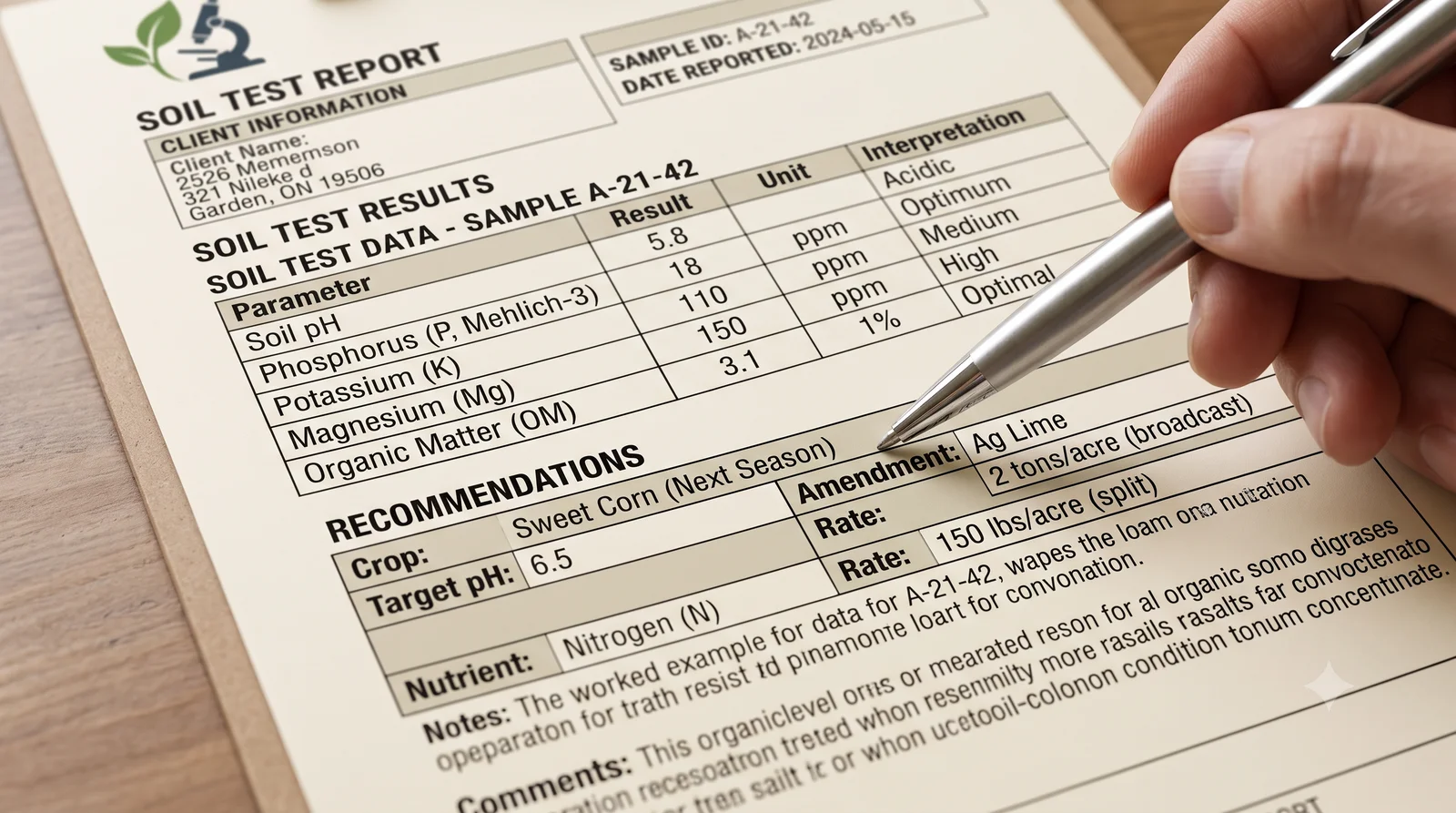
Here’s a sample report and what it actually means: pH 6.2, organic matter 3.5%, Phosphorus: Medium, Potassium: Low. The pH sits just under the 6.0–7.0 target range, close enough that most crops will do fine without a lime application, though slightly acid-loving plants will be more comfortable here than alkaline-preferring ones. Organic matter at 3.5% lands solidly in the healthy general range, so there’s no urgent amendment needed there. Phosphorus reading “Medium” means a light maintenance application is reasonable, not a heavy correction. Potassium reading “Low” is the number that actually calls for action: this soil needs a real potassium application, and the NPK Calculator is what turns “Low” into an actual pounds-per-bed or ounces-per-plant number based on whatever fertilizer you’re using.
Common Mistakes
The most common mistake is fertilizing blind, without testing first: guessing at what the soil needs instead of measuring it wastes money in one direction and risks real plant damage in the other. A close second is submitting an unrepresentative sample: pulling soil from a single spot instead of collecting several small samples from across the bed and mixing them together means the “result” may just describe one unusual patch rather than the bed as a whole. Testing frequency matters too: testing too rarely means missing real changes in the soil over several seasons, while testing every few months is overkill, since soil chemistry doesn’t shift that fast under normal use. Finally, watch the units: a reading in ppm and a recommendation in lbs/acre aren’t the same number, and treating them as interchangeable without converting between them is how an application rate ends up wrong by a wide margin.
Free book · 23 pages, PDF
Soil Test FAQ
What is a soil test, and what does it measure?
A soil test is a lab analysis of a soil sample that reports pH, organic matter percentage, N-P-K levels, and usually key micronutrients like zinc and manganese. It tells you what's actually in your soil instead of guessing from how a plant looks.
How do I convert my soil test's N-P-K numbers into a fertilizer plan?
Take the raw reading or category (like "Low" or a ppm value) for each nutrient and match it against your fertilizer's own N-P-K ratio to calculate an application rate. Our NPK Calculator does this conversion directly instead of requiring manual math.
Are home soil test kits accurate?
They're directionally useful but not lab-accurate. Home kits are fine for a rough, quick check between full tests, but a real lab test is more reliable and comprehensive, and worth the cost before making a significant fertilizer or lime decision.
How often should I get a soil test?
Every 2 to 3 years is the general rule for an established garden bed, since soil chemistry doesn't change dramatically faster than that under normal use. Test more often only if you've made a major amendment and want to confirm it worked.
How much soil do I need to submit for testing?
Most labs ask for about a cup or two of soil per sample, collected as several small scoops from across the bed and mixed together rather than one scoop from a single spot. Check your specific lab's instructions, since exact amounts vary.
Sources & further reading
The interpretation guidance above follows University of Maryland Extension’s Understanding Your Soil Test Report. For more on how we source and review the facts and formulas behind every calculator and guide on this site, see our methodology page. And for the full picture on feeding a garden or lawn correctly, see our complete guide to fertilizer and nutrients.