How to Use This Calculator
- Choose your material: Dirt/Soil, Gravel, or Mulch.
- Pick a conversion mode: Dimensions, Weight ↔ Volume, or Area to Volume.
- Enter your known measurement.
- Read the converted result in cubic feet, cubic yards, cubic meters, or tons.
Working from a delivery quote rather than a tape measure? Weight ↔ Volume mode runs it backwards, turning a tonnage figure into yardage, which is the usual reason to want a calculator for soil yardage after the material has already been priced.
How Do You Calculate Cubic Yards?
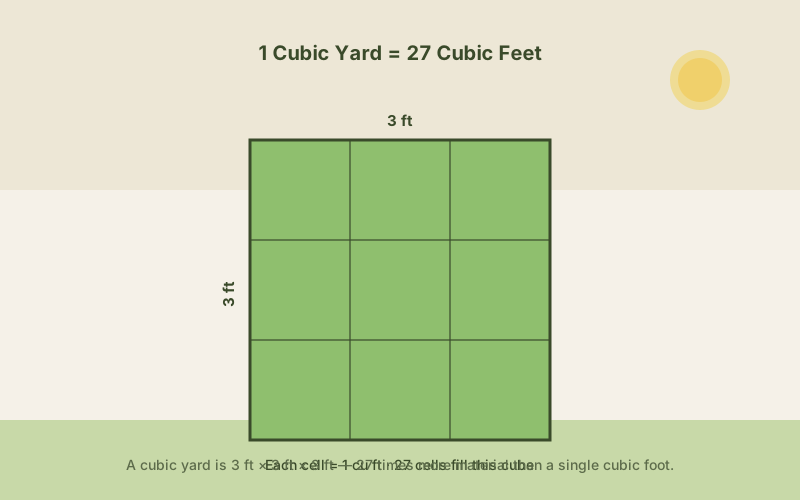
The dimensional math is straightforward: multiply length × width × depth to get a volume, then convert to cubic yards. If your measurements are in feet and inches, convert depth to feet first (divide inches by 12), multiply length × width × depth in feet to get cubic feet, then divide by 27 to get cubic yards, since a cubic yard is a 3 ft × 3 ft × 3 ft cube, and 3 × 3 × 3 = 27.
Converting between weight and volume is a separate calculation, since it depends on the material's density rather than pure geometry. Divide a known weight (in pounds) by the material's weight-per-cubic-yard figure to get cubic yards, or multiply cubic yards by that same figure to estimate weight. That figure isn't fixed, though. It varies meaningfully by material, and even within one material, moisture content shifts it: wet soil, gravel, or mulch weighs noticeably more than the same material dry. Treat any weight-based conversion as an approximate estimate, not an exact figure.
Weight per Cubic Yard by Material
| Material | Typical Range | Calculator Uses |
|---|---|---|
| Dirt / Soil | 2,000–3,400 lbs (1.0–1.7 tons) | ~2,400 lbs (1.2 tons) |
| Gravel | 2,400–2,900 lbs | ~2,700 lbs |
| Mulch | 400–800 lbs | ~500 lbs |
These figures match the same weight-per-yard estimates used elsewhere on this site. The Topsoil Calculator uses the same 1.0–1.7 tons/cu yd range (1.2 tons as its baseline) for soil, meaning a cubic yard of dirt typically weighs around 2,400 lbs, give or take with moisture. Gravel and mulch weights are standard landscaping-supply reference ranges. Moisture is the biggest swing factor for all three: a load pulled from a stockpile right after rain can weigh noticeably more than the same material bone-dry.
Worked Example
Say a supplier quotes you 3 tons of gravel for a delivery, and you need to calculate cubic yards of gravel from that weight before deciding if it's enough.
- Convert tons to pounds: 3 tons × 2,000 lbs/ton = 6,000 lbs.
- Divide by gravel's weight per cubic yard: 6,000 lbs ÷ 2,700 lbs/cu yd ≈ 2.22 cubic yards.
So a 3-ton gravel delivery is roughly 2.2 cubic yards. At a 3-inch depth, that’s about 60 cubic feet (2.22 cu yd × 27), which covers roughly 240 square feet (60 cu ft ÷ 0.25 ft depth). Recalculate against your own planned depth using the calculator above. The Weight ↔ Volume mode above works as a tons to cubic yard calculator instantly, for any weight and any of the three materials. Switch the material tab to Dirt/Soil and use the same steps to estimate dirt yardage from a delivery ticket instead of gravel.
Common Mistakes
- Confusing cubic feet with cubic yards. This is the single most common error in ordering bulk material, and it's a big one: a cubic yard is 27 times a cubic foot, so mixing the two up means ordering (or budgeting for) roughly 3.7% of what you actually need, or 27 times too much, depending on which direction the mistake runs.
- Assuming one material's weight-per-yard applies to another. Gravel, soil, and mulch have genuinely different densities: gravel runs roughly 5–6 times heavier per cubic yard than mulch. Always use the figure for the specific material you're actually ordering, not a number remembered from a different project.
- Not accounting for moisture content. Weight-per-yard figures assume a general moisture condition, and wet material can weigh meaningfully more than dry material of the same type. If a delivery is weight-limited (as bulk truckloads usually are), moisture can change how much volume you actually receive for a given weight.
Cubic Yard Calculator FAQ
How many cubic yards are in a cubic foot?
There are 27 cubic feet in 1 cubic yard. A cubic yard is a 3 ft × 3 ft × 3 ft cube, and 3 × 3 × 3 = 27, so converting cubic feet to cubic yards means dividing by 27, and converting the other way means multiplying by 27.
How much does a cubic yard of gravel weigh?
A cubic yard of gravel typically weighs 2,400–2,900 lbs, depending on the stone size and moisture. Most suppliers quote a figure around 2,700 lbs per cubic yard as a reasonable planning estimate. Confirm with your supplier if you need an exact number for a heavy delivery.
What is the difference between a yard and a cubic yard?
A "yard" is a unit of length (3 feet), while a "cubic yard" is a unit of volume: a cube measuring one yard on every side. In landscaping, "a yard of soil" or "a yard of mulch" is shorthand for a cubic yard of that material, not a literal yard-length of anything.
How many square feet will 20 tons of gravel cover?
It depends on the depth you're spreading it and the gravel's weight per cubic yard. At roughly 2,700 lbs per cubic yard, 20 tons (40,000 lbs) works out to about 14.8 cubic yards. Enter that into the calculator above with your planned depth to get the exact square footage it will cover.
Can I use this as a soil cubic yard calculator?
Yes. Select Dirt/Soil as the material and every mode becomes a cubic yard calculator soil conversion. The arithmetic is identical for soil, gravel and mulch; the only thing the material setting changes is the weight per cubic yard behind the tonnage estimate, which for soil is roughly 2,400 lbs.
How do you measure cubic yards of dirt?
Here's how to measure cubic yards of dirt in three steps: measure length × width × depth in feet to get cubic feet, then divide by 27 to convert to cubic yards. If you only know a delivery weight instead of dimensions, divide the weight in pounds by roughly 2,400 lbs (dirt's typical weight per cubic yard) to get the same result. The calculator above handles both methods automatically. Just switch between Dimensions and Weight ↔ Volume mode with Dirt/Soil selected as the material. Both routes run the same dirt calculator cubic yards conversion; they only start from a different measurement.
Sources & further reading
For more on how we build and verify the formulas and reference figures behind every calculator on this site, see our methodology page.