The core difference between organic mulch vs inorganic mulch comes down to one thing: organic mulch breaks down and feeds the soil over time, while inorganic mulch doesn’t decompose at all. Which one actually matters more depends entirely on what you’re trying to accomplish in a given bed, and once the real organic vs inorganic mulch distinction is clear, the choice for any specific spot in your yard gets a lot easier. Once you have picked one, read our guide to the 8 mulch mistakes that hurt plants before you spread it.
Organic Mulch Types
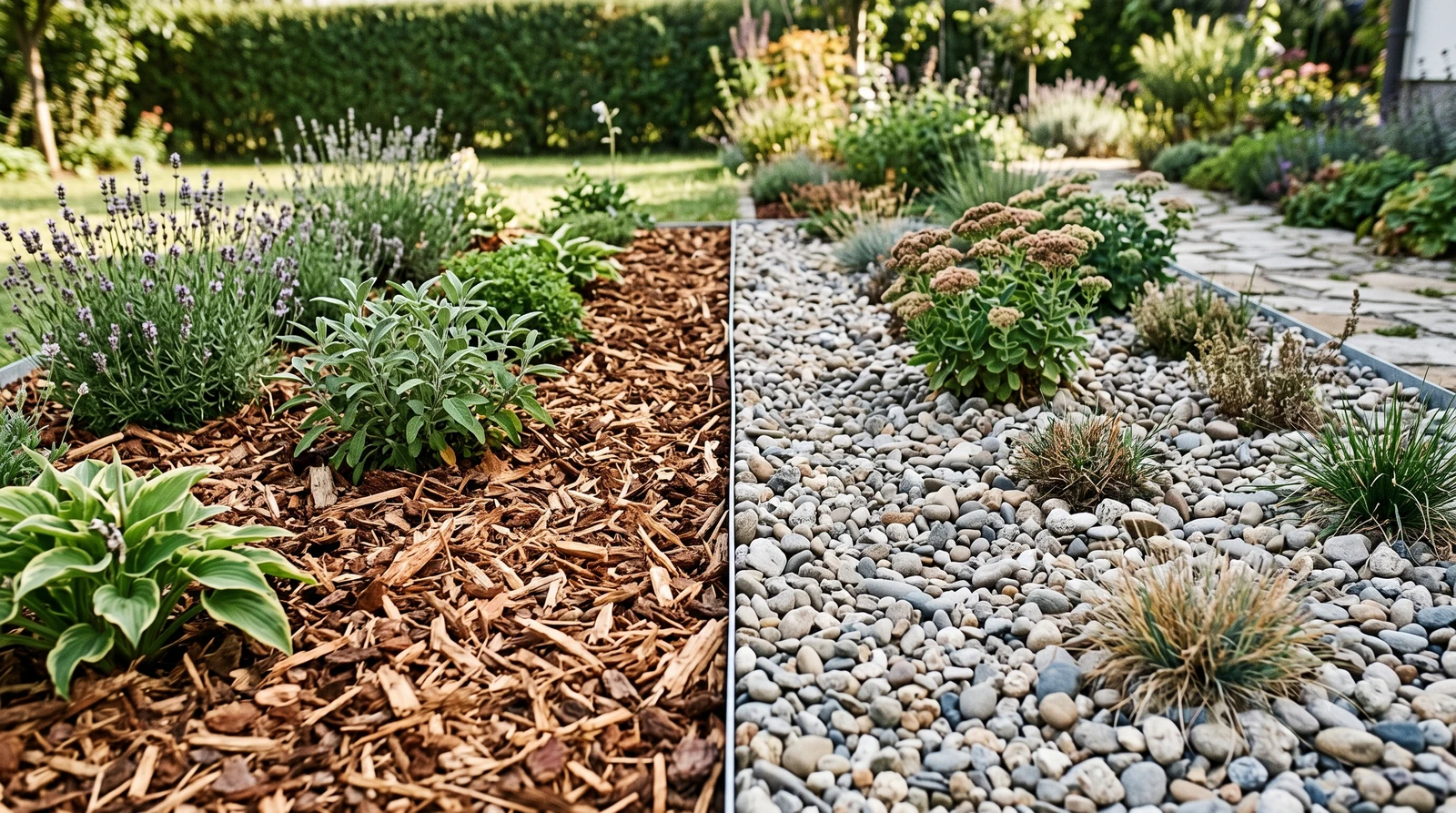
Organic mulch is anything that was once alive and will eventually break down: wood chips and bark are the most common choices for beds and borders, while compost (see what you can compost) and grass clippings work well as a lighter, faster-breaking-down option, especially in vegetable gardens. All of them feed the soil as they decompose, adding organic matter and supporting the biological activity that keeps soil healthy. The tradeoff is built into the definition: because organic mulch breaks down, it needs periodic replacement: typically topping up once a year as the layer thins. Our Mulch Calculator works out exactly how much you need for a given bed, in cubic feet, cubic yards, or bags.
Inorganic Mulch Types
Inorganic mulch doesn’t come from anything living and won’t decompose: landscape rock and gravel are the most common choice, with rubber mulch (typically made from recycled tires) as another inorganic option. Neither feeds the soil or needs replacing the way organic mulch does: a gravel bed laid today looks essentially the same in ten years, once you account for some settling and occasional topping up after erosion or disturbance. The flip side of that durability is that inorganic mulch never improves soil structure over time the way organic matter does. It’s inert by design, which is exactly what makes it useful in the situations covered further below.
Which Retains Moisture and Suppresses Weeds Better?
Organic mulch generally holds soil moisture better and moderates soil temperature more effectively, and that effect actually improves as it breaks down: partially decomposed mulch holds water more like the organic matter it’s becoming. Inorganic mulch suppresses weeds well on its own (a gravel bed with a solid base is genuinely hard for weeds to push through), but it does nothing to build soil health or improve moisture retention the way organic mulch does. If weed suppression is the only goal, either type works reasonably well; if you also want the bed’s soil to keep improving over time, organic mulch is doing a job inorganic mulch structurally can’t.
Which Lasts Longer?
This is where inorganic mulch has a clear, simple advantage: gravel and rubber mulch last for years without needing to be replaced, since there’s no organic material breaking down. Organic mulch, by contrast, typically needs topping up on roughly an annual basis as it decomposes and thins: that’s not a flaw, it’s the same process that’s feeding the soil underneath it. If you’re planning an organic mulch bed and want to know how much to reorder each year rather than guess, the same calculator handles that math for any bed size or shape, and the Pine Straw Calculator does it in bales.
Best Use by Situation
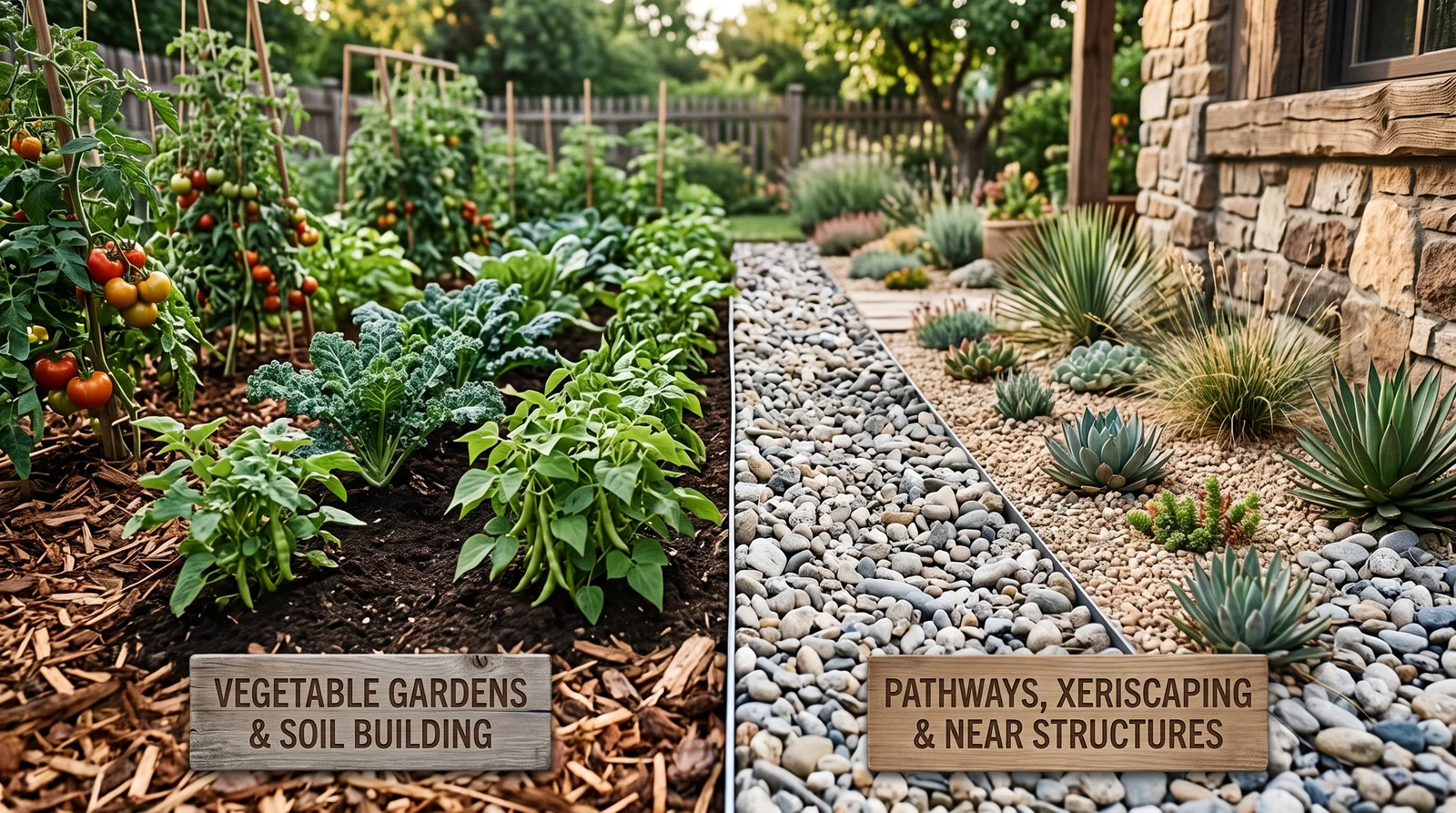
Organic mulch is the better choice for vegetable gardens and planting beds where soil building actually matters: annual vegetables and perennials both benefit from the steady organic matter contribution, and the yearly top-up is a minor cost against real soil improvement. Inorganic mulch is the better fit for pathways, xeriscaping, and areas right up against structures like foundations or walls, where you specifically don’t want organic material holding moisture against wood or masonry, and where the low-maintenance, non-decomposing nature of gravel or rock is exactly what the spot calls for. Matching the mulch type to what the space is actually for, rather than picking one type for the whole yard, is the real decision here.
Free book · 23 pages, PDF
Organic vs. Inorganic Mulch FAQ
What is the difference between mulch and compost?
Mulch is applied on top of soil to cover and protect it, retaining moisture, suppressing weeds, and moderating temperature. Compost is decomposed organic material mixed into soil to improve its structure and fertility. Compost can actually be used as a type of organic mulch, but the two serve different primary purposes.
How often does mulch need to be replaced?
Organic mulch typically needs topping up about once a year as it breaks down and thins. Inorganic mulch like gravel or rubber mulch doesn't need regular replacement at all: occasional topping up after settling or disturbance is usually all that's required.
Which is better around a house, mulch or pebbles?
Pebbles (inorganic mulch) are generally the better choice directly against a foundation, since they don't hold moisture against the structure the way organic mulch can. Organic mulch is better suited to planting beds further from the house where soil building is the priority.
What kind of mulch works best in a vegetable garden?
Organic mulch (straw, shredded leaves, compost, or untreated grass clippings) works best in a vegetable garden, since it breaks down and feeds the soil right where annual crops need it most. Inorganic mulch doesn't contribute anything to soil fertility, which is the main thing a vegetable bed needs season to season.
Should you put plastic under mulch?
Generally, no, plastic sheeting under mulch blocks water and air from reaching the soil and plant roots, which works against what mulch is supposed to do. A landscape fabric is sometimes used under inorganic mulch specifically for extra weed suppression, but solid plastic under any mulch type usually causes more problems than it solves.
Sources & further reading
For more on how we source and review the facts behind every calculator and guide on this site, see our methodology page. And for the full picture on mulch alongside topsoil, garden soil, and compost in a complete planting project, see our complete guide to soil and amendments.
Free book · 23 pages, PDF
The Soil & Amendments Cheat Sheet
Sent