Most people already know what can you compost when it comes to the obvious stuff: fruit and vegetable scraps go in the bin, that part’s settled. The real question is what to do with everything else: bread, eggshells, cardboard, the occasional weed. Here’s the complete list, including a few surprising yeses and the real reasons behind the no’s.
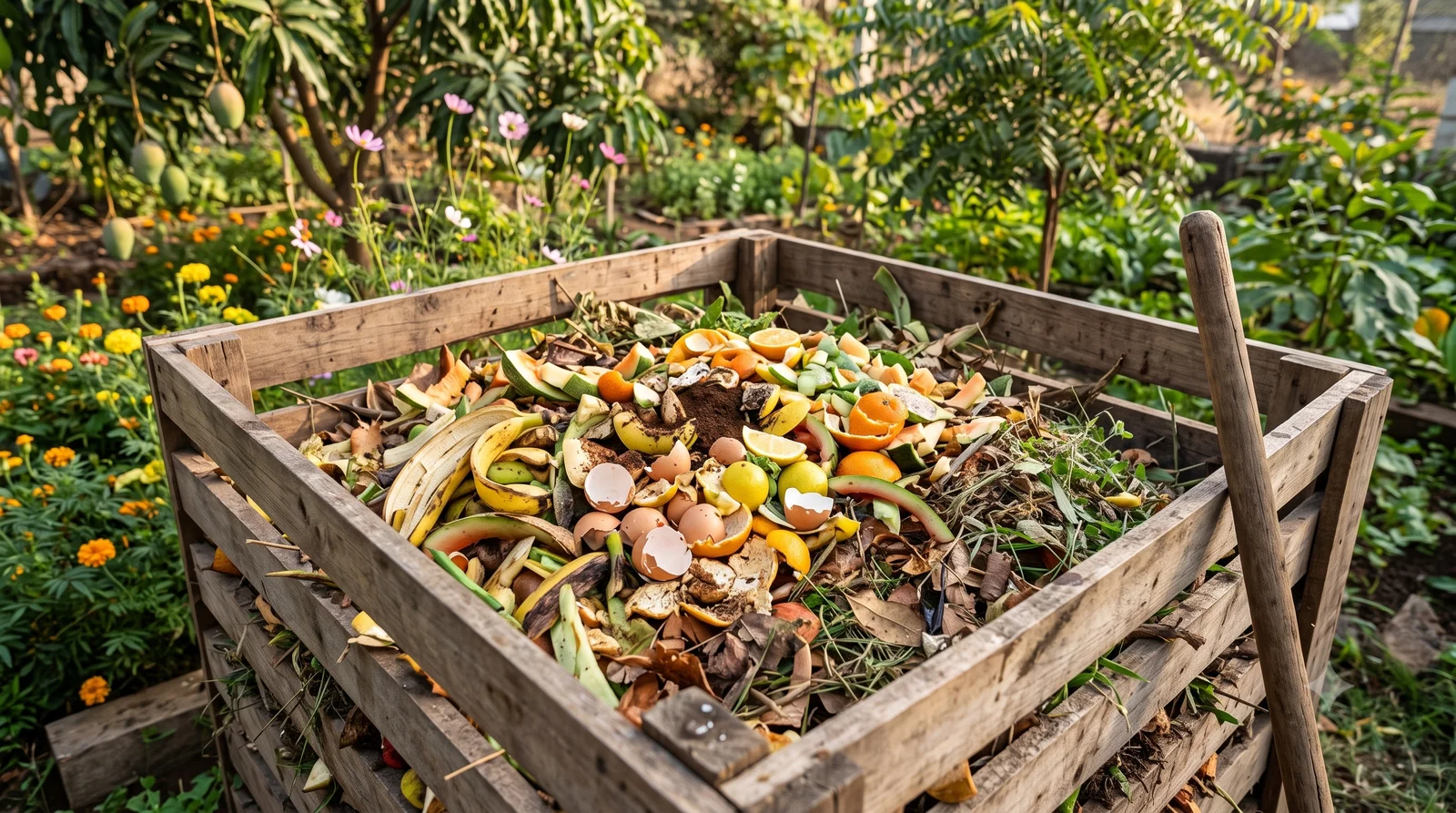
What You Can Compost
If you’ve ever wondered exactly what can you put in compost beyond the obvious scraps, here’s the full list, broken down by category.
Fruit and vegetable scraps. Peels, cores, rinds, and trimmings are the backbone of most home compost piles: they break down quickly and count as “greens” (nitrogen-rich material) in the browns-to-greens balance.
Coffee grounds. Yes, compostable, and worth composting rather than digging in fresh, since a thick layer of fresh grounds can mat down and tie up nitrogen as it breaks down. See our 15 Homemade Fertilizers guide for the full usage detail, including how much is too much.
Eggshells. Compostable, though slow to break down on their own unless crushed or ground first. Our Homemade Fertilizers guide covers the calcium contribution and realistic timeline in more depth.
Yard waste and leaves. Dry leaves are one of the best “browns” (carbon-rich material) you can add, and they’re usually free and abundant in fall. Shred them first if you can: whole leaves mat together and slow down airflow through the pile.
Grass clippings. Fresh clippings are a strong nitrogen source and break down fast, but add them in thin layers so they don’t compact into a slimy mat. If you’re managing the lawn itself rather than just its clippings, our Grass Seed Calculator and Overseeding Calculator handle the seeding side.
Shredded cardboard and uncoated paper. Plain cardboard and paper (no glossy coating, no heavy ink coverage, tape and labels removed) are a solid carbon source. Shredding first helps them break down at a reasonable pace instead of sitting as a soggy sheet.
Plain tea bags. Most tea bags are compostable, but check first: some brands use a synthetic mesh (often nylon or polypropylene) that won’t break down. Loose-leaf tea and paper-only bags are the safe bet; if you’re not sure, tear the bag open and compost just the leaves.
Nutshells. Most nutshells (walnut, pecan, almond) compost fine, just slowly: crushing them speeds things up. Black walnut shells are worth a note of caution since they contain juglone, a compound toxic to some plants, though the compost process breaks it down over time.
Getting the browns-to-greens balance right matters more than any single ingredient on this list. Once the pile has become finished compost, our Compost Calculator works out how much you need for a bed or top-dressing, in cubic feet, bags and weight, so you’re not just eyeballing it.
Can You Compost Bread?
Yes, in moderation. Bread breaks down readily in a compost pile, but two things matter: bury it in the center of the pile rather than leaving it on top, since exposed bread attracts rodents and other pests fast, and don’t add large quantities at once. A big loaf’s worth in one spot can go soggy and moldy in a way that smells before it decomposes evenly, rather than breaking down cleanly the way a scattering of smaller pieces will.
What You Can’t Compost (and Why)
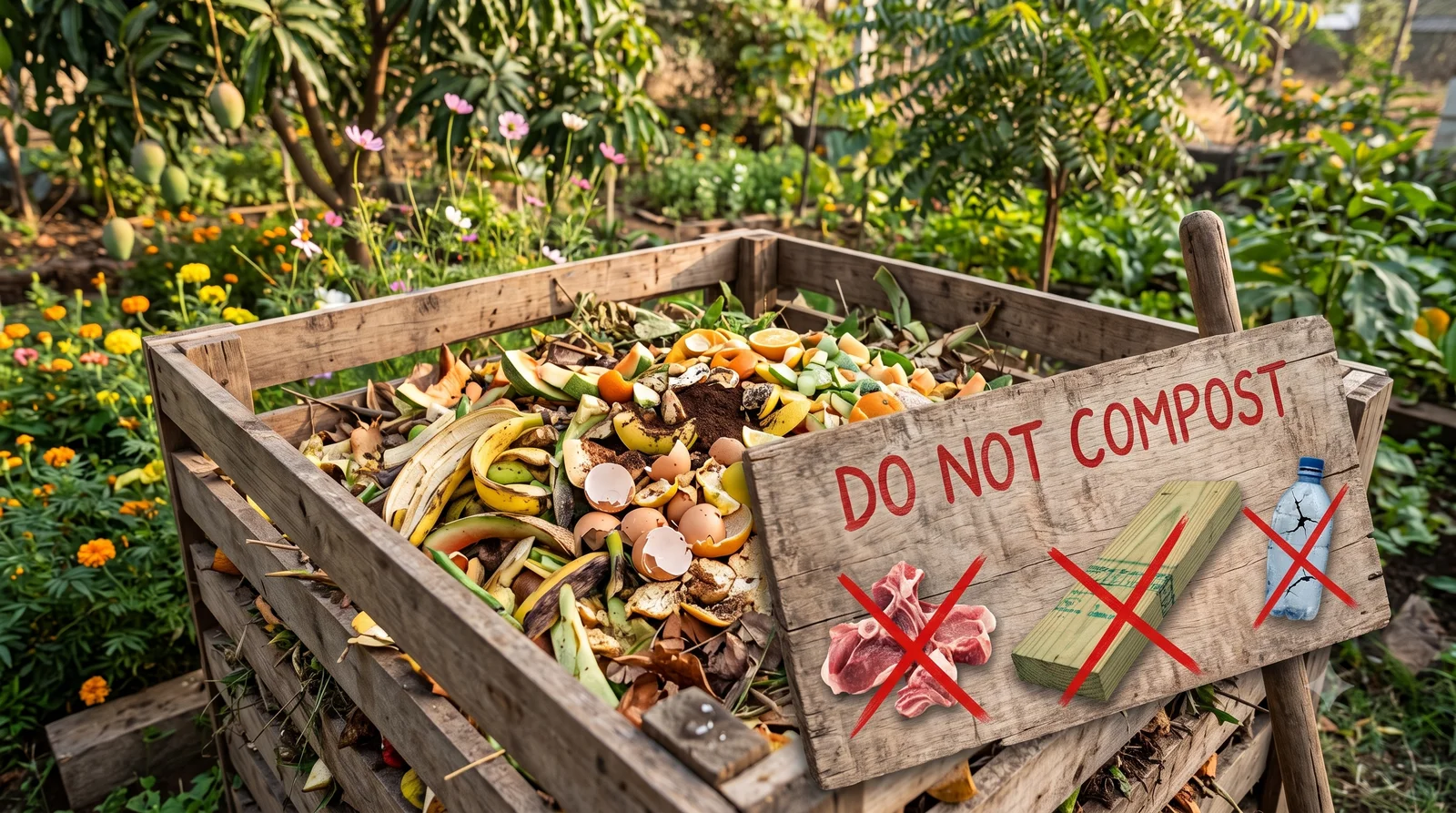
So what can’t you compost? A handful of categories are worth keeping out of a traditional home pile entirely, each for a specific, real reason, not just general caution.
Meat, dairy, and oily foods. These attract rodents and other pests, produce strong odors as they decompose, and carry a higher pathogen risk than a backyard pile’s heat can reliably neutralize. Industrial composting facilities can process them safely because they sustain much higher, more consistent temperatures than a home bin does.
Diseased plants. A home pile usually doesn’t get hot enough to reliably kill plant pathogens, so diseased material can survive the composting process and reinfect your garden when the finished compost goes back into a bed.
Pet waste from carnivorous pets. Dog and cat waste carries a real pathogen risk that’s different from herbivore manure (like aged chicken or cow manure, which composts safely with proper aging): carnivore waste can carry parasites and pathogens that survive typical home composting temperatures.
Synthetic “compostable” packaging. Many products labeled “compostable” are certified for industrial composting facilities specifically, which run hotter and longer than a backyard pile. Dropped into a home bin, most of this material simply won’t break down on any reasonable timeline.
Treated or painted wood. Chemical treatments and paint don’t break down in a home pile the way untreated wood does, and can introduce those chemicals into your finished compost and, eventually, your soil.
Weeds that have already gone to seed. A home compost pile rarely reaches the sustained heat needed to kill weed seeds, so seeded weeds tossed in the bin often just replant themselves wherever you spread the finished compost.
Large branches. Woody branches take far too long to break down whole. Chipping or shredding them first turns them into a usable carbon source; left whole, they’ll still be sitting there next season.
The Exception: Bokashi Composting
There’s one real exception to the meat-and-dairy rule: Bokashi composting. It’s an anaerobic fermentation method, not traditional aerobic composting: scraps are layered in a sealed bucket with bran that’s been inoculated with effective microorganisms, and the mixture ferments (or “pickles”) rather than decomposes in the open-air, oxygen-fed way a regular pile does. Because it’s fermentation instead of decomposition, Bokashi can accept meat, dairy, and oily scraps that would cause problems in a traditional bin. The catch: Bokashi output isn’t finished compost on its own. Once fermented (usually 2 weeks in the sealed bucket), it still needs to be buried in soil or mixed into a regular compost pile to fully break down before it’s usable around plants.
By Bin Type
Tumblers handle fruit and vegetable scraps, coffee grounds, and shredded yard waste well, and their enclosed design keeps pests out, a practical choice if bread or other pest-attracting scraps are part of your routine. Open piles handle larger volumes and bulkier material (leaves, larger yard waste) more easily, but need more attention to layering and moisture since they’re exposed to the weather. Worm bins (vermicomposting) are built for consistent, smaller-volume kitchen scraps: fruit and vegetable trimmings, coffee grounds, crushed eggshells, but don’t handle bread, oily foods, or acidic citrus in quantity as well as the other two methods, since worms are more sensitive to what goes in.
Free book · 23 pages, PDF
Compost FAQ
Can you compost expired or moldy food?
Yes, in most cases. Mold is actually part of the decomposition process, and expired plant-based food (produce, bread, grains) composts the same as fresh scraps. The exception is expired meat, dairy, or oily food, which stays off-limits in a traditional compost pile for the same pest and pathogen reasons fresh versions are.
Can you put biodegradable bags in compost?
Only if they're specifically certified for home composting, not just labeled 'biodegradable' or 'compostable' generically. Most biodegradable bags are certified for industrial composting facilities, which run hotter and longer than a backyard pile, and won't break down on a reasonable timeline at home.
What is the Bokashi method of composting?
Bokashi is an anaerobic fermentation method using bran inoculated with effective microorganisms to ferment kitchen scraps in a sealed bucket, rather than decomposing them with air the way traditional composting does. It can handle meat, dairy, and oily scraps that traditional composting can't, but the fermented output still needs to be buried in soil or added to a regular pile to fully break down.
What is the laziest way to start composting in my backyard?
Pile fruit and vegetable scraps, dry leaves, and shredded cardboard in a corner of the yard with roughly 2-3 parts browns to 1 part greens, and turn it occasionally when you remember. It won't break down as fast as a managed pile, but it requires close to zero maintenance and still produces usable compost eventually.
Sources & further reading
For general composting guidance, see the EPA’s Composting At Home guidance. For the coffee grounds specifics, see Oregon State University Extension’s research on coffee grounds and soil health. For more on how we source and review the facts behind every calculator and guide on this site, see our methodology page. And for the complete picture on compost alongside soil, mulch, and other amendments, see our complete guide to soil and amendments.