How to Use This Calculator
- Choose Rectangle or Cylinder/Pot shape.
- Enter your dimensions (length × width, or diameter).
- Set your fill depth.
- Read your cubic feet, cubic yards, liters, and weight.
How Much Soil Do I Need?
The right amount depends entirely on what you’re filling and how deep. For a rectangular raised bed, it’s length × width × depth. For a round pot or cylindrical container, it’s the base area (π × radius²) times the fill depth. The tricky part is that volume is three-dimensional: one extra inch of depth over a 4×8 bed adds 2.7 cubic feet, roughly an extra bag of soil.
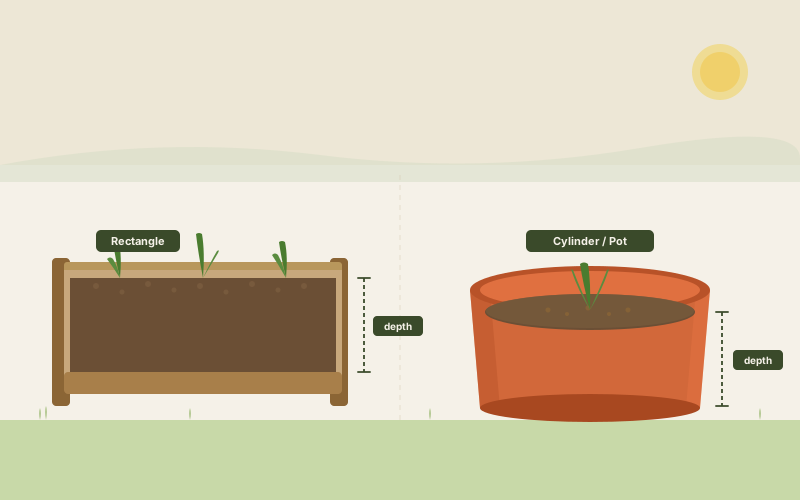
Use this calculator when you’re filling containers (cylindrical pots, fabric grow bags, half-barrels) or when you need liters alongside cubic feet. If you’re only filling standard rectangular raised beds, a dedicated Raised Bed Soil Calculator offers common size presets. If you’re ordering bulk topsoil by the truckload and need tons (the unit suppliers actually quote in), the Topsoil Calculator is the right tool.
Irregular, L-Shaped, or U-Shaped Beds
This calculator handles simple rectangles and cylinders directly, but most L-shaped, U-shaped, or otherwise irregular beds can still be measured with it, just not in a single pass. Break the footprint into 2–3 simple rectangles (an L-shaped bed is almost always just two rectangles that share an edge; a U-shape is usually three). Measure and calculate each section separately using the Rectangle mode above, then add the resulting volumes together for your total. It takes a few extra minutes of measuring, but it’s far more accurate than trying to estimate one odd shape by eye.
Weight varies as much by material as by moisture. Light, aerated potting mix runs 20–25 lbs per cubic foot when dry. Garden soil (topsoil amended with compost and other organic matter) is denser than potting mix but still noticeably lighter than plain topsoil: roughly 1,800–2,200 lbs per cubic yard (about 67–81 lbs per cubic foot). Dense, unamended topsoil runs heavier again, since it’s mostly mineral material with less pore space; see the Topsoil Calculator for that range if that’s what you’re filling with. This calculator’s weight estimate uses ~40 lbs/cu ft as a midpoint tuned toward potting mix. If you’re actually calculating volume for garden soil or topsoil, expect the real weight to run higher than what’s shown above. Useful either way for planning logistics, not for ordering by the ton. Need to convert your own known weight or dimensions into cubic yards directly? Our cubic yard calculator soil conversion tool is built for exactly that.
Worked Example
Here are two side-by-side examples (one rectangular bed and one round pot) so you can see exactly how the math differs.
Example 1: Rectangular raised bed (4 × 8 ft, 10″ deep)
- Area: 4 ft × 8 ft = 32 square feet.
- Convert depth to feet: 10 inches ÷ 12 = 0.833 ft.
- Cubic feet: 32 × 0.833 = 26.7 cu ft.
- Cubic yards: 26.7 ÷ 27 = 0.99 cu yd (round to 1 yard for bulk ordering).
- Liters: 26.7 × 28.32 = 755 L.
- Est. weight: 26.7 × 40 lbs ≈ 1,067 lbs (this uses the calculator’s potting-mix-weighted estimate; garden soil or topsoil filling the same bed would weigh noticeably more; see the note above).
Example 2: Round pot (12″ diameter, 8″ fill depth)
- Radius in feet: 12″ ÷ 2 = 6″ = 0.5 ft.
- Area: π × 0.5² = 0.785 sq ft.
- Convert depth to feet: 8 inches ÷ 12 = 0.667 ft.
- Cubic feet: 0.785 × 0.667 = 0.52 cu ft.
- Liters: 0.52 × 28.32 = 14.8 L.
- Est. weight: 0.52 × 40 lbs ≈ 21 lbs of potting mix.
The pot example shows why liters matter: “0.52 cubic feet” is hard to visualize at a store, but a 16–20 L bag of potting mix is exactly what you’re looking for. The calculator outputs all three so you can match whatever units your supplier uses.
Common Mistakes
- Confusing volume with area. Square feet tells you how much ground you cover; cubic feet tells you how much material you need. You cannot order soil in square feet. You always need to include depth. See FAQ #4 for the conversion.
- Not accounting for settling. Loose potting mix and garden soil can settle 10–15% after the first watering. Round your order up, not down, or you’ll be topping up within a week. The calculator footer reminds you to add 10–15%.
- Using the wrong shape. A round pot calculated as a rectangle will give you 27% too much soil (a circle inscribed in a square covers π/4 ≈ 78.5% of the area, meaning the rectangle overestimates by ≈ 27%). For round pots and fabric grow bags, always use the Cylinder toggle.
- Forgetting the drainage layer. If you put 1–2 inches of gravel, perlite, or landscape fabric at the bottom of a pot, that reduces the soil volume needed. Subtract that layer from your fill depth before calculating.
- Unit conversion errors. The most common: entering depth in feet instead of inches (or cm instead of m in metric mode). A 6-inch depth is 0.5 ft, so typing “6” in a feet field gives you a 6-foot-deep bed, 12× too much soil.
Soil Volume Calculator FAQ
How much soil do I need for a pot or container?
Measure the pot’s diameter, halve it for the radius, and calculate π × radius² × fill depth to get volume. A 12-inch pot filled 8 inches deep needs about 0.52 cubic feet (14.8 liters). Use the Cylinder toggle above and enter the diameter. The calculator handles the rest. Always subtract 1–2 inches from the pot’s measured depth for drainage material and watering headspace; fill depth is less than the pot’s total height. For square or rectangular planters, switch to Rectangle and enter the inner dimensions.
How many cubic feet are in a yard of soil?
There are exactly 27 cubic feet in one cubic yard. A cubic yard is a 3-foot cube: 3 × 3 × 3 = 27. Bulk soil delivered by truck is sold by the cubic yard; bags are sold by the cubic foot. A standard 2-cubic-foot bag is 1/13.5th of a cubic yard. If you need 3 or more cubic yards, bulk delivery almost always costs less than buying bags, even after accounting for delivery fees.
How much does a cubic foot of soil weigh?
It varies a lot by material and moisture. Dry potting mix: 20–25 lbs per cubic foot. Garden soil (topsoil amended with compost and other organic matter) is lighter than most people assume: roughly 1,800–2,200 lbs per cubic yard, or about 67–81 lbs per cubic foot. Dense, unamended topsoil runs heavier than garden soil, since it’s mostly mineral material with less organic matter and pore space. This calculator estimates ~40 lbs/cu ft as a midpoint, tuned toward potting mix and lighter garden-soil blends. It’s useful for planning, not for ordering by weight. If you’re ordering topsoil by the ton, use the Topsoil Calculator, which uses ~88.9 lbs/cu ft (1.2 tons per cubic yard) as its baseline estimate, with a real range up to ~1.7 tons/cu yd if wet or compacted.
Can I convert cubic feet to square feet?
Not directly. Cubic feet measure volume (three dimensions) and square feet measure area (two dimensions). To convert, you need depth: square feet = cubic feet ÷ depth in feet. Example: 25 cu ft with 6-inch (0.5 ft) depth covers 50 square feet. This is the most common source of confusion when ordering soil. If a supplier quotes in cubic yards and you want to know the coverage, divide by depth in feet. The calculator handles this in reverse: enter your area and depth to get volume.
How do I calculate soil volume for an irregular-shaped area?
Break the area into rectangles or cylinders, calculate each section separately, then add the volumes. For a curved or freeform bed, divide it into rough rectangles on graph paper, calculate each, sum them, and add 10–15% for irregular edges. For a very irregular shape, measure the longest length and widest width as a bounding rectangle, calculate that volume, then subtract 20–30% for the portions outside the actual bed. This “overcount then subtract” approach usually gets you within a bag or two. Running each section through a volume calculator for soil beats trying to eyeball the whole bed at once.
Need mulch too?
If you’re filling a bed or container with soil and topping it with mulch in the same project, think of this as a mulch soil calculator job in two passes: use this page for the soil volume, then switch to our Mulch Calculator for the top layer. Same footprint, different material, and a much shallower depth: typically 2–3 inches of mulch on top of whatever soil depth you just calculated.
Sources & further reading
Depth recommendations, weight ranges, and settling percentages in this article draw on general guidance from university cooperative extension services and the USDA Natural Resources Conservation Service. For our approach to formula sourcing and peer review, see our methodology page. For region-specific guidance on soil type, drainage, and amendments, search “soil volume” on Extension.org. For more on choosing between topsoil, garden soil, and compost in the first place, see our complete guide to soil and amendments.