How to Use This Calculator
- Pick a bed size preset (4×4, 4×8, 4×2) or enter custom dimensions.
- Set your fill depth in inches.
- Choose your bag size (1.5 or 2 cu ft).
- Read your cubic feet, cubic yards, bag count, and weight.
How Much Soil Do I Need for a Raised Bed?
The answer depends on three numbers: your bed’s length, width, and how deep you want to fill it. Most raised beds do best at 8–12 inches of soil depth. That gives vegetable roots room to spread without hitting compacted native soil underneath. Shallow beds (under 6 inches) restrict root growth for most crops; go at least 10–12 inches for tomatoes, peppers, and root vegetables.
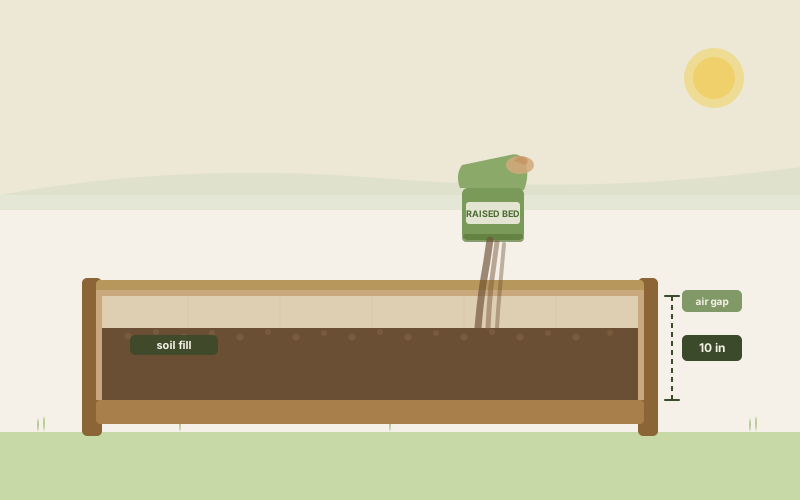
Once you have the volume in cubic feet, divide by 27 to get cubic yards, the unit bulk suppliers quote in. For bagged soil, divide by the bag size (typically 1.5 or 2 cubic feet) and round up to the nearest whole bag.
Don’t fill with straight topsoil or garden soil pulled from the ground. It compacts in a raised bed, drains poorly, and stunts plant growth. The standard raised bed soil mix ratio is 60% topsoil, 30% compost, and 10% perlite or coarse sand. This blend holds moisture, drains excess water, and provides the organic matter vegetables need. If you’re buying a pre-mixed “raised bed mix” in bags, it usually approximates this ratio, so check the label. Use our Compost Calculator to figure out exactly how much you’ll need.
This 60/30/10 split isn’t the only reputable formula out there, and we don’t present it as the one correct answer. A 50/30/20 blend (soil, compost, and a larger 20% aeration component like perlite or coarse sand) is a common alternative for heavier native soils that need more drainage help. Square Foot Gardening’s well-known “Mel’s Mix” skips topsoil entirely in favor of equal thirds compost, peat moss or coco coir, and vermiculite. Which one works best depends on your goals. 60/30/10 is a solid, economical default for most in-ground-adjacent raised beds, but if you’re optimizing for maximum moisture retention or working from a true no-topsoil system, one of these alternatives may suit you better.
For large beds (more than 2–3 cubic yards), get a bulk quote from a local landscape supplier. Bagged soil costs 3–5x more per cubic foot than bulk once you factor in delivery. The calculator above shows your total in cubic yards so you can compare both options easily.
Worked Example
Let’s walk through a 4×8 foot raised bed filled to 10 inches deep, a very common setup.
- Area: 4 ft × 8 ft = 32 square feet.
- Convert depth to feet: 10 inches ÷ 12 = 0.833 feet.
- Cubic feet: 32 sq ft × 0.833 ft = 26.7 cubic feet of soil.
- Cubic yards: 26.7 ÷ 27 = ~0.99 cubic yards (round to 1 yard for a bulk order).
- Bags (1.5 cu ft): 26.7 ÷ 1.5 = 17.8 → 18 bags.
- Bags (2 cu ft): 26.7 ÷ 2 = 13.35 → 14 bags.
- Estimated weight: 26.7 cu ft × 53.3 lbs/cu ft ≈ ~1,423 lbs.
So for a 4×8 bed at 10 inches, you need roughly 26.7 cubic feet, 1 cubic yard, or about 18 standard bags of 1.5 cu ft soil. Add 10–15% extra to account for settling, since soil always compresses after the first watering. For the full breakdown at every common depth (not just 10 inches), plus how many plants actually fit once it's filled, see our complete guide to soil and planting for a 4x8 raised bed.
Common Mistakes
- Not accounting for settling. Loose bagged soil can settle 10–20% after the first good rain. Fill slightly past your target depth and let it settle before planting, or plan to top off in spring.
- Using straight garden soil. Native soil pulled from your yard compacts in a raised bed into a dense, poorly draining block. Always use a proper raised bed mix or at minimum blend in compost and perlite.
- Ignoring the compost ratio. Under-composted soil runs out of nutrients fast. At least 25–30% by volume should be mature compost. More is fine; less means more fertilizing all season.
- Underestimating depth. A 4-inch-deep bed is barely a planter box. For productive vegetable growing, shoot for 10–12 inches minimum. Shallower beds heat up faster, dry out quicker, and stunt deep-rooted crops.
- Filling a bed to its full height when it doesn’t need to be. If your bed sits directly on native soil or grass (not on a patio, deck, or other hard surface), roots aren’t stopped by the bottom of the frame. They can grow on past it into the ground below. Match fill depth to what you’re actually growing: shallow crops like lettuce, radishes, and most herbs don’t need a bed filled to the brim, even if the frame itself is 12 inches tall. This is one of the easiest ways to cut your soil cost on a large bed.
- Buying bagged past the bulk threshold. Once your order exceeds about 2 cubic yards (54 bags), bulk delivery from a landscape yard almost always beats bagged. Get a quote before you load up a cart at the garden center.
Raised Bed Soil Calculator FAQ
How much soil do I need to fill a raised bed?
Multiply length × width × depth (in feet) to get cubic feet. A standard 4×8 bed at 10 inches deep needs about 26.7 cubic feet, roughly 1 cubic yard. Most raised beds need 8–12 inches of soil to give roots room to grow without hitting native soil.
How many bags of soil do I need for a 4×4 raised bed?
A 4×4 bed filled 10 inches deep needs about 13.3 cubic feet. That is roughly 9 bags of 1.5 cu ft soil or 7 bags of 2 cu ft soil. The calculator above auto-fills the 4×4 preset and shows both bag counts live as you adjust the depth.
How many cubic feet is 40 lbs of soil?
A standard 40 lb bag of potting or garden soil holds about 0.75 cubic feet. That means 1 cubic foot weighs roughly 53 lbs, and 1 cubic yard (27 cu ft) weighs about 1,440 lbs. These are averages. Actual weight varies by moisture content and soil mix.
How much compost should I mix into raised bed soil?
The classic raised bed mix is 60% topsoil, 30% compost, and 10% perlite or coarse sand for drainage. At minimum, work in 25–30% compost so the bed retains moisture and feeds plants without compacting. Straight garden soil alone compacts too hard for raised beds.
Can I use potting mix instead of topsoil in a raised bed?
Not on its own. Potting mix costs several times more per cubic foot than a topsoil-based blend, and its light, fast-draining structure dries out faster than most raised bed crops want. It works better as one ingredient in a blend than as a full replacement: mixing some potting mix into a topsoil-and-compost base can improve aeration in heavy soil, but filling an entire bed with it gets expensive fast and needs more frequent watering to compensate for the drainage.
How many plants can I fit in my raised bed?
It depends on the crop. In a 4×8 bed using square-foot spacing: 1 tomato or pepper per square foot, 4 lettuce heads, 9 spinach plants, or 16 radishes. Use our Plant Spacing Calculator for a precise grid count with any spacing and bed size.
How much soil do I need for a Vego Garden raised bed?
It depends on which specific Vego Garden kit and footprint you have. They sell several series (Classic and Modern, in multiple heights, plus elevated beds) built from modular panels in many different length-and-width configurations, so there’s no single number that fits all of them. Vego’s most common bed is 17 inches tall, marketed specifically for the extra soil depth that gives roots room to grow. Once you know your bed’s actual inside length, width, and how deep you’re filling it (measure the interior, not the outer frame, since wall thickness eats a little of the footprint), enter those into the calculator above to get an exact cubic feet, cubic yards, and bag count. It works as a Vego soil calculator for any of their bed sizes, not just the standard presets here.
Sources & further reading
Soil depth and mix ratio guidance in this article draws on general recommendations from university cooperative extension services and widely published raised bed gardening resources. For more on how we build and verify the formulas behind every calculator on this site, see our methodology page. For the bigger picture on choosing between topsoil, garden soil, and compost, see our complete guide to soil and amendments.