Part of our Plant Problem Diagnosis series
Why are my plant leaves turning yellow? It’s one of the most-searched questions in gardening, and the honest answer is that yellowing plant leaves can mean a dozen different causes that look nearly identical at first glance: nutrient deficiencies, overwatering, natural aging, and more. The trick is that where the yellowing shows up on the plant, and how it’s distributed across each leaf, narrows it down fast: match the pattern below, then use our fertilizer and nutrient calculators to act on it once you know the cause. This guide covers houseplants, vegetables, and landscape plants generally; if you’re specifically troubleshooting tomatoes, see the tomato-specific version instead, since tomatoes have a couple of extra causes (early blight, septoria) worth ruling out first. And if your plant is wilting as well as yellowing, see our guide to diagnosing why a plant is wilting for that side of it.
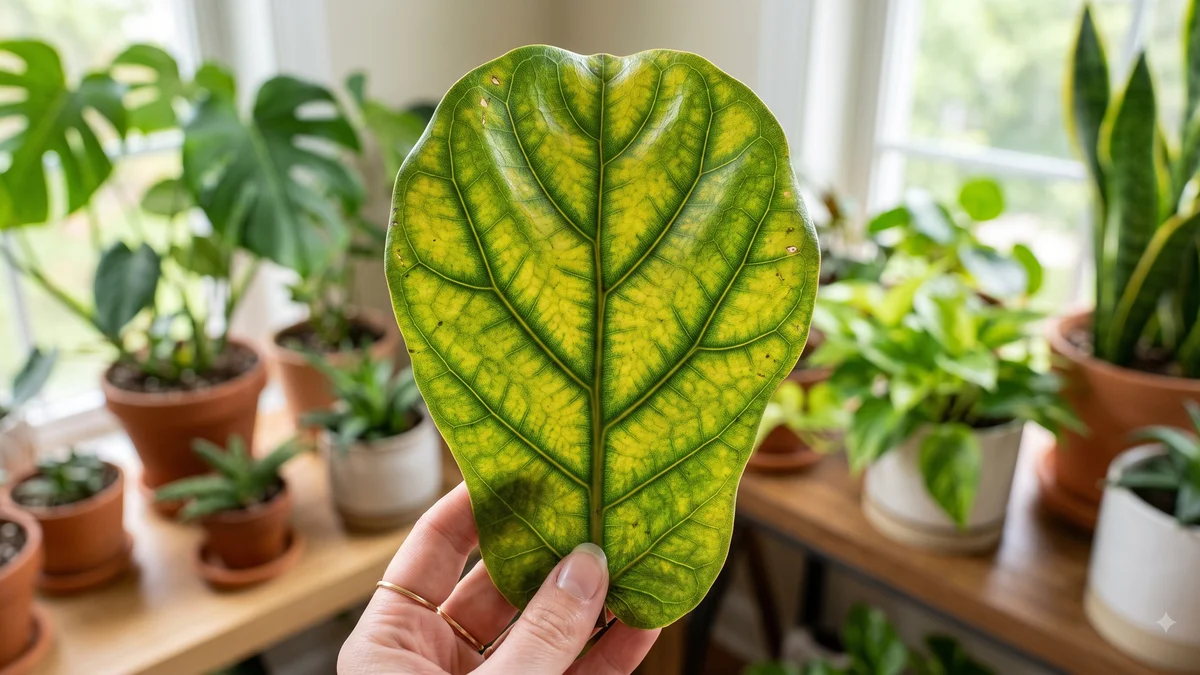
Quick Answer: Why Are My Plant Leaves Turning Yellow?
Understanding why leaves turn yellow starts with two questions, and answering them is the fastest path to a real answer, faster than scrolling through photos hoping one looks familiar.
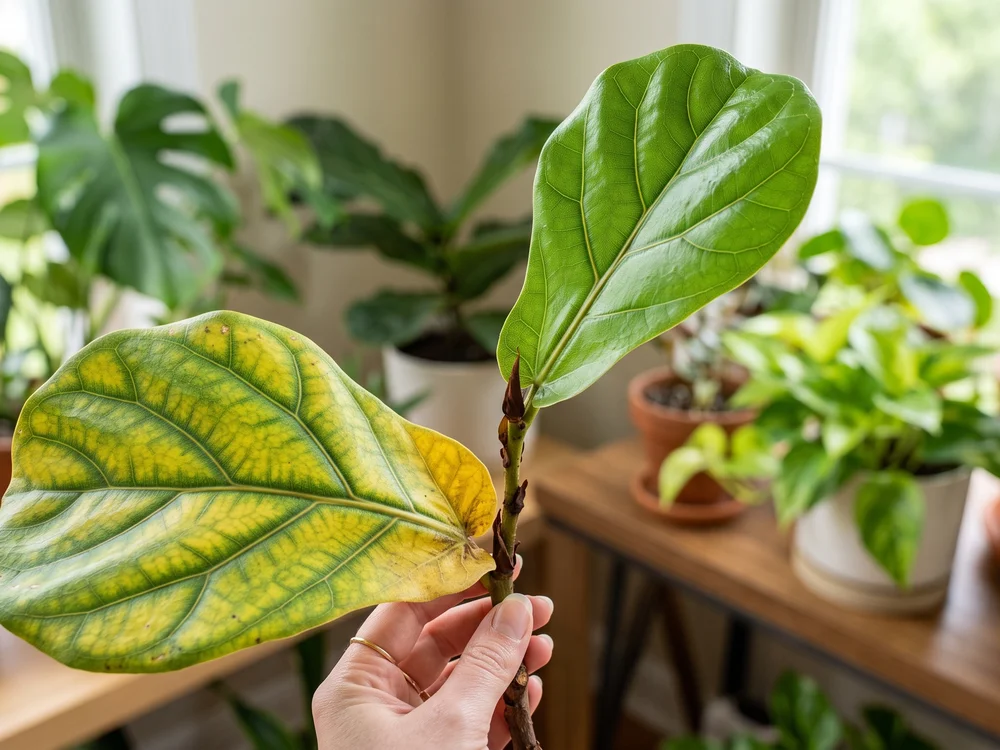
Old Leaves Yellowing First: Mobile Nutrient Deficiencies
Nitrogen, magnesium, and potassium are all mobile within the plant: when supply runs short, the plant pulls these nutrients out of older leaves and relocates them to new growth, sacrificing the old leaf to keep the growing tip fed. That’s why deficiency in any of these three shows up on the oldest leaves first, per Cornell University’s Cooperative Extension.
Nitrogen Deficiency
The most common cause of plant leaves turning yellow. Yellowing of leaves is due to deficiency of nitrogen more often than any other single nutrient problem: uniform yellowing (the whole leaf, veins included) starting on the lowest, oldest leaves and working upward as it worsens. Per the University of Maryland Extension, affected leaves are also smaller than normal and the plant looks generally pale and slow. The fix is a balanced or nitrogen-heavy feed timed to the plant’s active growing season. Our NPK Calculator turns that into an actual application rate instead of a guess, or browse all of our fertilizer and nutrient calculators if you’re not sure which one you need.
Magnesium Deficiency
Interveinal yellowing specifically on older leaves: the veins stay green while the tissue between them yellows, and per the University of Maryland Extension it can progress to reddish-purple blotches and browning at the leaf margins. Common in tomatoes (Solanum lycopersicum) and roses (Rosa spp.), both heavy feeders in soil that’s often been depleted of magnesium over a season. Epsom salt (magnesium sulfate) is the standard fix, dissolved in water and applied to the soil.
Potassium Deficiency
Yellowing that shows up at the leaf margins and tips first on older leaves, often followed by browning or scorching along the same edges as it progresses. Per the University of Maryland Extension, leaves may also crinkle or roll upward. A potassium-rich fertilizer corrects it; a soil test confirms it’s actually potassium and not one of the other two before you buy anything.
New Leaves Yellowing First: Immobile Nutrient Deficiencies
Iron, manganese, calcium, and sulfur are the opposite case: they’re largely immobile once the plant has used them, so it can’t strip them out of old leaves to feed new ones. Deficiency in any of these shows up on the newest growth first instead, per Cornell’s Cooperative Extension, often the clearest single tell that separates this group from the mobile nutrients above.
Iron Chlorosis
Interveinal yellowing on new growth specifically, with the veins staying visibly green. Per Illinois Extension, this is the classic presentation of iron chlorosis, and it’s almost always a soil pH problem rather than an actual shortage of iron in the ground. Iron becomes chemically locked up and unavailable to roots once soil pH climbs much above 6.5-7.0, even when there’s plenty physically present in the soil. See our guide to reading your soil pH number before reaching for an iron supplement: correcting the pH is usually the real fix, not just adding more iron on top of soil that will lock it up too.
Manganese Deficiency
A similar interveinal pattern on new growth, less common than iron chlorosis but easy to confuse with it. Per the University of Maryland Extension, manganese-deficient leaves tend to show darker green banding right along the veins rather than the crisp green-vein-on-yellow contrast of iron. A soil test is the reliable way to tell them apart before treating.
Calcium and Sulfur Deficiency
Both are genuinely rare in home gardens with reasonable soil, and both are also immobile, showing on new growth: calcium deficiency as small, distorted new leaves with dead tips (blossom end rot on tomatoes and peppers (Capsicum annuum) is the same underlying mechanism, just in the fruit instead of the leaf); sulfur deficiency as a pale, uniform yellowing on new growth that can look like nitrogen deficiency until you notice it’s hitting the top of the plant instead of the bottom.
Not a Nutrient Problem: Other Causes of Yellow Leaves
Do Yellow Leaves Mean Too Much Water?
Often, yes. Per the Royal Horticultural Society, overwatered plants typically show old and new leaves yellowing at the same time (not the clean old-leaf/new-leaf split of a nutrient deficiency), plus soft or mushy stems, and roots that feel waterlogged rather than firm. Saturated soil pushes oxygen away from the root zone, and roots that can’t get oxygen struggle to take up nutrients even when the soil has plenty, which is why overwatering can produce yellowing that looks confusingly like a deficiency. The fix is letting the soil dry out between waterings and improving drainage; our Soil Type Calculator can help confirm whether heavy, slow-draining soil is working against you, and it’s worth taking a moment to check your watering schedule against the plant’s actual needs rather than a fixed routine. And if your plant is wilting as well as yellowing, our dedicated wilting diagnostic guide covers that overlap in more depth.
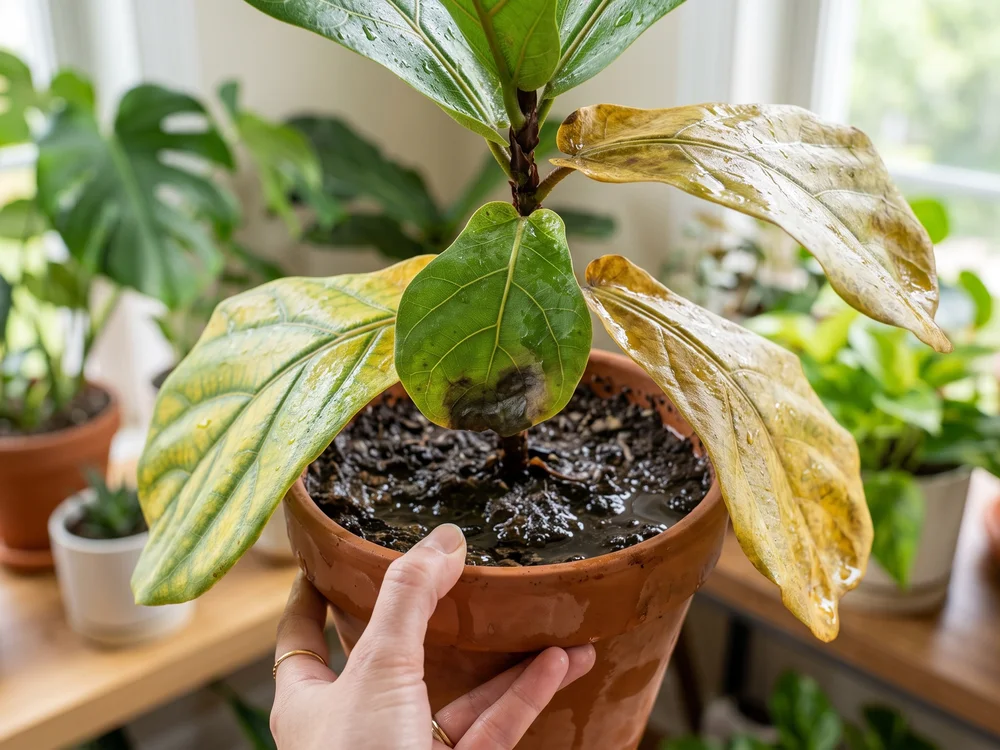
Underwatering
The contrast case: yellowing paired with leaves that feel dry, crispy, or thin rather than soft, and soil that’s pulled away from the pot edge or cracked at the surface. Consistent, deep watering on a real schedule fixes it faster than a single heavy soak. Our Drip Irrigation Calculator works out a consistent run time for an in-ground bed.
Natural Aging
A few of the lowest, oldest leaves yellowing and dropping occasionally, with the rest of the plant green and vigorous, is completely normal. Plants shed leaves that have already done their job to redirect energy toward new growth. This is not a problem to fix. It’s worth ruling out first before assuming something’s actually wrong. Or if it’s progressed to browning rather than just yellowing, see our guide to brown leaf tips for that side of it.
Transplant or Root Shock
Yellowing shortly after a move (repotting, transplanting outdoors, or a big environmental change) is usually stress, not disease or deficiency. Roots damaged or disturbed during the move take time to recover function. Most plants bounce back within a week or two with consistent (not excessive) watering and no fertilizer until new growth resumes.
Pest or Disease
Sap-sucking pests (spider mites, aphids, scale) and fungal or viral diseases can both cause yellowing, usually alongside other tells: stippling, webbing, sticky residue, spots, or curling that a pure nutrient or watering issue won’t produce. If the yellowing comes with visible insects, holes, or leaf spots rather than a clean pattern, treat it as a pest or disease question rather than a feeding or watering one. We’ll cover specific pest and disease diagnosis in future guides. If you’re also seeing a white, powdery coating on the leaves, see our guide to powdery mildew. That’s a common cause of yellowing that isn’t nutrient-related.
Does It Matter If It’s an Indoor or Outdoor Plant?
Outdoor plant leaves turning yellow and indoor plant leaves turning yellow usually trace back to the same underlying causes above, but the odds shift depending on where the plant lives.
Indoor Plants
Overwatering is the single most common cause indoors, usually made worse by a pot with no drainage hole or a saucer that lets the roots sit in standing water. Low light can also mimic a nutrient deficiency: a plant that isn’t getting enough light to use the nutrients it has will yellow and stretch even on a normal feeding schedule. Dry, heated indoor air in winter adds a third variable, stressing plants that would otherwise be fine.
Outdoor Plants
Outdoor plant leaves turning yellow more often trace back to soil and weather: heavy rain can leach nitrogen and other mobile nutrients out of the root zone within days, soil pH can swing enough after a season of amendments to lock up iron or manganese, and a sudden cold snap can trigger yellowing that looks like a deficiency but is really just cold stress.
Quick Diagnostic Table
How to cure yellow leaves on plants comes down to matching the fix to the exact cause, not just treating the color. Here’s a scannable summary of everything above: match your symptom pattern to a likely cause and fix.
| Symptom pattern | Likely cause | Fix |
|---|---|---|
| Whole leaf uniform yellow, oldest leaves first | Nitrogen deficiency | Balanced or N-heavy feed |
| Yellow between veins, older leaves, edges may brown | Magnesium deficiency | Epsom salt (magnesium sulfate) |
| Yellow/brown at leaf edges and tips, older leaves | Potassium deficiency | Potassium-rich fertilizer |
| Yellow between veins, new growth, veins stay green | Iron chlorosis (usually a pH issue) | Correct soil pH; chelated iron |
| Similar to iron, dark veins, new growth | Manganese deficiency | Soil test before treating |
| Old and new leaves yellow together, soft stems, wet soil | Overwatering / root stress | Let soil dry; improve drainage |
| Yellow plus crispy, dry leaves | Underwatering | Consistent, deep watering |
| A few bottom leaves only, rest of plant healthy | Natural aging | Nothing needed |
| Whole plant yellows shortly after a move | Transplant/root shock | Time, steady watering, no fertilizer yet |
Free book · 23 pages, PDF
Yellow Plant Leaves FAQ
What do yellow leaves on plants mean?
It depends entirely on the pattern. Yellow leaves are the plant's way of showing that something (a nutrient, water, or root function) isn't working normally, but the specific cause comes down to which leaves are affected (old vs. new growth) and whether the whole leaf is yellow or just the tissue between the veins. See the Quick Answer section above for the fastest way to narrow it down.
Why do leaves turn yellow on plants?
Leaves turn yellow when they stop producing enough chlorophyll, the green pigment, usually because a nutrient is running short, the roots are stressed by too much or too little water, or the leaf is simply old and being shed on purpose. Which of those it is comes down to the yellowing pattern. See the Quick Answer section above.
Do yellow leaves mean too much water?
Often, yes, especially if it's old and new leaves yellowing together, paired with soft stems or soil that stays wet. Waterlogged soil starves roots of oxygen, which then struggle to take up nutrients even if the soil has plenty, producing yellowing that can look like a deficiency. Letting soil dry between waterings and improving drainage usually resolves it within a couple of weeks.
Can yellow leaves turn green again?
Individual yellow leaves generally don't turn green again. The chlorophyll loss is usually permanent for that leaf. But the plant as a whole recovers once the underlying cause is fixed: new growth comes in green and healthy, and existing yellow leaves are usually best removed rather than left in place.
Is it normal for a few leaves to turn yellow and drop occasionally?
Yes, if it's limited to the lowest, oldest leaves and the rest of the plant looks healthy and vigorous, this is normal aging (senescence), not a problem. Plants continuously shed older leaves that have already done their job as they put energy into new growth. Only worry if the yellowing spreads to more of the plant or shows an interveinal pattern.
Sources & further reading
The mobile-vs-immobile nutrient framework behind this guide’s structure comes from Cornell University Cooperative Extension’s guide to diagnosing nutrient deficiencies from leaf symptoms. Individual nutrient symptoms and the Epsom salt fix for magnesium come from the University of Maryland Extension. The iron chlorosis and soil pH mechanism comes from Illinois Extension’s Chlorosis guide, corroborated by the University of Missouri Integrated Pest Management program. Overwatering symptoms come from the Royal Horticultural Society’s guidance on waterlogging and flooding. For more on our sourcing approach, and for the tools that turn a diagnosis into an actual plan, see our Fertilizer & Nutrients cluster for feeding calculators, or our Watering & Irrigation cluster if the answer points to your watering routine instead.