The short answer on how to look after a calla lily is to give it bright light, keep the soil evenly moist but never soggy, feed it roughly monthly while it grows, and let it rest dry after it flowers. Calla lilies grow from rhizomes, so winter care matters as much as summer care, and whether yours can stay outside depends on your USDA hardiness zone. Extension sources differ on the details, mostly on planting depth and how wet to keep the soil, so this guide gives the range each one reports.
Calla Lily Quick Facts
| What | Answer | Source |
|---|---|---|
| Outdoor hardiness | Zones 8 to 10; some sources allow zone 7 with protection | Clemson, Missouri Botanical Garden, NC State |
| Planting depth | 2 to 6 inches, depending on the source | NC State, Clemson, Missouri Botanical Garden, University of Minnesota |
| Spacing | 12 inches to 2 feet apart | Missouri Botanical Garden, Clemson, University of Minnesota |
| Light | Full sun to part shade; afternoon shade in hot areas | NC State, Clemson, University of Minnesota |
| Water | Moist but not wet in a pot | Ask Extension, Clemson |
| Rest period | Dry, about 50°F to 60°F | Iowa State, NC State, Ask Extension |
| Time to bloom | About 60 to 90 days after planting | Clemson |
| Pets | Toxic to dogs and cats | ASPCA |
What a Calla Lily Is (and Is Not)
Despite the name, a calla lily is not a true lily. The University of Minnesota Extension says calla lilies are Zantedeschia species that are not true lilies and that they are related to jack-in-the-pulpit and Caladium. Missouri Botanical Garden agrees, placing them in the arum family, and describes the plant as stemless, with flowers and leaves rising directly from the rhizome. NC State Extension lists the genus in the family Araceae.
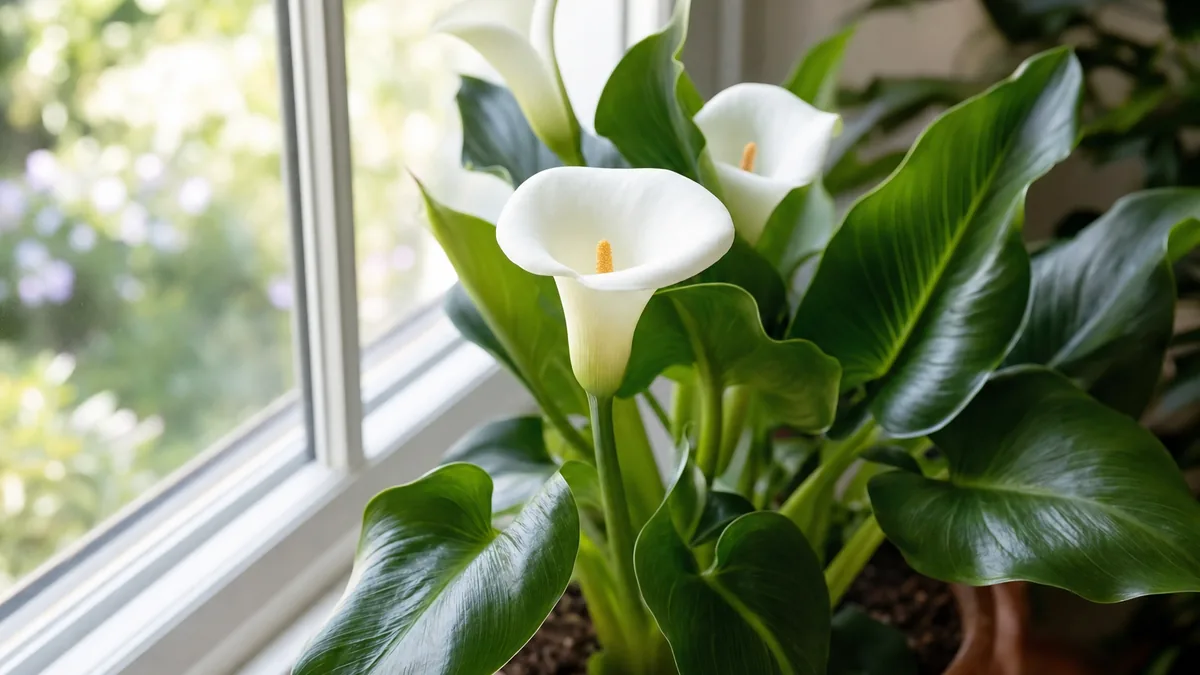
The showy part is not a petal. The University of Minnesota says the colored funnel is a modified leaf called a spathe, while the true flowers are tiny and sit on the central spike, the spadix. It also notes spathes come in white, yellow, peach, orange, red, pink, purple or bicolored forms.
Calla lilies are also a different plant from the peace lily sold as a houseplant. An Ask Extension answer (April 2024) treated them separately: the calla lily needs a few hours of direct sun and a dormant rest, while the peace lily prefers bright light but not full sun. Do not apply peace lily care to a calla.
Growing Calla Lilies Indoors or Outdoors
Whether yours can stay outside depends on your winters. Clemson Extension says callas are winter hardy in USDA zones 8 to 10, and an Ask Extension answer from an OSU Extension Master Gardener volunteer (March 2021) says the same, treating them as annuals in zone 6b. Missouri Botanical Garden says the white calla (Zantedeschia aethiopica) is hardy to zone 8 and may survive some zone 7 winters with protection. NC State Extension gives zones 8a to 10b for the same species, saying it may survive zone 7 if protected, and says that outside the hardy range it can be treated as an annual. For the colder numbers, assume zone 8 is the safe line. The University of Minnesota says callas are not hardy there and the rhizomes must be dug and stored indoors.
If the zone numbers are new to you, the hardiness zones guide linked above explains what they measure and what they leave out, and the growing zones by state pages show typical zones where you live.
In cold areas, a pot is the simplest way to grow one. The OSU volunteer’s Ask Extension answer recommends treating callas as container plants, partly because a pot gives the most control over soil. Missouri Botanical Garden suggests bringing containers indoors before the first frost and placing them by a window with bright indirect light. The University of Minnesota suggests potting the rhizomes in late winter and growing them in a sunny window or under grow lights until it is warm enough outdoors.
How to Plant Calla Lilies
Calla lilies are planted as rhizomes, which are thick, tuber-like underground stems. Clemson Extension says to plant in spring after frost danger has passed, when daytime temperatures stay above 70°F, and to set each rhizome with the growth buds, called eyes, pointing up. Missouri Botanical Garden also says to plant after the threat of frost has passed.
Depth and spacing vary more than any other number in the sources:
| Source | Depth | Spacing |
|---|---|---|
| NC State Extension (genus page) | 2 inches | 18 inches |
| Missouri Botanical Garden | 3 to 4 inches | 12 to 18 inches |
| Clemson Extension | No deeper than 3 to 4 inches | 12 to 18 inches |
| University of Minnesota Extension | 4 to 6 inches | 1 to 2 feet |
| UF/IFAS Charlotte County (pots) | No more than 3 inches | Not given |
A middle path, about 3 inches deep with the eyes up, falls inside three of the five ranges. The Pacific Northwest Pest Management Handbooks, in its entry on bacterial soft rot, lists planting shallowly among the ways to reduce rot in rhizomatous plants (the entry is written for iris but names calla lily as a host), which is another reason not to bury them deep.
- Wait for warm weather. Plant outdoors after the last frost, or start rhizomes in pots earlier, as the University of Minnesota describes.
- Choose a pot with drainage holes. UF/IFAS Charlotte County suggests an eight-inch pot with sterile potting medium.
- Set the rhizome eyes up at about 3 inches deep, inside the 2 to 6 inch range above.
- Water in once, then keep the soil moist but not wet.
- Give it bright light. Clemson says blooms come about 60 to 90 days after planting.
For pots, our guide to plant pot sizes explains how container width relates to the plant and the soil it holds.
Outdoors, spacing is the next question. Our spacing tool can lay out 12 to 18 inches apart or wider, depending on which source you follow.
Light and Temperature
Sources agree on bright light and disagree about intensity. The University of Minnesota says callas bloom more profusely in full sun, though they tolerate part shade. NC State Extension lists dappled sun, full sun or partial shade and prefers partial shade in hotter climates. Clemson recommends full morning sun with filtered shade in the afternoon. Missouri Botanical Garden says full sun to part shade, and notes that the plant prefers part shade in St. Louis. UF/IFAS Charlotte County recommends full sun for pots.
Indoors, the Ask Extension answer from April 2024 says a calla needs a sunny window for several hours, and that too little light, or too much nitrogen, can make the stems flop. The same answer says indoor temperatures should stay above 60°F but below 75°F. The OSU volunteer’s answer gives 55°F to 70°F while flowering and 50°F to 55°F while dormant. Taken together, a cool room is better than a hot one.
How to Water and Feed Calla Lilies
Watering
The consistent message for pots is moist but not soggy. The Ask Extension answer says to keep calla lilies consistently moist during active growth, and the OSU volunteer says to keep the soil moist but not wet, so the rhizomes neither rot nor shrivel and dry out. Clemson warns that if the rhizomes are kept too wet they will develop rot.
Outdoors, the sources are looser. NC State says the white calla tolerates standing water and can survive in up to 12 inches of water, and Missouri Botanical Garden lists it for pond edges and says it prefers medium to wet soil. That tolerance is specific to the white calla, so a potted calla indoors should still follow the moist-but-not-wet advice. If you are unsure whether a pot is too wet, our root rot guide covers the signs and what can be saved.
Soil
The University of Minnesota says callas prefer deep, moist, rich soil. Clemson specifies moist, well-drained, organically rich soil. NC State lists clay, loam or high organic matter and says the white calla tolerates acid to alkaline pH. Use a quality potting mix in containers, with the drainage hole doing the real work.
Fertilizer
The University of Minnesota says to fertilize in spring after planting with a 5-10-5 or 5-10-10 fertilizer. The Ask Extension answer says to feed roughly monthly when growing indoors, while warning that too much nitrogen can make stems flop. We found no extension figure for the amount to use, so follow the label.
Calla Lily Dormancy and Overwintering Rhizomes
A calla that has stopped blooming is not dead. The Ask Extension answer says a calla lily needs a dormant rest period, and describes a plant that flowered for two years and then produced only foliage. UF/IFAS Charlotte County says the foliage fades at the end of the growing season and the plant goes dormant, and to dry the plants out for winter. NC State notes the white calla is deciduous when cold temperatures hit or when there is a prolonged dry season.
Resting a potted calla
The Ask Extension answer gives a simple cycle for a pot. In late summer, let the plant dry until the leaves wither, clip the old foliage, and keep the pot lightly moist in a cool, shady spot. The tubers stay dormant for a few months. In early winter, repot in fresh soil and increase light, moisture and warmth to restart growth. Missouri Botanical Garden also says the alternative to lifting rhizomes is to replant in containers and overwinter them indoors as houseplants.
Lifting and storing rhizomes
Iowa State University Extension gives the clearest sequence for garden plants:
- Wait for a killing frost, then cut the foliage 1 to 2 inches above the soil.
- Dig carefully. Iowa State says not to cut or injure the rhizomes.
- Dry them in a warm, dry place for 1 to 2 weeks.
- Pack them in vermiculite, sawdust or peat moss.
- Store them cool and dry, at 50°F to 60°F. NC State gives the same temperature range.
One difference: Missouri Botanical Garden says to store rhizomes in a damp medium such as peat, while Iowa State and NC State say dry. Two sources favor dry storage, and rot is a known risk for callas, so dry is the safer choice.
Pruning and trimming
Callas need little pruning. Cut foliage back when it dies down, as Iowa State and the Ask Extension answer describe. We found no extension guidance on deadheading individual blooms, so we do not give a rule for it.
Repotting and restarting growth
Restart is the same step in pots. Repot in fresh soil in early winter, per the Ask Extension answer, or pot rhizomes in late winter to get a head start on the season, per the University of Minnesota. UF/IFAS Charlotte County adds that a plant may need another season to build rhizome reserves before it flowers, so a missing bloom in year one is not a failure.
Why Calla Lily Leaves Turn Yellow or Droop
Start by asking whether the plant is simply finishing its year. UF/IFAS Charlotte County says the foliage fades at the end of the growing season as the plant goes dormant, and the Ask Extension answer describes drying the plant until the leaves wither. If it happens mid-season, look at water and light.
- Too much water. Clemson says rhizomes kept too wet develop rot. NC State and Missouri Botanical Garden both list rhizome rot as a problem.
- Soft rot. The Pacific Northwest Pest Management Handbooks names calla lily as a host of the soft rot bacterium and lists leaf yellowing or browning, especially on the outer leaves, among the early signs, with rhizomes that rot and may smell foul. It recommends destroying infected rhizomes and avoiding wounds when digging.
- Too little light or too much nitrogen. The Ask Extension answer says either can cause stems to flop.
- Pests. NC State, Missouri Botanical Garden and Clemson list Japanese beetles, and Clemson adds slugs and snails, with voles and squirrels digging up the rhizomes.
Our guides to why plant leaves turn yellow and why a plant is wilting help separate thirst from too much water. If you find soft, foul-smelling rhizomes, the handbook above recommends destroying infected plants and rhizomes. For more houseplant troubleshooting, see our indoor plants hub.
Are Calla Lilies Poisonous to Pets?
Yes. The ASPCA lists Zantedeschia aethiopica as toxic to dogs and cats because of insoluble calcium oxalates, with signs including a strong burning sensation in the mouth, tongue and lips, drooling, vomiting and difficulty swallowing. NC State Extension rates the toxicity as medium and adds horses to the list, and notes contact dermatitis is possible. The NC State genus page is stronger, rating it high and saying the plant is poisonous to humans, cats and dogs. UF/IFAS Charlotte County says the plant is highly toxic if ingested and suggests keeping it away from children and pets. If a pet chews one, the ASPCA advises calling a veterinarian or its Poison Control line.

Free book · 25 pages, PDF
How to Look After a Calla Lily FAQ
How do you take care of a calla lily plant indoors?
An Ask Extension answer says to give it a sunny window for several hours, keep it consistently moist but not soggy while it grows, and feed roughly monthly. It gives a range of above 60°F and below 75°F for indoor temperature. Then let it dry for a dormant rest each year.
How often should I water a calla lily?
No extension source gives a day count. The consistent advice is to keep the soil moist but not wet during growth. Clemson Extension warns that rhizomes kept too wet develop rot, and the Ask Extension answer says to let the plant dry progressively in late summer before dormancy.
How deep do you plant calla lily rhizomes?
Sources vary. NC State Extension says 2 inches, Missouri Botanical Garden and Clemson say 3 to 4 inches, and the University of Minnesota Extension says 4 to 6 inches. Clemson says to plant with the eyes pointing up.
Can calla lilies stay outside in winter?
Clemson Extension says they are winter hardy in USDA zones 8 to 10. Missouri Botanical Garden and NC State Extension say the white calla may survive some zone 7 winters with protection. Colder than that, the University of Minnesota says to dig and store the rhizomes indoors.
How do you store calla lily rhizomes over winter?
Iowa State University Extension says to cut the foliage 1 to 2 inches above the soil after a killing frost, dig without injuring the rhizomes, dry them for 1 to 2 weeks, then store them in vermiculite, sawdust or peat moss at 50°F to 60°F.
Why is my calla lily not flowering?
The Ask Extension answer describes a calla that flowered for two years and then only grew leaves, and says it needs a dormant rest. It also says too much nitrogen or too little light causes problems. UF/IFAS Charlotte County adds that a plant may need another season to build rhizome reserves.
Are calla lilies poisonous to cats and dogs?
Yes. The ASPCA lists the calla lily as toxic to dogs and cats because of insoluble calcium oxalates, causing mouth irritation, drooling and vomiting. Call a veterinarian or ASPCA Poison Control if a pet chews the plant.
Sources & further reading
Care details come from Clemson Cooperative Extension Home and Garden Information Center, University of Minnesota Extension, NC State Extension Plant Toolbox (Zantedeschia) and its white calla page, Missouri Botanical Garden Plant Finder, Iowa State University Extension and the UF/IFAS Charlotte County Extension blog. Dormancy and indoor care also draw on two Ask Extension answers (calla and peace lily, April 2024 and planting calla lilies outside, March 2021). Soft rot comes from the Pacific Northwest Pest Management Handbooks, and toxicity from the ASPCA Animal Poison Control calla lily page. For how we source the facts on this site, see our methodology page.
Free book · 25 pages, PDF
The Indoor Plants Repotting Cheat Sheet
Sent