So how are plant pots measured, exactly? Not by a ruler across the top, most of the time. Nursery pot sizes are usually sold in “gallons,” a trade-size label that describes roughly how much soil the pot holds, not its exact volume or its diameter. That’s why a “5-gallon” pot from one brand can look noticeably different from another, and why two pots with the same width can hold very different amounts of soil depending on how deep they are. This guide gives you the real gallon-to-inches numbers (diameter and height, which most charts skip), plus how to measure a pot yourself and how to tell when a plant has actually outgrown its container.
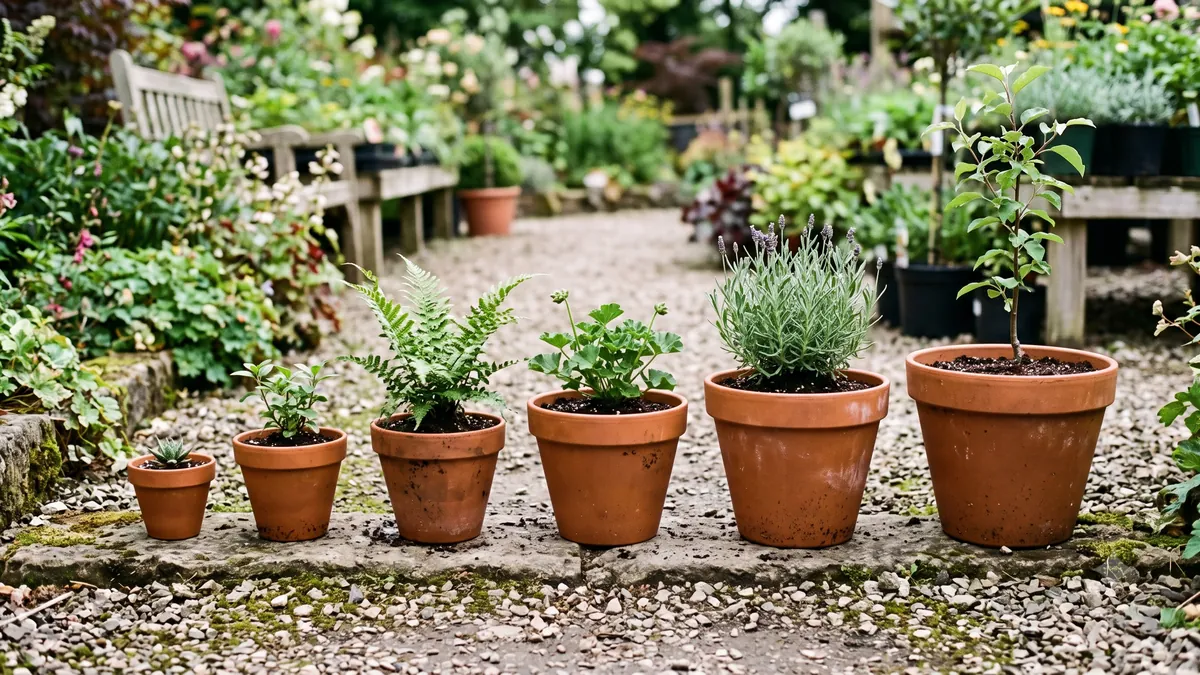
How Are Plant Pots Actually Measured?
Nursery pot sizes trace back to how growers have sold plants for decades: by the trade size of the container, not its literal capacity. A “1-gallon” pot is the industry’s name for a specific, roughly standardized pot, not a promise that it holds exactly one US gallon of soil. The nursery standard, ANSI Z60.2-2025, defines a 1-gallon pot as container class #1 and allows it anywhere from 152 to 251 cubic inches, which is 0.66 to 1.09 real gallons (about 0.87 at the midpoint). The trade-size number was set generations ago as a category, not a measured volume, and it stuck.
Two things make this genuinely confusing if you’ve never measured a pot yourself. First, the nursery standard only sets a volume range for each class, not a shape, and manufacturers each mold their own pots, so a “10-gallon” from one company and a “10-gallon” from another can differ by an inch or more in either dimension. Second, diameter alone doesn’t tell you volume: a wide, shallow pot and a narrow, tall one can share the same top width and still hold very different amounts of soil, because height is doing real work that a single “size” number hides. That’s exactly why the chart below lists both dimensions instead of just one.
Gallon to Inches: Real Reference Chart
Here’s a real plant pot sizes chart: top diameter and height, compiled from multiple nursery container manufacturers, presented as ranges rather than one falsely precise number, since actual dimensions genuinely vary by brand. If you’ve ever wondered how big is a 5 gallon pot or wanted exact 15 gallon pot dimensions before you buy, this is the honest version: a range you can trust, not a single number pretending to be universal.
One pattern worth noticing: the 3-gallon and 5-gallon rows below have nearly the same diameter but different heights, and that’s not a mistake. A lot of “same width, different gallon” confusion at the garden center comes down to exactly this: two pots that look the same size from above hold different amounts of soil because one is taller.
| Size | Diameter | Height |
|---|---|---|
| 1 gal | 6–8 in | 6.5–7 in |
| 2 gal | 8–9.5 in | 7.5–8.5 in |
| 3 gal | 10–11.5 in | 9–10 in |
| 5 gal | 10–12 in | 11–12 in |
| 7 gal | 12–15 in | 11–12 in |
| 10 gal | 14.75–18 in | 13–15 in |
| 15 gal | 17.5–19.5 in | 15–16.5 in |
| 20 gal | 20–21.5 in | 16–17.5 in |
| 25 gal | 22–24 in | 17–19 in |
| 30 gal | ~24–27 in | ~17–20 in |
The 30-gallon row is the least standardized size in this chart. We couldn’t find a direct manufacturer spec at exactly 30 gallons, so the range above is interpolated honestly from real 25-gallon and 35-gallon container listings rather than presented as measured fact. At this scale, growers increasingly shift to fabric grow bags or wooden box planters instead of rigid trade pots, and sizing conventions get looser accordingly. If you need an exact number at 30 gallons and up, measure the specific container you’re considering.
A pot labelled “1.72 gallon” belongs in the 2 gal row. That volume works out to about 397 cubic inches, inside the #2 container class (320 to 474 cubic inches) set by the American Standard for Nursery Stock, and HC Companies’ 2-gallon thermoform pot, rated at 396.66 cubic inches, measures 8.8 inches across and 8.5 inches tall.
For the trade-gallon-to-actual-volume conversion (how many real gallons and liters a “1-gallon” or “10-gallon” pot holds), see our Pot Size Calculator, since this chart is the missing height dimension that one doesn’t include.
How to Measure a Pot Yourself
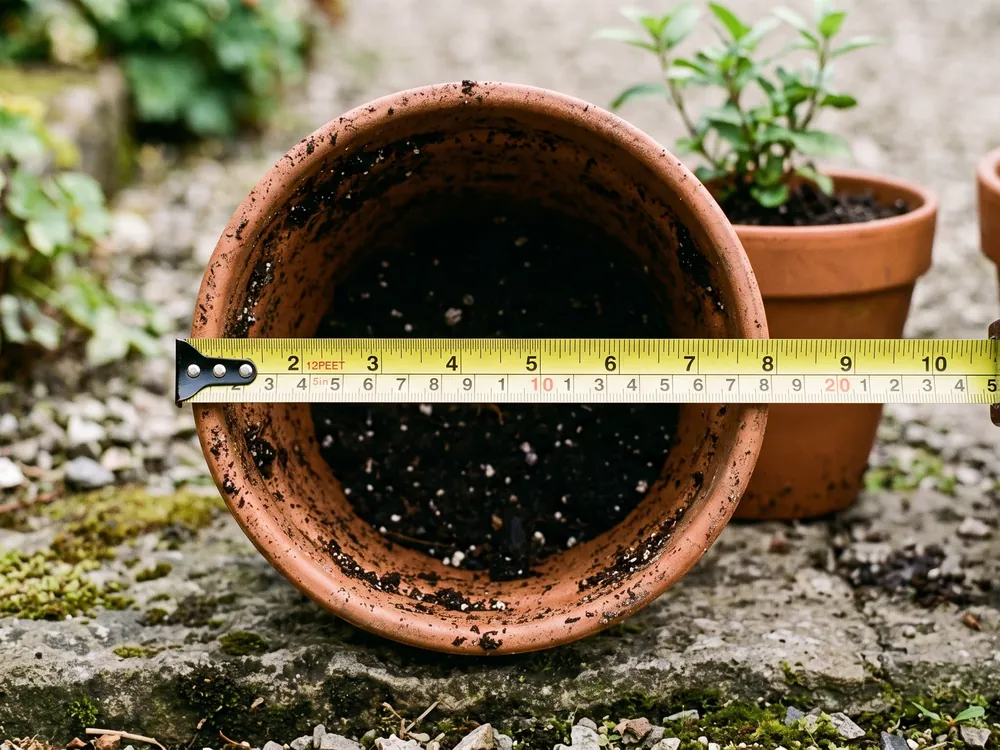
Charts and trade labels only get you so far. If you already own the pot in question, here’s how to measure plant pots yourself in under a minute, no guessing required.
- Diameter: lay a tape measure straight across the widest point of the pot’s top opening, rim to rim, not the base, which is almost always narrower on a tapered pot. Round pots taper inward toward the bottom by design, so the top measurement is the one that matters for “will this fit next to my other pots” and for matching a trade size.
- Height: measure straight down the outside of the pot, from the rim to the base. Skip this step and you’ll only ever have half the picture: two pots with an identical diameter can differ by several inches in height, which is exactly the gap this guide’s chart fills in.
- Volume, if you need it: once you have both measurements, our Pot Size Calculator converts custom diameter-and-height numbers directly into gallons and liters, so you don’t have to do the cylinder math by hand.
A tape measure beats trusting the size printed on a nursery tag, because that number is a trade label, not a guarantee, and it’s the only way to know for certain whether a pot you already own will actually fit the spot (or the plant) you have in mind.
When to Actually Size Up
Knowing a pot’s dimensions only answers half the question. The other half (how to know when to repot a plant in the first place) is really about reading the plant, not the calendar. Here’s what to actually check, in the order it’s usually easiest to notice:
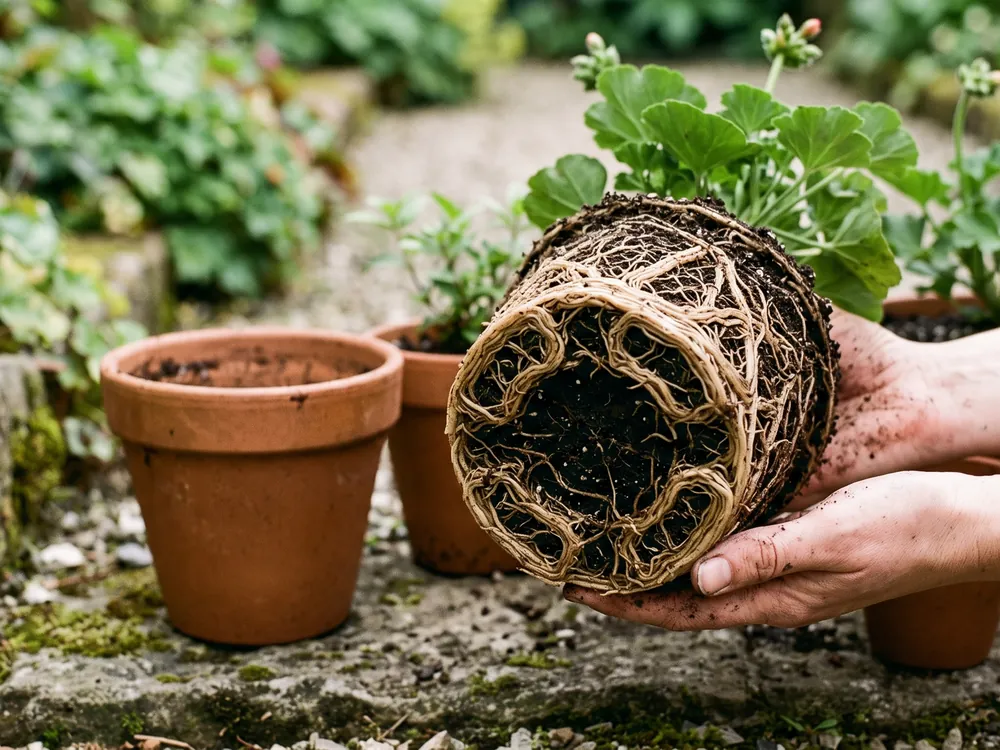
- Lift the plant out and look. This is the single most reliable check, and the one most guides skip because it takes more effort than glancing at the surface. Gently slide the root ball out of the pot (water it first so it releases cleanly). If you see a dense mat of roots circling the outside of the root ball, or roots that have taken on the pot’s shape rather than the soil’s, it’s time to size up. You’re looking at the plant’s actual root system, not a proxy for it.
- Check the drainage holes. Roots emerging from the bottom of the pot are an easier-to-spot version of the same signal, without needing to unpot anything.
- Watch how fast water disappears. A root-bound plant has displaced most of its soil with roots, so water runs straight through and out the bottom within seconds, rather than being absorbed and held. If you’re watering more often than you used to just to keep the plant from wilting, this is usually why.
- Notice growth that’s stalled for no other reason. If light, water, and season all check out normal but the plant simply isn’t producing new growth during what should be its active season, a maxed-out root system is a common, easy-to-miss cause, especially compared to more visible problems like pests or under-watering.
- Watch for a top-heavy plant. A plant that has outgrown its container’s footprint above the soil line, to the point that it tips or leans without support, has usually also outgrown it below the soil line.
When you do size up, resist the urge to jump straight to a much bigger pot “to save a step.” Slow growers (most succulents, cacti, and compact houseplants) do best moving up gradually, about 1–2 inches of diameter at a time. Fast, vigorous growers, and fast-cycling edibles started from seed, can usually handle a bigger jump of 2–3 inches, or in some cases straight to their mature minimum size in a single move. Either way, a container that’s far larger than the current root system holds more wet soil than the roots can use between waterings, and that excess moisture sitting around underused roots is one of the most common causes of root rot, not a shortcut that saves you future repotting.
Once you know your new size, our Pot Size Calculator converts it into exact gallons and liters, recommends a specific next size up from your current pot, and looks up minimum sizes by plant. See how pot sizes actually work in practice, beyond just the raw numbers.
Common Pot Sizes for Popular Plants
Mature container sizes below are typical ranges for a full-grown specimen, not starter sizes: a young plant should generally start smaller and work up gradually, per the sizing guidance above.
| Plant | Typical mature pot size |
|---|---|
| Monstera deliciosa (Swiss cheese plant) | 10–15 gal, 14–17 in, once it’s a full climbing specimen |
| Ficus lyrata (fiddle leaf fig) | 10–15 gal, 14–17 in, for a floor-height plant |
| Tomato (indeterminate, full-size) | 8–10 gal minimum, 12–16 in deep |
| Ocimum basilicum (basil) | 1–2 gal, 8–10 in is plenty for a full plant |
| Strelitzia reginae (bird of paradise) | 10–15 gal, 14–17 in, and it actually blooms better slightly root-bound |
| Citrus × meyeri (Meyer lemon) | 15–20 gal, 18–22 in, for a mature fruiting tree in a container |
A quick pattern across this list: most mature houseplants people keep as floor specimens (monstera, fiddle leaf fig, bird of paradise) land in roughly the same 10–15 gallon range, while fruiting plants (a tomato for one season, a Meyer lemon for years) need noticeably more root room than a leafy houseplant of similar visible size.
Free book · 25 pages, PDF
Quick Reference Table
| Size | Diameter | Good for |
|---|---|---|
| 1–2 gal | 6–9.5 in | Herbs, seedlings, small houseplants |
| 3–5 gal | 10–12 in | Medium vegetables, medium houseplants |
| 7–10 gal | 12–18 in | Tomatoes and other large vegetables, young floor houseplants |
| 15–20 gal | 17.5–21.5 in | Mature floor houseplants, dwarf shrubs |
| 25–30 gal | 22–27 in | Mature dwarf fruit trees, large permanent plantings |
Plant Pot Sizes FAQ
How are plant pots measured?
Two ways, and they answer different questions. Nursery pot sizes are sold by trade gallon (a rough, non-literal category set by manufacturer convention, not an exact liquid measurement), while a pot’s physical size is its top diameter and height in inches. The gallon label tells you roughly which size category you’re buying; the inch measurements tell you whether it will actually fit where you’re putting it.
Are flower pots measured at the top or bottom?
At the top. Measure the diameter across the top opening, rim to rim, since the base of a tapered pot is narrower and a bottom measurement makes the pot look smaller than it is. For a square pot, measure along one side rather than corner to corner, which is how the American Standard for Nursery Stock specifies square containers. Add the height, from rim to base, and you have both numbers you need to compare pots.
How big is a 5 gallon pot?
Real 5-gallon nursery pots typically run about 10–12 inches in diameter and 11–12 inches tall, though exact 5 gallon pot dimensions vary by manufacturer. The nursery standard (ANSI Z60.2-2025) sets only the volume of a #5 pot: 785 to 1,242 cubic inches, or 3.4 to 5.4 real gallons. Note that a 5-gallon pot holds meaningfully more soil than a 3-gallon pot at a very similar diameter. The difference is almost entirely in the height.
Is a "1-gallon" pot actually one gallon?
No. nursery gallon sizes are a trade convention, not a literal liquid measurement. Under the nursery standard (ANSI Z60.2-2025), a 1-gallon pot is class #1: 152 to 251 cubic inches, or 0.66 to 1.09 real US gallons. Treat the gallon number as a size category, not a promise about exact volume.
How do I know when to repot a plant?
Check the roots directly if you can: slide the root ball out and look for roots circling the outside or taking on the pot’s shape. Short of that, watch for roots emerging from the drainage holes, water running straight through without being absorbed, growth stalling during the plant’s active season, or a plant that’s become top-heavy. Any one of these is worth checking; more than one usually means it’s overdue.
What size pot should I move up to?
For slow growers (most succulents, cacti, and compact houseplants) size up gradually, about 1–2 inches of diameter at a time. For fast growers and fast-cycling edibles, 2–3 inches is appropriate, and some annual vegetables do better moving straight to their mature minimum size in one jump. Avoid oversizing dramatically in one move. Too much excess soil around a small root system holds moisture the roots can’t use, which invites root rot.
Sources & further reading
Nursery container dimensions in the reference chart above are compiled from real manufacturer and retailer listings, including The Harvest Company’s Viagrow nursery pot specifications and Home Depot product listings for Viagrow round nursery pots, cross-checked against the trade-size diameters already published on our own Pot Size Calculator. The 1.72 gallon example uses HC Companies’ thermoform nursery pot specifications, and container classes, their volume ranges (Table 1, section 1.1.3.1) and the rule for measuring square pots come from AmericanHort’s American Standard for Nursery Stock, ANSI Z60.2-2025, approved April 17, 2025, which supersedes ANSI Z60.1-2014. Because the standard sets volume ranges and not dimensions, figures here are presented as ranges rather than single exact numbers. If you need precision for a specific container, measure it directly using the method above. For more on how we build and verify the numbers behind every calculator and guide on this site, see our sourcing approach. For the full picture on light and pot sizing for houseplants specifically, see our indoor plant calculators.