How to Use This Calculator
- Enter your bed as length and width, a circle radius, or a total area.
- Pick your bulb type, then choose the closer, middle or wider end of its spacing range.
- Read the number of bulbs to buy, the depth and spacing, and the packs of 25, 50 and 100.
How Many Bulbs Do I Need?
The count comes from spacing. On a square grid, one bulb takes up its spacing squared, so the number of bulbs per square foot is 144 ÷ spacing in inches squared. Multiply by the bed’s area and round up. This is the same plant quantity method Iowa State University Extension publishes in “How to Determine Plant Quantity for Planting Beds”: multiply the bed’s square footage by the plants per square foot.
The spacing itself comes from extension tables, and most bulbs have a range rather than one number. Tulips are 4 to 6 inches apart, daffodils 6 to 8, crocus 3, and large alliums 12 to 18. The Closer, Middle and Wider buttons in the calculator pick the low end, the midpoint or the high end of that range, so you can see how much the count changes. In metric the same grid count is 10,000 ÷ spacing in centimeters squared, per square meter.
Then comes the spare allowance. We add 5% or 10% on top and round up, and we say so in the result. That buffer is our own rule of thumb for soft or damaged bulbs, not a figure from an extension guide. The pack counts show how many bags of 25, 50 or 100 that comes to, since bulbs are usually sold in those lots. Pack sizes vary by supplier, so check the label.
Planting Depth: How Deep to Plant Bulbs
The common rule is to plant at two to three times the height of the bulb, which is how Rutgers NJAES puts it in its spring bulb fact sheet. University of Vermont Extension says about three times the height, so a 2-inch bulb goes in a 6-inch hole. Sources differ a little on what to measure: Iowa State University Extension says two to three times the bulb’s maximum diameter, and Clemson Cooperative Extension says three to four times its width. Enter your bulb’s height in the calculator to see the two to three times figure next to the table depth.
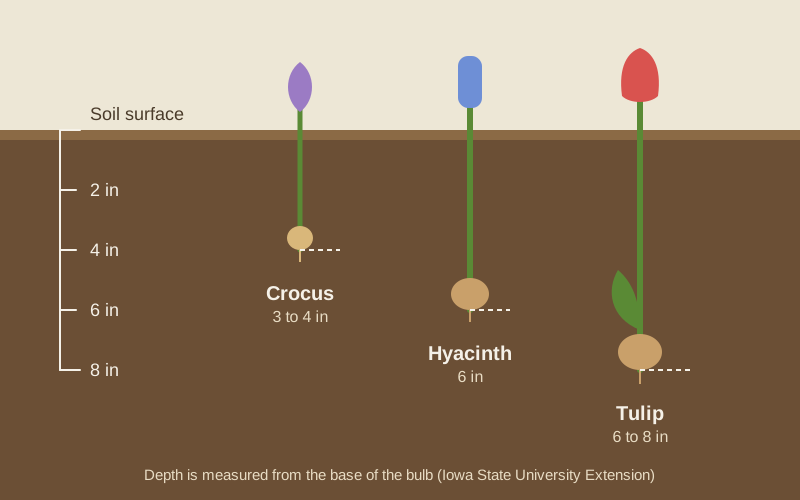
The calculator uses the depth ranges from the Iowa State University Extension table, with Dutch iris from University of Nebraska–Lincoln Extension and lily from Missouri Botanical Garden. Depth is measured from the base of the bulb to the soil surface. In loose, sandy soil, University of Nebraska–Lincoln Extension says to go 1 to 2 inches deeper than the table depth. If your bulbs come with package instructions, follow those, since different bulbs need different depths.
Worked Example
Say you have a 4 × 8 foot bed and want Darwin hybrid tulips at the middle of the Iowa State range, 5 inches apart, with 10% spare. Here is the math:
- Area: 4 ft × 8 ft = 32 square feet.
- Bulbs per square foot: 144 ÷ (5 × 5) = 5.76.
- Planting spots: 32 × 5.76 = 184.3, rounded up to 185.
- With 10% spare: 184.3 × 1.10 = 202.8, rounded up to 203 bulbs.
- Packs of 25: 203 ÷ 25 = 8.1, so 9 packs (or 5 packs of 50, or 3 packs of 100).
- Depth: 6 to 8 inches, from the base of the bulb.
In metric, the same bed is about 3 m2, with tulips about 13 cm apart, planted 15 to 20 cm deep. The calculator switches every figure to metric when you choose Metric.
When to Plant Bulbs by Zone and Region
Spring bulbs go in during fall, once the soil has cooled. The extension sources below tie the date to soil temperature and local climate, not to a hardiness zone number, so we list each source’s own region instead of assigning zones ourselves. To see where you fall, check your zone with the Hardiness Zone Finder and your first fall frost with the Frost Date Calculator, then compare with the nearest row.
| Region | What the source says | Source |
|---|---|---|
| Minnesota | Late September and early October are ideal; as late as October 20, though earlier is better. | U of Minnesota |
| Iowa | October is ideal. September planting risks early fall growth, and late planters can go as late as December if the ground is unfrozen. | Iowa State |
| Nebraska | Late September through October, when soil temperatures fall below 60°F (about 16°C). | U of Nebraska–Lincoln |
| New Jersey | Mid-September through October, when soil temperature falls below 60°F (about 16°C). | Rutgers NJAES |
| New York (St. Lawrence County) | As soon as the ground is cool and evenings average 40–50°F (4–10°C), and on until the ground begins to freeze, well into November. | Cornell Cooperative Extension |
| Missouri | Daffodils and small bulbs are best planted by the end of October. Tulips can go in until the ground freezes. | Missouri Botanical Garden |
| South Carolina, Upstate | Plant daffodils in mid-autumn. Wait to plant other spring bulbs until the soil at planting depth stays below 60°F (about 16°C). | Clemson |
| South Carolina, coast | Most bulbs go in late December or early January. Most need a 12–16 week chilling period, so refrigerate them in ventilated packages until planting. | Clemson |
Layering Bulbs in One Hole (Lasagna Planting)
Layering stacks several bulb types in one hole so the spot flowers from early to late spring. University of Vermont Extension describes digging a trench deep enough for the largest bulbs, covering them to the depth of the next largest, and continuing up. Cornell Cooperative Extension of St. Lawrence County gives example depths: late-spring bloomers at 8 inches, mid-spring bloomers at 6 inches, early bloomers at 4 inches, and more early bloomers at 2 inches. The layer table above shows the same depths in both unit systems. Treat each layer as its own bulb type when you count.
Common Bulb Planting Mistakes
- Planting while the soil is still warm. Iowa State University Extension notes that September planting risks premature fall emergence. Wait for soil below 60°F (16°C) where your extension office says so.
- Digging one hole per bulb. Rutgers NJAES prefers loosening the whole bed to planting depth, which gives better drainage and longer-lasting results, and recommends mass plantings or drifts.
- Planting in a single line of singles. Iowa State University Extension says to plant at least five of a large-bulb variety together, and small bulbs in drifts of at least 25.
- Going too shallow in sandy soil. University of Nebraska–Lincoln Extension says to add 1 to 2 inches to the table depth in loose, sandy soil.
- Skipping chilling in a warm climate. Clemson Cooperative Extension says most bulbs need 12 to 16 weeks of chilling, so refrigerate them first on the coast.
- Leaving the bed bare. University of Vermont Extension recommends mulching after planting to hold moisture and moderate temperature swings. Our Mulch Calculator works out how much to buy.
Bulb Planting Calculator FAQ
How many bulbs should I buy for my flower bed?
Multiply the bed’s area by the bulbs that fit in one square foot, then round up and add a few spare. On a square grid the count per square foot is 144 divided by the spacing in inches squared. Tulips 5 inches apart fit about 5.8 per square foot, so a 4 × 8 foot bed (32 sq ft) holds 185 and needs about 203 with 10% spare. The calculator above does this live and also gives the number of 25, 50 and 100 packs.
How many bulbs per square foot should I plant?
It depends on the bulb, because the sourced spacing differs. At Iowa State University Extension’s spacings, crocus 3 inches apart fit 16 per square foot, tulips 4 to 6 inches apart fit 4 to 9, trumpet daffodils 6 to 8 inches apart fit about 2 to 4, and large alliums 12 to 18 inches apart fit about 0.4 to 1. In square meters, divide 10,000 by the spacing in centimeters squared.
How deep should I plant tulip and daffodil bulbs?
Iowa State University Extension lists Darwin hybrid tulips and trumpet or large-cupped daffodils at 6 to 8 inches (15 to 20 cm) deep. Missouri Botanical Garden gives 7 to 8 inches for both. In loose, sandy soil, University of Nebraska–Lincoln Extension says to plant 1 to 2 inches deeper than the table depth.
Do I measure bulb depth from the top or the bottom of the bulb?
From the base of the bulb to the soil surface. Iowa State University Extension and Clemson Cooperative Extension both measure it that way, so a 2-inch-tall bulb planted 6 inches deep has about 4 inches of soil over its tip.
Can I use this for naturalizing or drift planting?
Yes, with one caveat. Extension sources give spacing ranges and group sizes, not a separate density for naturalized drifts, so we do not invent one. Use the Closer setting for a fuller look, which plants at the low end of the sourced spacing range. Iowa State University Extension suggests at least five of a large-bulb variety together, and drifts of at least 25 for small bulbs, looking best in groups of 50 or more.
When should I plant bulbs in my zone?
Extension sources key fall planting to soil temperature more than to a zone number: University of Nebraska–Lincoln Extension and Rutgers say to plant when soil falls below 60°F (about 16°C), and Clemson says to wait until the soil at planting depth stays below 60°F. Use the hardiness zone finder and frost date calculator linked on this page to see where you fall, then compare with the regional examples in the planting window table.
How many spare bulbs should I buy?
We add 5% or 10% so a few soft, damaged or mis-sorted bulbs do not leave gaps. That allowance is ours, not an extension figure, and extension guides do not publish a spare percentage. Set it to None if your supplier already counts extras, or if you plan to fill any gaps next year.
What is lasagna planting, and does it change how many bulbs I need?
Lasagna planting stacks bulbs in layers in the same hole or trench, deepest and latest-blooming first, so one spot flowers in sequence. University of Vermont Extension describes digging a trench deep enough for the largest bulbs, covering them to the depth of the next largest, and repeating. Each layer is a separate bulb type, so run the calculator once per type and read the count for each layer.
Sources & further reading
Depth and spacing figures come from Iowa State University Extension’s “Selecting and Planting Spring-Blooming Bulbs”, with Dutch iris from University of Nebraska–Lincoln Extension’s G1742 Spring Flowering Bulbs and lily from Missouri Botanical Garden’s Flowering Bulbs fact sheet. The two-to-three-times depth rule is from Rutgers NJAES FS1220, University of Vermont Extension’s “Selecting and Planting Bulbs This Fall” and Clemson Cooperative Extension’s “Spring-Flowering Bulbs”. Layer depths are from Cornell Cooperative Extension of St. Lawrence County’s “There’s Still Time to Plant Hardy Bulbs!”, and the Minnesota planting dates from University of Minnesota Extension’s “Plant fall bulbs now for a colorful spring garden”. The spare-bulb percentage and the 25, 50 and 100 pack sizes are our own conventions, not extension figures. For how we source and review the formulas behind every calculator, see our methodology page.
For more on spacing and layout, see our complete guide to spacing and planting.