How to Use This Calculator
- Enter your ZIP code or USDA hardiness zone.
- Read your median last spring and first fall frost dates, and the safer 1-in-10 dates.
- Follow the generated planting timeline for your zone.
How Do You Find Your Frost Date?
Enter a ZIP code and this calculator uses NOAA’s 1991-2020 U.S. Climate Normals: 30 years of daily low temperatures at the weather station nearest your ZIP code. It prefers an airport station within 15 miles, because airports sit in the open where towns are, rather than on a lakefront or up a valley, and it tells you which station it used and how far away it is. If another station close by differs by a week or more, it says so. Select a hardiness zone instead and you get a broader, zone-level estimate.
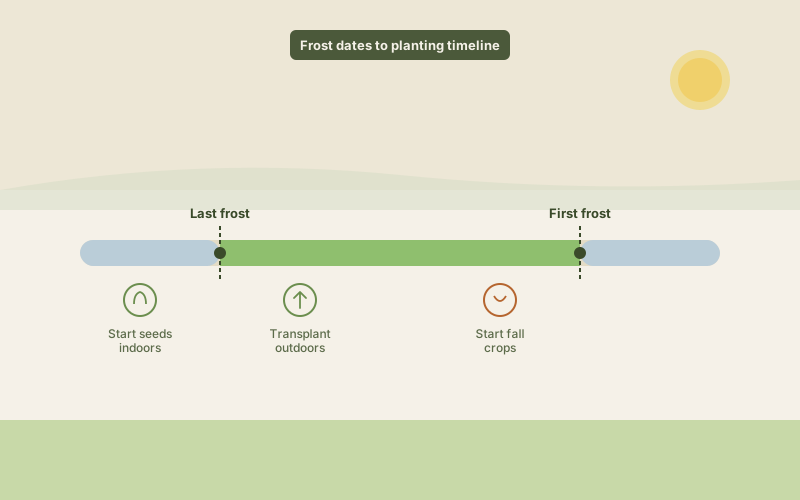
Station data gives a probability curve, not a single guaranteed day. The calculator shows two points on it: the median last frost, when half of years have had their last frost, and a safer date that only 1 year in 10 is later than. The same goes for fall: a median first frost, and an earlier date that frost beats only 1 year in 10. Hardiness zones are coarser: they measure winter lows, not frost timing, so two towns in the same zone can have quite different frost dates.
For planning, count from the median, and hold your most tender transplants for the safer date if a late frost would cost you. Your own yard can still run a little warmer or colder than the station, so check the forecast as a real planting deadline approaches.
About these estimates
A ZIP code gives the nearest NOAA station’s median dates from 1991-2020. Half of years have a later last frost than the median, and your own yard can differ from the station by a week or more with elevation, nearby water, and urban vs. open ground. A hardiness zone gives a broader estimate that can be off by 1 to 3 weeks.
One distinction worth keeping in mind: hardiness zone and frost date are related but measure different things. The USDA hardiness zone reflects average annual minimum winter temperature; it tells you which perennials can survive the winter in your area. Frost dates, by contrast, track the timing of specific freeze events in spring and fall; they tell you when it’s safe to plant annuals and when the growing season ends. A location can be in a relatively mild zone but still have a later-than-expected last frost due to inland position, elevation, or a cold valley microclimate. So while zone is a useful shorthand for frost timing, use it as a directional estimate and check local conditions before committing tender seedlings to the ground. If you just need the zone itself (say, to check a plant tag's hardiness rating before buying), our Hardiness Zone Finder answers that standalone question directly.
Your Planting Timeline
A bare frost date only tells you when the risk of frost passes. It doesn’t tell you what to actually do with that information. This calculator translates your estimated frost dates into a full sequence of planting actions.
Before using the timeline, it helps to know what kind of frost you’re planning around. A light frost (roughly 29–32°F / −2–0°C) damages or kills tender annuals (tomatoes, peppers, basil, beans), but cold-hardy crops like broccoli, kale, and spinach can tolerate it. A hard freeze (28°F / −2°C or below) kills most vegetable crops and can damage even cold-tolerant ones. The dates this calculator shows are standard 32°F threshold estimates; if your area is prone to late hard freezes, consider adding a week or two of buffer beyond the last-frost date for the most sensitive crops.
- Start cold-hardy seeds indoors (broccoli, cabbage, lettuce): roughly 6–8 weeks before your last frost date, so seedlings are ready to go out while it’s still cool.
- Start warm-season seeds indoors (tomatoes, peppers): also around 6–8 weeks before last frost for most varieties, though some crops (peppers especially) can want closer to 8–10. Check the seed packet.
- Transplant cold-hardy seedlings outdoors: a few weeks before your last frost date, since these crops tolerate a light frost.
- Transplant tender crops outdoors: only after your last frost date has passed, since tomatoes, peppers, and similar crops have essentially no frost tolerance.
- Start fall crop seeds: roughly 10–12 weeks before your first fall frost date, timed so they mature before the cold returns.
- Protect or harvest tender crops: by your first fall frost date, since that’s when the growing season for frost-sensitive plants effectively ends.
This is the same general week-offset logic widely taught by cooperative extension services, applied automatically to your specific estimated dates rather than left as a generic rule you have to do the math on yourself. Want the per-crop breakdown instead of the general rule, with exact start-indoors, transplant, and direct-sow dates for tomatoes, peppers, broccoli, and more? Get your full seed starting calendar, built on this same frost estimate.
Worked Example
Say you enter 60601, downtown Chicago. The nearest airport station is Chicago Midway, 9 miles away.
- Median last spring frost: April 11. Only 1 year in 10 has a frost after April 27.
- Median first fall frost: October 31. Only 1 year in 10 has one before October 20.
- Growing season: about 203 days between the two medians.
From there, the planting timeline follows automatically: start cold-hardy and warm-season seeds indoors around mid-to-late February (6 to 8 weeks before the median last frost, Feb 14 to 28), transplant cold-hardy seedlings outdoors in mid-to-late March, and plant tender crops like tomatoes after April 11, or after April 27 if you want the safer date. On the back end, fall crop seeds go in around August 8 to 22 (10 to 12 weeks before the median first frost), with tender crops needing protection or harvest by late October. The calculator above computes all of this instantly for any ZIP code; this Chicago walkthrough is just one example of the pattern.
Common Mistakes
- Planting tender crops too early. A warm stretch in March or early April doesn’t mean frost risk is over. Wait until you’re past your median last frost, not just past a few nice days, and use the safer date for anything you can’t afford to lose.
- Ignoring microclimates. Low spots where cold air pools, spots shaded from morning sun, and open areas away from buildings or pavement all frost earlier and harder than the general zone estimate suggests. Know your yard’s specific cold spots, not just your zone.
- Treating the median as a guarantee. Half of years have a frost after the median date. It’s the right date to plan around, not a promise; check the extended forecast before a real planting deadline.
- Not accounting for fall frost when succession planting. Gardeners plan carefully around the spring frost date but often forget to count backward from the fall frost date for a second round of crops. Missing the fall planting window is just as common a mistake as planting too early in spring.
Frost Date Calculator FAQ
How do I find my last frost date?
Enter your ZIP code in the calculator above. It finds the nearest NOAA weather station (an airport station within 15 miles where there is one) and gives its median last frost from the 1991-2020 climate normals, plus a safer date that only 1 year in 10 is later than. No ZIP code? Pick your hardiness zone for a broader estimate.
When should I start seeds indoors based on my frost date?
Most warm-season crops like tomatoes and peppers are started indoors 6–8 weeks before the last frost date; cold-hardy crops like broccoli and cabbage can start on the same general timeline. The calculator above computes this window automatically once you enter your ZIP or zone. Always double-check the specific crop’s seed packet, since timing varies by a couple of weeks between species.
When is it safe to plant after the last frost?
Tender, frost-sensitive crops (tomatoes, peppers, basil, squash, beans) usually go out after your median last frost, and half of years still have a frost after that date. For the most cold-sensitive crops, or if you can’t risk a loss, wait for the safer date the calculator shows (only 1 year in 10 has a later frost), and keep an eye on the extended forecast right before planting.
How accurate are frost date estimates?
A ZIP code uses 30 years of records (1991-2020) from the nearest NOAA weather station, so the median is a real station figure, not a zone guess. It is still a median: half of years have a later last frost, and a low spot, hilltop or lakeshore near you can differ by a week or more. Picking a zone instead gives a broader estimate from USDA hardiness zone patterns, which can be off by one to three weeks.
When should I start planting my vegetable garden?
It depends entirely on the crop: cold-hardy vegetables (lettuce, peas, broccoli) can go in several weeks before your last frost, while tender crops (tomatoes, peppers, squash) need to wait until after it. Use the planting timeline generated above for the general schedule, then check each specific crop’s frost tolerance before committing it to the ground.
Sources & further reading
General frost-timing guidance and the importance of the last and first frost dates for garden planning draw on NC State Extension’s average first and last freeze dates resource and the University of Maryland Extension’s frost and freeze dates guide, both of which also point to station-level tools. Frost dates for a ZIP code come from NOAA NCEI’s U.S. Climate Normals, 1991-2020 (the 32°F last-spring and first-fall probability dates for 7,095 stations), matched to ZIP code points from the U.S. Census Bureau’s 2023 ZCTA Gazetteer. Hardiness zone reference points were checked against the USDA Plant Hardiness Zone Map. For more on how we build and verify the formulas behind every calculator on this site, see our methodology page.