How to Use This Calculator
- Enter your ZIP code or hardiness zone.
- Pick your crop.
- Read your personalized start, transplant, or direct-sow dates.
How Does a Seed Starting Calendar Work?
This calculator builds directly on our Frost Date Calculator, and it uses the exact same last spring frost: for a ZIP code, the median at the nearest NOAA weather station (1991-2020 normals); for a zone, the middle of that zone’s range. Then it works backward or forward from that date using each crop’s own weeks-before-or-after-last-frost timing. A tomato started 6 to 8 weeks before frost and a pea direct sown 4 to 6 weeks before frost count from the same date, just with different offsets.
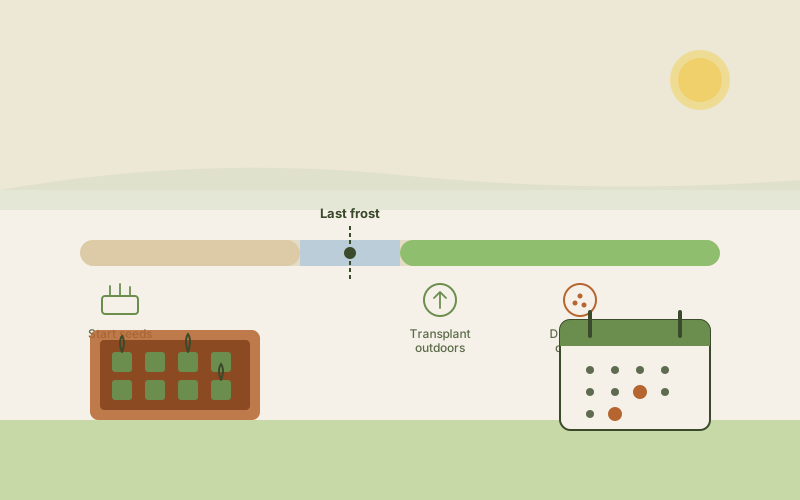
Enter your ZIP code (it finds the nearest NOAA weather station) or your zone directly, then pick a crop. Crops that are normally started indoors return an indoor start date and a transplant date; crops that are normally direct sown (because they resent root disturbance or grow too quickly to bother transplanting) return a single direct sow window instead.
As with the Frost Date Calculator, every date is shown as a range, not a single falsely precise day. Zone-level estimates are useful for planning but coarser than station-level climate data for your exact address, so treat these dates as a planning window, and nudge them earlier or later based on your own yard’s microclimate and the current year’s forecast.
One thing calendar dates can’t capture: seeds germinate based on soil temperature, not the calendar alone. A seed started indoors “on schedule” can still stall or germinate unevenly if the potting mix is too cold. Most warm-season crops need a soil temperature of at least 60–65°F (16–18°C) for reliable germination; peppers and basil want 70°F (21°C) or warmer; cool-season crops like lettuce and spinach will sprout in soil as cool as 40–50°F (4–10°C). If your seed tray is sitting on a cold surface or in a cool room and germination is slow, the soil temperature is usually the culprit. A seedling heat mat under the tray solves this quickly.
Seed Starting Timeline by Crop
Timing relative to your last frost date, by crop. Indoor-start crops show a start window followed by a transplant window; direct-sow crops show a single planting window relative to last frost.
| Crop | Method | Timing relative to last frost |
|---|---|---|
| Tomato | Start indoors | 6–8 weeks before; transplant 1–2 weeks after |
| Pepper | Start indoors | 8–10 weeks before; transplant 1–2 weeks after |
| Eggplant | Start indoors | 8–10 weeks before; transplant 1–2 weeks after |
| Broccoli / Cabbage / Cauliflower | Start indoors | 6–8 weeks before; transplant 2–4 weeks before |
| Lettuce (head) | Start indoors | 4–6 weeks before; transplant 2–3 weeks before |
| Marigold | Start indoors | 6–8 weeks before; transplant 1–2 weeks after |
| Cucumber / Summer squash | Direct sow | 1–2 weeks after last frost |
| Beans / Zinnia | Direct sow | 1–2 weeks after last frost |
| Carrots / Lettuce (leaf) | Direct sow | 2–4 weeks before last frost |
| Peas / Spinach | Direct sow | 4–6 weeks before last frost |
| Radishes | Direct sow | 2–4 weeks before last frost |
These figures follow standard cooperative extension guidance (see Sources below) and are what the calculator uses internally. The full crop list in the tool includes a few more varieties with the same logic applied.
Hardening Off
Seedlings grown indoors live in a controlled environment with no real wind, no direct sun exposure, and no temperature swings. Moving them straight from that sheltered world into the garden, even on the “right” transplant date, shocks them. Leaves scorch in the sun they haven’t adapted to, stems snap in a breeze they’ve never felt, and cold nights slow growth for a week or more. Hardening off is the process of gradually acclimatizing seedlings to outdoor conditions before transplanting, and it’s one of the biggest factors separating a smooth transplant from a stalled one.
The standard approach, starting about 7–10 days before your transplant date:
- Day 1–2: Set seedlings outside in a sheltered spot with dappled shade: under a tree, on a covered porch, or anywhere shielded from direct midday sun and strong wind. Start with about one hour outdoors, then bring them back in.
- Days 3–4: Extend to 2–3 hours outdoors, still in a sheltered spot. Watch for wilting; if they droop in the sun, move them to shade and water as needed.
- Days 5–6: Move to a location with morning direct sun and afternoon shade. Leave them out for 4–6 hours.
- Days 7–8: Increase to a full morning of sun, or leave them out all day if temperatures stay above their cold threshold. Bring in if temperatures will drop near frost.
- Days 9–10: Leave them outside for a full day, or overnight if the forecast is safe. They should now be ready to transplant into the ground.
The key is gradual progression: each day adds a bit more sun, wind, and temperature range. Don’t rush the process if you get a string of very hot, windy, or cold days; pause at the same exposure level until conditions are milder. Cold-hardy crops like broccoli and cabbage can begin hardening off earlier and tolerate a couple of light frosts during the process; tender crops like tomatoes and peppers should be brought back in any night the forecast drops near 50°F (10°C) or below.
Worked Example
Say the calculator estimates you’re in Zone 6b, with an estimated last frost date range of roughly March 29 – April 12, and you select Tomato.
- Last frost midpoint: around April 5 (the calculator uses the midpoint of your range as the anchor for crop math).
- Start seeds indoors: 6–8 weeks before that midpoint, roughly February 8 – 22.
- Transplant outdoors: 1–2 weeks after that midpoint, once the frost risk has passed, roughly April 12 – 19.
Switch the crop to Broccoli with the same Zone 6b location and the indoor start window stays similar (6–8 weeks before, so February 8 – 22), but the transplant window moves earlier, to roughly March 8 – 22, because broccoli tolerates a light frost and doesn’t need to wait for it to pass. Switch to Peas and the calculator returns a single direct-sow window instead, around February 22 – March 8, well before last frost. Same zone, same underlying frost estimate, three different real calendars.
Common Mistakes
- Starting seeds too early. Seedlings started far ahead of their transplant window sit in small containers too long, get root-bound, and stretch into weak, leggy growth reaching for light. If your transplant date is still 8+ weeks out, wait.
- Skipping hardening off before transplant. Seedlings grown indoors haven’t felt real wind, direct sun, or temperature swings, and moving them straight to the garden can scorch leaves and stall growth for a week or more. See the Hardening Off section above for the full step-by-step process. The short version is 7–10 days of gradually increasing outdoor exposure before transplanting.
- Ignoring the indoor-start vs. direct-sow difference. Crops like beans, cucumbers, and carrots resent having their roots disturbed and generally do worse transplanted than direct sown. Starting them indoors "for extra time" often backfires. Check the method column in the timeline table above before deciding.
Seed Starting Calendar FAQ
When should I start seeds indoors?
It depends on your crop and your last frost date. Most warm-season crops like tomatoes and peppers start 6–10 weeks before your last frost date; cold-hardy crops like broccoli and cabbage are usually started 6–8 weeks before. Enter your ZIP code or zone into the calculator above and it computes the exact window for whichever crop you pick.
How do I get a seed starting calendar for my ZIP code or zone?
Use the calculator above. Enter your ZIP code (it uses the nearest NOAA weather station’s median last frost, 1991-2020) or select your USDA hardiness zone if you know it, then pick a crop from the dropdown. It returns a personalized calendar: indoor start date, transplant date, or direct sow date, all built from the same frost dates as our Frost Date Calculator.
What's the difference between starting seeds indoors and direct sowing?
Starting indoors means germinating seeds inside, under lights or on a warm windowsill, then transplanting the seedlings outside once conditions are safe. This gives tender, slow-growing crops like tomatoes and peppers a head start. Direct sowing means planting the seed straight into the garden soil where it will grow. Crops that resent root disturbance or grow quickly from seed, like beans, carrots, and zinnias, generally do better direct sown than transplanted.
When is it safe to transplant seedlings outdoors?
It depends on the crop's frost tolerance. Cold-hardy seedlings like broccoli and cabbage can go outside a few weeks before your last frost date, once they've been hardened off. Tender crops like tomatoes and peppers have essentially no frost tolerance and need to wait until after your last frost date range has passed. The calculator above computes the right window automatically for whichever crop you select.
What happens if I start seeds too early or too late?
Starting too early usually means leggy, root-bound seedlings sitting in small containers for weeks longer than they should, waiting on a planting date. They stretch toward the light, develop weak stems, and transplant poorly. Starting too late compresses the growing season and can push harvest past your first fall frost date for longer-season crops. The calculator's date ranges are built to avoid both problems, but a few days of flexibility either way is normal.
Sources & further reading
Crop-by-crop indoor seed starting and transplant timing draws on the University of Missouri Extension’s "Starting Plants Indoors From Seeds" (G6570) and the University of Maryland Extension’s Vegetable Planting Calendar, both of which list weeks-before-or-after-last-frost windows by crop. Frost date estimates themselves use the same USDA Plant Hardiness Zone approach as our Frost Date Calculator (see that page for the underlying sourcing). Choosing between light types for your seed-starting setup? See our LED vs. Fluorescent Grow Lights comparison. For more on how we build and verify the formulas behind every calculator on this site, see our methodology page.