Can hibiscus plants survive the winter? Hardy hibiscus and rose of Sharon do outdoors in zone 5 and warmer, per Colorado State Extension and UConn. Tropical hibiscus does not: Smithsonian Gardens lists zones 9 to 12, and University of Minnesota Extension says to bring it inside before the first fall frost. Both are shrubs worth planning for now.
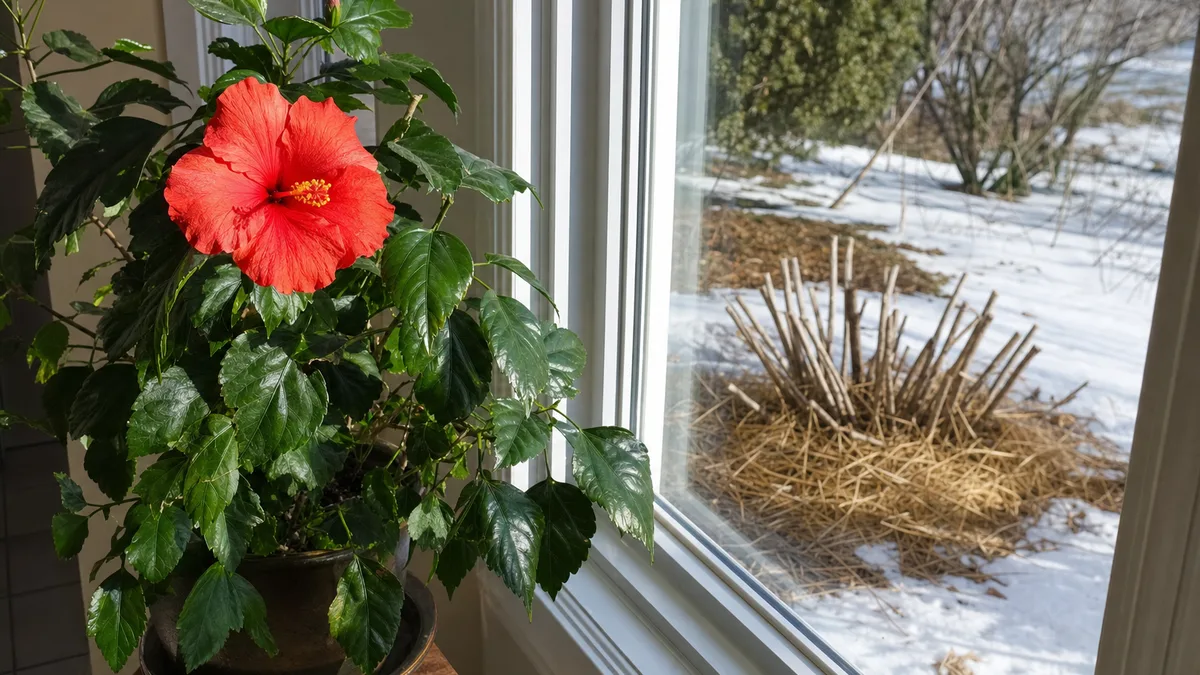
Hibiscus Winter Quick Reference
| Plant or situation | Zone or temperature limit | What to do | Source |
|---|---|---|---|
| Hardy hibiscus (Hibiscus moscheutos) | Zones 4 to 9 (Clemson, NC State); reliably to zone 5 (Colorado State) | Cut back stems, mulch, leave in the ground | Clemson, NC State, Colorado State |
| Rose of Sharon (Hibiscus syriacus) | Zone 5 (UConn, Nebraska); zones 5 to 9 (Iowa State) | Prune in spring, remove winter-killed stems | UConn, Nebraska, Iowa State |
| Tropical hibiscus in the ground | Zones 9 to 12 (Smithsonian Gardens); 9 to 10 (LSU) | Grow in a pot anywhere colder | Smithsonian Gardens, LSU |
| Tropical hibiscus, any cold-damage risk | Likely damaged or killed below 35°F | Move inside before nights get that cold | Smithsonian Gardens |
| Tropical hibiscus as a houseplant | Daytime temperatures no lower than 55°F | Bright window, less water, little feed | University of Minnesota |
| Tropical hibiscus kept dormant | About 40 to 45°F, frost free | Dry on the side, check every two weeks | Ask Extension, Maryland |
Can a Hibiscus Plant Survive the Winter? Hardy vs Tropical by Zone
It depends on which hibiscus you own, because three quite different plants share the name. New Mexico State University tells them apart by looks: hardy hibiscus (Hibiscus moscheutos) has very large pastel flowers and matte medium green leaves, tropical hibiscus has smaller red, yellow or white flowers on dark glossy leaves, and rose of sharon (Hibiscus syriacus) is a hardy shrub with smaller flowers than the hardy perennial type. If the tag is gone, flower size and leaf shine usually settle it, and the zone ranges below follow the USDA map explained in our hardiness zones guide.
Hardy hibiscus
Clemson Extension recommends hardy hibiscus for USDA zones 4 through 9, and the NC State Extension Plant Toolbox gives 4a through 9b. Colorado State Extension in Pueblo County is a little more careful: most hardy hibiscus reliably tolerate winters as far north as zone 5, and zone 4 gardeners may still find suitable varieties. University of Illinois Extension says it is hardy to zone 4. Plan on zone 5 and warmer for safe results, and treat zone 4 as a bonus that depends on the cultivar. NMSU says these plants freeze to the ground in winter and return each spring.
Rose of sharon
UConn’s plant database and Nebraska Extension both call rose of sharon hardy to zone 5, and Iowa State Extension says zones 5 to 9. Iowa State adds that winter temperatures of -20°F or lower can injure or destroy the shrub. Nebraska notes that plants may still suffer some winter kill in severe winters, which is one reason it suggests planting in spring so the roots establish before the first winter.
Tropical hibiscus
Smithsonian Gardens says many tropical hibiscus (Hibiscus rosa-sinensis) live in zones 9 to 12, and LSU’s horticulture department lists zones 9 to 10 and calls it not fully hardy except along the warm southern coast. Smithsonian says the plants prefer temperatures above 50°F and are likely to be damaged or die at temperatures below 35°F. University of Florida (UF/IFAS) says the slightest cold wave can make the lower leaves yellow and drop, and that in North Florida the plants die back to the ground and typically regrow from the roots. NMSU says that where tropical hibiscus freezes outdoors it does not come back. Our guide to what temperature frost forms explains why leaf damage can start before the thermometer reads 32°F.
To check where you sit, the growing zones pages list them by place.
What to Do With Hardy Hibiscus and Rose of Sharon in the Winter
Mostly, less than you think. These plants are built for the cold, and the main jobs are one cutback, a layer of mulch, and patience in spring.
How to prune hibiscus plants for winter
Sources disagree on timing and height, and you can choose between them. Colorado State (Pueblo County) says to cut stems back to about 4 to 6 inches of growth in fall or spring, before new growth emerges, and to use loppers because the stems are woody. University of Illinois Extension says to cut stems to about 3 to 4 inches above the ground at the end of the season. Clemson says to cut back in late winter to 6 inches. NC State says to cut back the stems nearly to ground level in the fall, because flowers form on new growth. NMSU says a plant that has frozen to the ground can be cut back now or in spring and should resume growth.
There is also a wildlife option. Clemson says to leave dormant stems standing through winter because they shelter solitary native bees, and NC State suggests cutting dead stems to 12 to 24 inches instead of the ground for the same reason. Then do the final cut in late winter. Pruning follows the same logic as other shrubs that bloom on new growth, and our guide to cutting back hydrangeas by type shows how timing changes with bloom habit.
Mulch and water
NMSU recommends an organic mulch such as wood chips, bark or straw. It says mulch conserves soil moisture, moderates temperature swings and protects the crown, and that a cool crown discourages early spring growth that late freezes could damage. NMSU gives no depth. NMSU also says to water during the drier parts of winter, since the plant does not tolerate dry soil. Our comparison of organic and inorganic mulch helps you choose, and the broader steps in protecting plants in winter cover covers and wind.
Rose of sharon needs a different cut
Do not cut a rose of sharon to the ground. Nebraska Extension says the best time to prune it is spring, which lets you remove winter damage, and that it blooms on new wood, so trimming the previous season’s growth in late winter or early spring encourages larger blossoms. UConn says cutting it back every year promotes more vigorous shoots and larger flowers, and that winter-killed stems may need to be removed.
When Should You Bring a Tropical Hibiscus Inside?
Before the first fall frost, says University of Minnesota Extension, because tropical hibiscus is not winter hardy. University of Maryland Extension ties the date to nights rather than the calendar: hibiscus can stay out from mid-May through early fall, and you should have an overwintering plan ready before nighttime temperatures regularly fall into the mid-to-low 50s°F. Smithsonian’s 50°F preference and 35°F damage line point the same way. Use your average first frost as the outer limit and the night forecast as the trigger. The step-by-step routine for moving any pot is in when to bring plants inside for winter.
Typical frost dates by zone are listed on the frost dates pages. The same fall rhythm applies to other tender potted plants, and our guide to overwintering pepper plants and the one on overwintering rosemary use the same pot-in-before-frost routine.
How to Care for a Hibiscus Plant in the Winter Indoors
- Inspect and treat for pests. University of Maryland Extension says to treat plants with a houseplant-labeled horticultural oil or insecticidal soap before they come in, and to check for pests each time you water.
- Trim if needed. Maryland says to trim large plants to fit the space, and Smithsonian Gardens says winter pruning keeps the shape compact.
- Choose the brightest spot. Minnesota Extension asks for at least 4 to 5 hours of bright, direct light, ideally from a sunny west or south window. Smithsonian suggests a south- or west-facing window.
- Hold the temperature. Minnesota says daytime temperatures should not fall below 55°F, with 65 to 75°F best, and that hibiscus cannot withstand extreme changes in temperature or humidity. Keep it away from drafts, radiators and entryways.
- Water less. Minnesota says to let the soil dry out a little more between waterings in winter, while never letting it dry to the point of wilting.
- Feed lightly or not at all. Minnesota says to fertilize less often, while Smithsonian says to stop fertilizing while overwintering unless a deficiency shows, and Maryland says to wait until new growth appears.
Sources agree on the direction, not the amounts: none of the pages I read gives a watering interval for an actively growing indoor plant, so check the soil with a finger rather than a calendar. If the pot is heavy and the soil stays wet, our guide to root rot shows the signs. For choosing a new container when you pot up a garden plant, see plant pot sizes explained.
Light, and when a grow light helps
Maryland Extension says to supplement with artificial light if natural light is not enough, and winter windows often fall short in northern states. Our comparison of LED vs. fluorescent grow lights helps you choose a fixture.
Pests to watch for
Smithsonian Gardens names aphids, thrips and spider mites as the main pests, with whitefly, scale and mealybug less often, and says to scout more carefully indoors and treat with horticultural oil or insecticidal soap. Minnesota lists aphids and spider mites and suggests washing the foliage periodically. Maryland says to act at once on webbing, honeydew, stippling or a white waxy residue. Clemson mentions whiteflies and aphids on outdoor hardy hibiscus as occasional visitors.
Why Does a Hibiscus Drop Its Leaves After It Comes Inside?
It is the plant adjusting, and it usually recovers. Maryland Extension says that during the adjustment period hibiscus will drop some leaves and stop growing, so hold off on water and fertilizer until new growth appears. The Chicago Botanic Garden, a non-profit research garden, says losing all the leaves shortly after moving indoors is normal and new growth follows. Maryland also says that a plant held dormant with little or no light may lose every leaf, which it says is not a concern.
Leaf yellowing has other causes too. Minnesota Extension says yellowing is often caused by sudden changes in soil moisture or air temperature, by drafts or by overwatering, and that some yellowing in spring or fall is normal. It lists too hot or too cold temperatures, drafts, uneven watering and low light as causes of bud drop. Our guide to why plant leaves turn yellow helps you narrow it down.
How to Keep a Hibiscus Plant Alive in the Winter Without a Sunny Window
Let it go dormant. Maryland Extension says you can keep potted hibiscus as a houseplant or let it go dormant in a frost-free space, and University of Illinois Extension describes the same two options: high light indoors, or dormant in a cool spot kept on the dry side. An Ask Extension answer for a zone 6a garden in Ohio gives the detail. Bring the pot in before the first frost, stop watering and let the soil dry, and expect the leaves to fall. Keep it at about 40 to 45°F, check the soil about every two weeks, and add a small amount of water if it is dry 2 to 3 inches down, enough to keep the stems from shriveling without prompting growth. Dormant storage is one of the methods compared in what is overwintering.
The same answer describes a second route: cut the top growth back, repot into a smaller container and store it somewhere protected that stays above 40°F, such as a garage or porch. It also warns that growing the plant as a houseplant often gives poor results because of the high light it needs. For a plant in a large outdoor container, the answer says the key risk is freezing of the roots and that a container kept no colder than 40°F may survive, though it names no insulating material. Sources differ on how dry to go (Maryland says water sparingly, the Ask Extension answer waters only when the soil is dry 2 to 3 inches down), so err on the dry side but never leave the soil bone dry for weeks.
Gardeners who want a spare insurance plan can root cuttings in late winter. Minnesota Extension says to take 3 to 5 inches from the strongest shoots, and the method resembles propagating roses from cuttings.
Spring Return: Waking Hibiscus Up and Moving It Back Out
For tropical plants, Maryland Extension says to move dormant plants to a sunny spot in April, increase watering and start feeding with a water-soluble houseplant fertilizer. Smithsonian Gardens says to give a hard prune before moving the plant outdoors, cutting back by about half in early spring. Minnesota says to prune in late winter, and that heavy pruning is tolerated but removes flower buds, which delays blooming. Move pots out only after frost danger has passed, per Maryland, and harden them off: Minnesota says to go from a porch to filtered shade to full sun to avoid bud and leaf loss, though it gives no day counts.
Hardy types wake up late, which worries people. Illinois Extension says hardy hibiscus is traditionally one of the latest perennials to emerge, then grows quickly. Iowa State says rose of sharon leafs out late in spring and in Iowa may not do so until late May or early June, and it treats mid-June with no leaves as the point at which the shrub is probably dead. Give the plant until then before you dig it up.
If you plant a new rose of sharon or hardy hibiscus in spring, the Tree & Shrub Care Planner shows how much to water, and where and when, from planting day until it is established. The winter checklist for the rest of the yard is in our winterize your garden guide.
Free book · 23 pages, PDF
Hibiscus Winter Care FAQ
Can a hibiscus plant survive the winter?
Hardy types can and tropical types cannot, outdoors in most of the country. Clemson Extension lists hardy hibiscus for zones 4 through 9, UConn calls rose of sharon hardy to zone 5, and Smithsonian Gardens lists tropical hibiscus for zones 9 to 12.
How do I care for a hibiscus plant in the winter?
Care depends on the type. For hardy hibiscus, cut the stems back and mulch with wood chips, bark or straw, per New Mexico State University. For tropical hibiscus, bring it in before frost, give bright light, keep daytime temperatures at 55°F or higher and water less, per University of Minnesota Extension.
How do I prune hibiscus plants for winter?
Cut hardy hibiscus stems to roughly 3 to 6 inches in fall or late winter. Illinois Extension says 3 to 4 inches, Colorado State 4 to 6 inches and Clemson 6 inches. Rose of sharon is pruned in spring instead, per Nebraska Extension.
What should I do with a hibiscus plant in the winter if it is a houseplant?
Keep it in your brightest south or west window, away from drafts, and let the soil dry a little more between waterings. University of Minnesota Extension says to fertilize less often, and Smithsonian Gardens says to stop feeding unless a deficiency appears.
When should I bring my hibiscus inside?
Before the first fall frost, says University of Minnesota Extension. University of Maryland Extension adds that you should have a plan ready before nights regularly drop into the mid-to-low 50s°F.
Why is my hibiscus dropping leaves after I brought it indoors?
It is adjusting. University of Maryland Extension says hibiscus drops some leaves and stops growing during the adjustment period, so hold back water and fertilizer until new growth appears.
How do I keep a hibiscus plant alive in the winter without much light?
Let it go dormant. An Ask Extension answer says to keep it at about 40 to 45°F and check the soil about every two weeks, adding a little water only if it is dry 2 to 3 inches down. University of Maryland Extension says to use a frost-free space.
Sources & further reading
Hardy hibiscus and rose of sharon: Colorado State Extension, Pueblo County, Clemson Extension, NC State Extension Plant Toolbox, University of Illinois Extension, New Mexico State University, UConn Plant Database, Nebraska Extension, Buffalo County and Iowa State Extension.
Tropical hibiscus: Smithsonian Gardens, University of Minnesota Extension, University of Maryland Extension, University of Illinois Extension on tropical hibiscus, Ask Extension, LSU Horticulture, UF/IFAS Gardening Solutions and Chicago Botanic Garden.
Free book · 23 pages, PDF
The Tree Care Cheat Sheet
Sent