How to Use This Calculator
- Choose a mode: Coverage & Wattage, DLI Calculator, or Light Distance.
- Enter the inputs for that mode: growing area and light need, a PPFD reading and photoperiod, or light type and growth stage.
- Read your recommended wattage, DLI, or hanging distance.
How Do You Calculate Grow Light Needs?
Two measurements matter for growing under artificial light: PPFD (photosynthetic photon flux density), the intensity of plant-usable light hitting a surface at a given instant, and DLI (daily light integral), the total amount of that light delivered over a full day. PPFD is measured in µmol/m²/s with a light meter; DLI is calculated from PPFD and photoperiod, and is measured in mol/m²/day.
A related term worth distinguishing: PPF (photosynthetic photon flux) is the total light a fixture emits in all directions, measured at the source. PPFD is what actually reaches the plant canopy at a specific distance and position, always less than PPF, because light spreads and some of it misses the target area entirely. Fixture spec sheets sometimes list PPF; your light meter measures PPFD. The difference matters most for the Light Distance mode on this calculator: moving a light closer increases the PPFD at the canopy even though the fixture’s PPF stays constant.
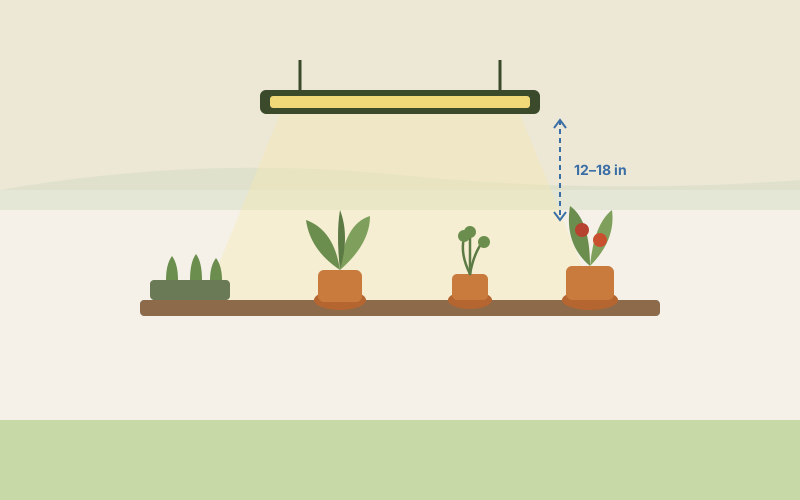
Light needs vary widely by plant type and growth stage. A low-light houseplant and a fruiting vegetable can need three to five times as much daily light to grow well. Using the same setup for both is a common reason one thrives and the other stalls. Growth stage matters too: seedlings are more sensitive to intense, close-range light than mature plants, which is why recommended hanging distances shift as a plant grows.
This calculator handles three related but distinct questions: how much wattage to size for a given growing area, what DLI a light meter reading works out to, and how far to hang a light for a given fixture type and growth stage. All three use the same underlying light concepts, just applied to different practical decisions.
Target DLI by Plant Type
These are typical target ranges, not fixed requirements. Actual needs shift with temperature, CO², and the specific species. Use them as a starting point, then adjust based on how your plants actually respond.
| Plant type | Target DLI (mol/m²/day) |
|---|---|
| Seedlings & cuttings | 6–8 |
| Low-light houseplants | 6–10 |
| Leafy greens & herbs | 12–20 |
| Fruiting vegetables | 20–30 |
Fruiting crops need roughly double to triple the daily light of leafy greens and houseplants, since producing fruit is a much more energy-intensive process for a plant than maintaining leaves alone. The DLI Calculator mode above can compare your calculated DLI directly against any of these four target ranges.
Worked Example: DLI Calculation
Say a light meter reads 400 µmol/m²/s (PPFD) at plant canopy height, and the light runs 14 hours a day.
- Multiply PPFD by 3,600 (seconds per hour): 400 × 3,600 = 1,440,000.
- Multiply by photoperiod: 1,440,000 × 14 = 20,160,000.
- Divide by 1,000,000 to convert µmol to mol: 20,160,000 ÷ 1,000,000 = 20.16 mol/m²/day.
A DLI of roughly 20 comfortably covers leafy greens and herbs (target 12–20) and sits right at the entry point for fruiting vegetables (target 20–30). That is workable for tomatoes or peppers, though pushing the photoperiod or PPFD higher would give more margin for a heavy-fruiting crop. The calculator above runs this same formula instantly for any PPFD reading and photoperiod.
Common Mistakes
- Confusing lumens with PPFD or DLI. Lumens measure how bright a light looks to the human eye; PPFD and DLI measure the light plants can actually use for photosynthesis. A high lumen rating doesn’t guarantee a good grow light, so check PPFD or DLI specs instead.
- Hanging lights too close or too far. Too close can stress or bleach leaves with excess intensity and uneven coverage; too far under-delivers light and wastes the fixture’s potential. Use the Light Distance mode above as a starting point, then watch how the plant responds.
- Ignoring photoperiod. The same fixture at the same distance delivers very different DLI depending on how many hours a day it runs: a bright light for 8 hours can under-deliver compared to a dimmer light for 16.
- Using the wrong DLI target for the plant type. A DLI that’s perfect for a low-light houseplant will leave a fruiting tomato under-lit and unproductive. Match the target range to what you’re actually growing, not a generic number.
Grow Light Calculator FAQ
What is DLI (daily light integral)?
DLI is the total amount of plant-usable light a spot receives over a full day, measured in mol/m²/day. It combines light intensity (PPFD) and how many hours the light runs, giving a single number that correlates well with plant growth, much more useful than a single instantaneous reading.
How do I calculate DLI from a PPFD reading?
Multiply your PPFD reading (µmol/m²/s) by 3,600, multiply by your photoperiod in hours, then divide by 1,000,000. The calculator above does this instantly. Enter a PPFD reading and photoperiod and it returns DLI in mol/m²/day.
What wattage grow light do I need for my growing area?
It depends on plant light need: roughly 15–20 actual watts per square foot for seedlings and low-light houseplants, 25–35 for leafy greens and herbs, and 40–50 for fruiting vegetables. Enter your area and light need tier into the calculator above for a specific wattage range and estimated electricity cost.
How far should a grow light be from my plants?
It depends on light type and growth stage. LED lights are typically hung 18–24 inches above seedlings and 12–18 inches above mature plants; fluorescent fixtures run cooler and can generally sit 6–12 inches away at either stage. Check your specific fixture’s spec sheet too, since intensity varies by model.
What is the difference between lumens and PPFD or DLI?
Lumens measure how bright a light looks to human eyes, weighted toward the green-yellow wavelengths we see best. PPFD and DLI measure the actual quantity of light plants can use for photosynthesis across a wider range of wavelengths. A light can have an impressive lumen rating and still be a poor grow light. Lumens are not a reliable way to shop for or evaluate a grow light.
Sources & further reading
Target DLI ranges draw on Virginia Cooperative Extension’s guide to calculating and using Daily Light Integral and DLI guidance published by Michigan State University Extension’s floriculture program. Wattage and hanging-distance ranges reflect typical home-grower LED and fluorescent fixture guidance rather than a single study. If you're still deciding between light types, see our LED vs. Fluorescent Grow Lights comparison. For more on how we build and verify the formulas behind every calculator on this site, see our methodology page.