Part of our Plant Problem Diagnosis series
Seedlings turn tall, thin and floppy when they stretch toward light that is too weak or too far away, and warmth and crowding make the stretch worse. The extension fix is bright light held a few inches above the plants on a timer for roughly 12 to 18 hours a day (sources vary), a cooler spot once the seeds have sprouted, and room to grow. Tomatoes that have already stretched can be rescued by burying part of the stem, but extension sources say most other crops should not be planted deeper. The same lamp routine applies to flowers started indoors, such as the marigolds in our guide to how to plant marigold seeds.
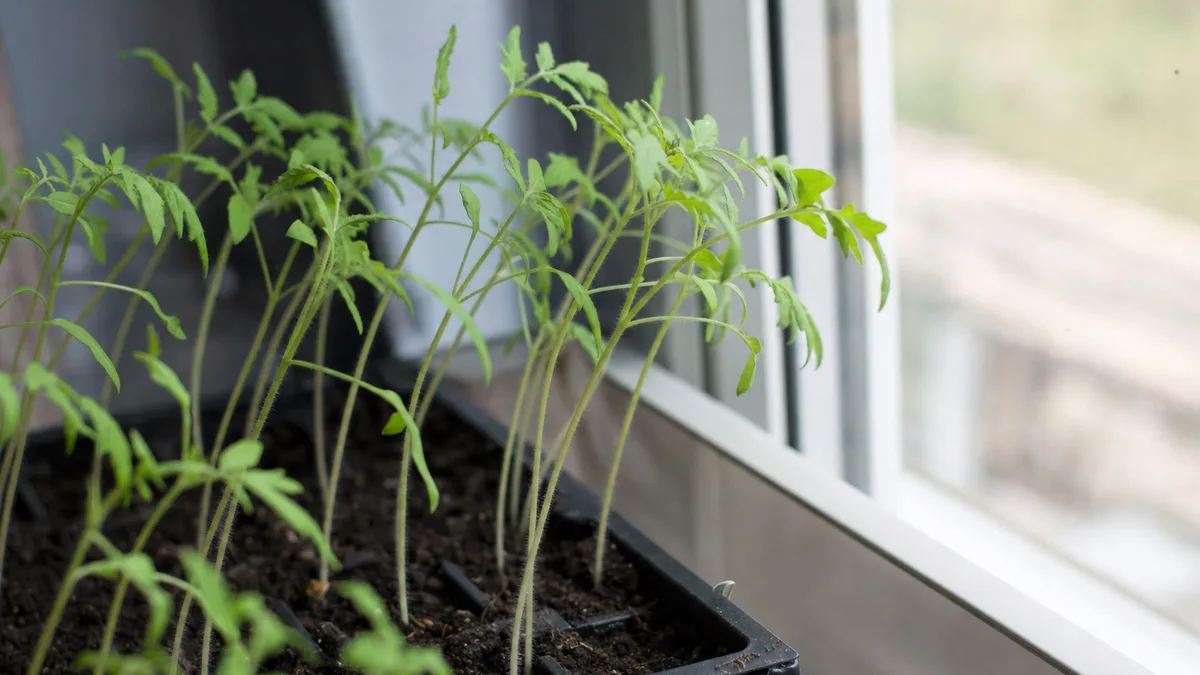
Quick Answer: Why Are My Seedlings Leggy?
Three quick looks at your tray point to the cause faster than reading every section in order.
What Leggy Means and Why Seedlings Stretch
A leggy seedling has a long, thin stem with a small amount of leaf on top. Plant scientists call this stretching toward light etiolation, and it is an ordinary survival reflex: a seedling that senses too little light puts its energy into getting taller, hoping to reach a brighter spot, instead of building a thick stem. Clemson Cooperative Extension describes the result plainly, saying that vegetable seedlings under low light become leggy, weak and tend to topple over once they are a few inches tall. The University of Minnesota Extension adds that weak stems mean the plant will struggle to hold itself up.
The stretch is more than a cosmetic problem. Utah State University Extension notes that thin, tall seedlings have difficulty staying upright, and the University of Maryland Extension says that stems which stretch and lean toward the light do not produce sturdy plants. Tomato and cabbage-family seedlings are singled out by Maryland as especially prone to stretching. Because the stem lengthens quickly and the extra length cannot be taken back, prevention is far easier than repair, which is why most of this guide is about the conditions that cause it.
If the leaves themselves are the worry rather than the stem, our yellow-leaves diagnostic guide covers that side, and the plant diagnosis hub lists every symptom guide in the series.
Not Enough Light Is the Main Cause
The University of Minnesota Extension says lack of light is the major cause of elongated, skinny stems. Minnesota also states that it is much better to grow seedlings under fluorescent or LED lights than to rely only on natural light, even in a greenhouse, and that a windowsill is not a good location for starting seeds. A south-facing window may be enough for only a few plants. Our guide to LED vs. fluorescent grow lights compares the two.
Other services agree. The University of Maryland Extension says natural light from a window is seldom enough for strong seedling growth and that acceptable growth usually happens only in south-facing bay windows or sun rooms with plenty of direct sun. Iowa State University Extension says a sunny window usually does not provide sufficient light, and Clemson says seedlings on windowsills reach for the light and become very tall and leggy. So the shared message is that a bright windowsill is rarely a substitute for lamps.
If a window is all you have, Iowa State suggests turning the seedlings regularly so they do not lean. That limits the tilt, but it does not add the intensity that prevents stretching. The same Iowa State page says intense light is necessary to prevent spindly or leggy seedlings, and the University of Minnesota’s vegetable team recommends moving lights closer, or adding stronger bulbs, if seedlings are already stretching.
Grow Light Distance and Hours Per Day
Extension services give lamp heights and daily hours, but they do not all agree, because the numbers depend on the fixture. Tubes and strips that put out modest light sit very close to the leaves; stronger fixtures can sit higher. Here is what each source says.
| Source | Lamp height above seedlings | Hours of light per day |
|---|---|---|
| University of Maryland Extension (seedling care) | 1 to 2 inches beneath a fluorescent fixture | 14 to 16 |
| University of Maryland Extension (starting seeds) | 2 to 6 inches, fluorescent or LED | 14 to 16 |
| University of Minnesota Extension | No more than 4 inches; as close as 2 is ideal | 12 to 16 |
| Clemson Cooperative Extension | 2 to 4 inches for fluorescent tubes | 16 to 18 |
| Utah State University Extension | 2 to 3 inches, with a warning about leaf scorch from high-output lights | 12 to 14 or more |
| UNH Extension | 3 to 4 inches above the tops | 14 to 16 |
| Iowa State University Extension (general guide) | 4 to 6 inches | 12 to 16 |
| Iowa State University Extension (troubleshooting) | 18 inches for a 4-foot LED shop fixture giving at least 3,000 lumens | 14 |
| University of Missouri Extension | About 6 inches from the lamps | 14 to 16 |
Our own tally of that table: apart from the 18 inch LED shop fixture Iowa State describes, the sources span 1 to 6 inches above the plants, and 12 to 18 hours of light a day. A schedule of 14 to 16 hours falls inside or at the edge of every range listed, so that is a reasonable middle to start from, but read the fixture label and watch the leaves. If the tips look bleached or crispy, the lamp is too close, as Utah State warns. If the stems keep lengthening, it is too far.
Two habits show up repeatedly. First, use a timer; Clemson and Maryland both recommend one. Second, keep the gap constant as the plants grow: Clemson says to start with the light just above the soil line and raise it to hold a 2 to 4 inch gap as the transplants get taller. That means the lamp should hang on chains or a rack you can adjust, not sit fixed above the tray.
Warm Temperatures, Crowding and Feeding
Light is the main cause, but three other conditions turn a borderline setup into a leggy one. Iowa State University Extension lists poor light, excessive watering, high temperatures, excessive fertilization and crowded conditions together as contributors to spindly growth.
Temperature after germination
Seeds often want warmth to sprout, but seedlings do better cooler. The University of Maryland Extension says that after germination seedlings can have a night temperature of 55 to 60°F and a day temperature of 65 to 70°F. Utah State University Extension and the University of Missouri Extension both say most vegetables prefer night temperatures of 60 to 65°F with days about 10 degrees warmer, and both say that warmer conditions give spindly or leggy plants. Iowa State says to move seedlings to a spot at 60 to 70°F right after germination, and UNH Extension gives 55 to 65°F. Purdue Extension agrees that warm temperatures aggravate the already spindly growth.
Put those together and the sources overlap around 60°F at night and up to about 70°F by day, with some services allowing a little lower. The University of Minnesota Extension gives only a floor, saying to keep air temperatures above 60°F, and notes that potting mix in indoor containers can run up to 5°F cooler than the air. A warm spot near a heat vent, a refrigerator top or a heat mat left on after the seeds are up is a common way to overshoot.
Crowding and overlapping leaves
When seedlings shade each other, each one stretches to get above its neighbor. Utah State says to space plants so the leaves do not overlap, and says seedlings are ready for a larger container when the leaves begin to overlap. The University of Missouri Extension warns that failing to transplant promptly results in crowded, spindly seedlings that may not develop properly. Details on thinning and moving seedlings up are in the next sections.
Fertilizer and watering
Extension sources name fertilizer in general, not nitrogen in particular, so that is as specific as we can be. Utah State says overfertilizing can cause rapid, succulent growth with weak stems, and that it is better to be a little lean than excessive. Missouri advises fertilizing at about half the recommended strength a few days after germination. The University of Maryland Extension says to hold back on fertilizing, since most potting mixes supply enough nutrients for about 5 to 6 weeks of growth. Iowa State lists excessive watering as a contributor, so let the surface dry between waterings. For tomatoes, our guide to the best tomato fertilizer covers feeding seedlings and young plants.
How to Keep Seedlings From Getting Leggy
Putting the extension advice in order of impact:
- Use real lights, not a window alone. Hang a fluorescent or LED fixture within the heights in the table above and run it on a timer for the hours your fixture calls for.
- Raise the lamp as the plants grow. Keep the gap steady rather than leaving the light where you first hung it.
- Cool the room down once seeds sprout. Aim for the 55 to 70°F band that the sources above describe, with nights cooler than days.
- Keep leaves from overlapping. Thin to one plant per cell and pot up when the leaves start touching.
- Feed lightly. Hold back on fertilizer early, and use dilute solution afterward.
- Do not start too early. Purdue Extension names starting seeds too early as the likely culprit behind leggy transplants, and Iowa State says seedlings planted too early get large and lanky before they can go outside.
Airflow and gentle brushing
Extension sources do support moving the plants a little. Clemson says to place a fan near seedlings that have two true leaves so they sway gently, and it warns that the fan dries the plants faster, so check moisture more often. Utah State says a small fan at plant level can lower humidity and increase stem strength, and recommends very light, intermittent airflow. The University of Maryland Extension says gently brushing the tops of the transplants with your hand or a wooden stick helps control their height and makes them stockier. None of these pages gives a number for how long the fan should run or how many strokes to use, so treat them as a light, occasional habit and watch how the plants respond. The University of Minnesota Extension page on starting seeds did not mention fans or brushing, so this is advice from a few services rather than all of them.
Thinning and Potting Up
Thinning is how you cut crowding off at the source. The University of Minnesota Extension says that once true leaves develop you should snip all but the healthiest seedling off at ground level with scissors, and not pull the extras, which can damage the roots of the one you keep. The University of Missouri Extension suggests sowing two seeds per pot and thinning to one.
Potting up is the other release valve. Maryland says seedlings left in the seed flat too long are one of the most common mistakes, and that the ideal time to transplant is while they are small and recover quickly, shortly after the first true leaves appear. Iowa State says first true leaves, while Missouri says at least one set of true leaves and large enough to handle. For the new container, Minnesota recommends one that is 1 to 2 inches wider than the cell pack. Clemson says to hold seedlings by their seed leaves rather than the stem, since the stem is fragile. For spacing, the University of Minnesota Extension says tomato seedlings should be about two inches apart, and two to three inches apart for peppers.
How to Fix Leggy Tomato Plants
Tomatoes have a trick other vegetables lack: they grow roots from the stem. Purdue Extension explains that most gardeners handle leggy tomatoes by setting the transplants deeper when planting out, since tomatoes root along the stem. The University of Minnesota Extension says burying part of the stem gives a stronger plant, because new roots emerge from the buried section. Penn State Extension says any portion of a tomato stem that touches the ground can root.
The method, as the extension pages describe it:
- Strip the lower leaves. Purdue says to remove any leaves that would otherwise sit below the soil.
- Dig a trench, not a hole. Minnesota says to dig a trench three to four inches deep. Penn State says to lay the roots and lower stem horizontally in a trench a few inches deep, and notes this is a good method for leggy plants.
- Bury the stem up to just below the lowest remaining leaves. This is Minnesota’s instruction. Penn State’s general advice is to remove the lower leaves and plant 5 to 6 inches deep, so the sources differ slightly on depth. Both agree that the trench is the way to do it.
- Let the tip turn up. Purdue says the stem bends toward the sun, and that in a few weeks the top of the plant will be relatively upright. It also suggests planting at an angle, since deep roots sit in cooler soil with less oxygen and tomato roots like a warm soil.
Trench planting rescues a plant at transplanting time. For seedlings still indoors, the extension sources we read do not describe a way to shorten stems that have already stretched, other than burying them when the plants go out. The better move is fixing the light, temperature and spacing so that new growth is sturdy, and, as Purdue puts it, starting with good-sized plants. Penn State and Purdue both point to a short, stocky transplant with a thick stem, with Penn State saying the stem should be about the width of a pencil. Harden the plants off before the move; Penn State describes about a week of gradual increases in sun and wind exposure.
Other Seedlings, and When to Start Over
Do not generalize the tomato trick. Purdue Extension says other crops do not root as readily as tomatoes and should not be planted deeper. Ohio State University Extension says to plant pepper seedlings no deeper than the soil line from the tray, and that planting deeper on most plants will cause stem rot. The University of Minnesota Extension likewise says to set pepper seedlings so the shoots are at the soil line, as they were before transplanting. We did not find an extension source that gives separate depth rules for cucumbers, squash or cabbage-family transplants, so we make no claim beyond Purdue’s general statement about other crops. Our guide to growing peppers from seed covers their light and warmth needs.
That leaves two choices for a stretched non-tomato seedling. If it stands up on its own, correct the light, cool it, pot it up into a container 1 to 2 inches wider, and grow on with closer lamps. The University of Minnesota’s vegetable team says legginess is caused by low light, so better light is the fix for everything that grows afterward.
Starting over is a judgment call, and this part is our opinion rather than a sourced rule: extension services give no height or stem-thickness cutoff. If a seedling cannot hold itself up even after a week or two under close lights, or has lost its growing tip, which Minnesota warns it may not survive, sow a fresh batch. Check the timing first, because Purdue and Iowa State both link leggy transplants to starting too early, and a later sowing date is often the real correction.
Leggy Seedlings: Quick Reference Table
| Cause | Sign | Fix | Source |
|---|---|---|---|
| Too little light | Long, thin stems that lean toward the window | Use grow lights on a timer; do not rely on a windowsill | University of Minnesota Extension; Iowa State Extension |
| Lamps too far or too brief | Stems keep lengthening under lights | Lower lamps to the heights in the table above; run 12 to 18 hours depending on source | Maryland, Minnesota, Clemson, Utah State, UNH, Iowa State, Missouri |
| Too warm | Tall, spindly plants in a warm room | Night 55 to 65°F, day about 10 degrees warmer, depending on source | Maryland, Utah State, Missouri, Iowa State, UNH |
| Crowding | Leaves overlap in the seed tray | Snip extras at the soil line; pot up into a container 1 to 2 inches wider | University of Minnesota Extension; Utah State; Missouri |
| Heavy fertilizer or water | Fast, soft, weak stems | Fertilize lightly; let the surface dry between waterings | Utah State; Iowa State; Missouri |
| Started too early | Large, lanky transplants before the outdoor date | Sow later; buy or grow shorter, stocky plants | Purdue Extension; Iowa State |
| Weak stems, no motion | Seedlings flop over | Fan or gentle brushing; no frequency given by sources | Clemson; Utah State; Maryland |
| Leggy tomato at transplanting | Tall, floppy transplant | Trench plant with the lower leaves removed | Purdue; University of Minnesota; Penn State |
Free book · 23 pages, PDF
Leggy Seedlings FAQ
Why are my seedlings tall and thin?
Almost always because they are stretching toward light that is too weak or too far away. The University of Minnesota Extension calls lack of light the major cause of elongated, skinny stems. Warm temperatures, crowding and too much fertilizer can add to it, according to Iowa State Extension.
Can leggy seedlings be saved?
Tomatoes can: extension services such as Purdue, the University of Minnesota and Penn State say to plant them deeper or in a trench, because they root along the buried stem. Most other crops should not be buried. For those, fix the light, cool them, and pot up. If a seedling will not stand even after improving conditions, starting a new batch may be easier.
Can I grow seedlings on a windowsill?
Often not well. The University of Minnesota Extension says a windowsill is not a good location for starting seeds, and the University of Maryland Extension says window light is seldom enough. A south-facing bay window or sun room may work. Turning plants regularly helps with leaning, according to Iowa State Extension.
How far should grow lights be from seedlings?
It depends on the fixture. Extension sources give 1 to 6 inches for fluorescent or LED shop lights, such as 2 to 4 inches from Clemson and no more than 4 inches from the University of Minnesota. Iowa State gives 18 inches for a 4-foot LED fixture giving at least 3,000 lumens. Check the fixture label, and watch for leaf scorch.
How many hours of light do seedlings need?
Extension sources range from 12 to 18 hours a day. Minnesota and Iowa State say 12 to 16, Maryland and UNH say 14 to 16, Utah State says 12 to 14 or more, and Clemson says 16 to 18. A timer keeps it consistent.
Is there a quick checklist on how to prevent seedlings from getting leggy?
Give seedlings strong light a few inches above them on a timer, keep them cooler than they were for germination (around 55 to 70°F depending on source), thin and pot up before leaves overlap, and go easy on fertilizer. Start seeds at the right time, not too early.
Sources & further reading
Lamp heights and daily hours come from the University of Maryland Extension’s guide to the care of vegetable seedlings and its starting vegetable seeds indoors guide, the University of Minnesota Extension’s starting seeds indoors page, Clemson Cooperative Extension’s starting seeds indoors factsheet and its grow light setup guide, Utah State University Extension’s seedling culture and transplanting article, UNH Extension’s transplants for the home garden, Iowa State University Extension’s guide to starting seed indoors and its article on addressing issues with starting seeds indoors, and the University of Missouri Extension’s starting plants indoors from seeds. Notes on low light as the cause of legginess also draw on the University of Minnesota’s troubleshooting seedling issues post. The rescue method for tomatoes and the warnings about other crops come from Purdue Extension’s Leggy Tomatoes article, University of Minnesota Extension on growing tomatoes, Penn State Extension’s tomatoes from seedlings to fruit, Ohio State University Extension on growing peppers and University of Minnesota Extension on growing peppers. For more on our sourcing approach, see our methodology page.
Free book · 23 pages, PDF
The Plant Problem Diagnosis Quick Reference
Sent