If you’ve started tomatoes from seed before, learning how to grow bell peppers from seeds will feel familiar with one big catch: peppers need a longer head start and warmer conditions than almost anything else you’d start indoors. Get the timing and warmth right and the rest of the process is straightforward: this guide covers both, plus the transplant mistake that trips up gardeners coming from tomatoes.
When to Start Pepper Seeds
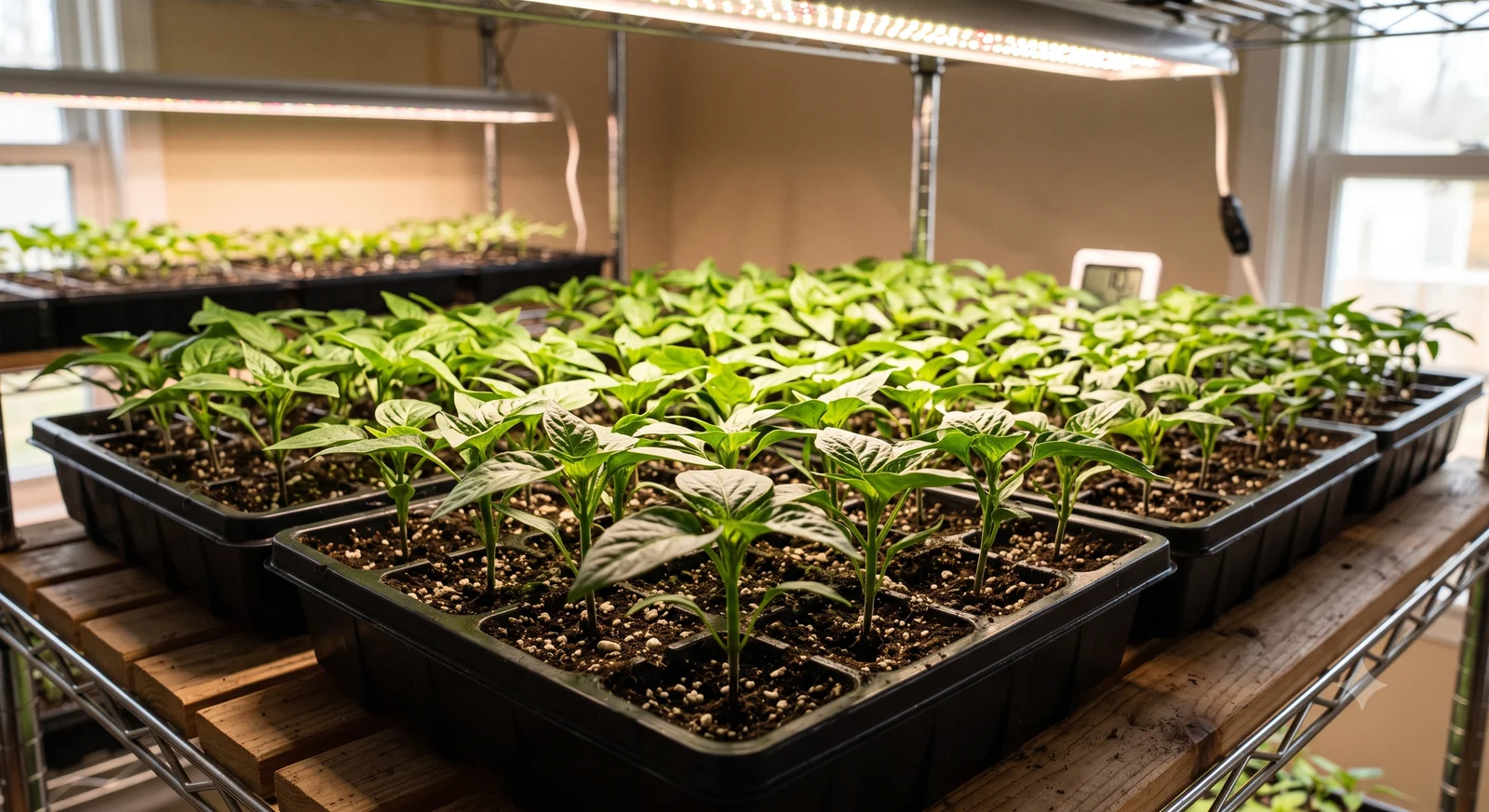
HarvestMath’s own Seed Starting Calculator puts peppers at 8–10 weeks before your last frost date for starting indoors, noticeably earlier than tomatoes’ 6–8 week window. That extra lead time exists because peppers grow more slowly than tomatoes at every stage, from germination through reaching transplant size, so starting on the earlier end of that window is generally safer than the later end.
If you don’t already know your last frost date, our Frost Date Calculator estimates it by ZIP code, and the Seed Starting Calculator turns that into a full personalized schedule (indoor start date, hardening-off window, and transplant date) for peppers and everything else in your garden plan.
Peppers Need More Warmth Than Tomatoes
Peppers germinate best at 70–85°F soil temperature, a touch warmer than tomatoes’ 70–80°F range, and University of Minnesota Extension specifically recommends running a heat mat toward the higher end, 80–90°F, until pepper seeds actually emerge. That narrower comfort zone is why a heat mat matters more for peppers than for almost any other seed you’ll start indoors: without one, room-temperature germination can take noticeably longer and come up unevenly. Not every seed wants warmth, though. Our How to Grow Lettuce from Seed guide covers a cool-season crop that germinates best in the 50s and 60s and can actually go dormant in the kind of heat peppers need. And unlike peppers, which need an indoor head start, some crops can’t be started indoors at all. Our How to Grow Carrots from Seed guide covers a direct-sow-only root crop where transplanting ruins the harvest. Cucumbers split the difference between the two extremes: they work either direct-sown or transplanted; see our How to Grow Cucumbers from Seed guide for that more forgiving case. Beans join carrots on the direct-sow-only side. Our How to Grow Beans from Seed guide covers that case, plus the truth about what beans actually do for soil nitrogen.
Peppers are also just slower. Where tomato seeds typically sprout in 5–12 days, pepper seeds commonly take 7–14 days, and some hot pepper varieties, habaneros especially, can take three weeks or longer. If you’re starting both crops on the same day, don’t be surprised if your peppers are still bare dirt a week after your tomatoes have sprouted; that’s normal, not a sign anything’s wrong. For a side-by-side look at the rest of the process, see our How to Grow Tomatoes from Seed guide.
Sowing and Germinating
This is where how to grow peppers from seed comes down to the fundamentals: depth, moisture, and warmth. Sow pepper seeds about ¼ inch deep in a sterile seed-starting mix, matching University of Minnesota Extension’s own planting depth for peppers. Keep the mix consistently moist, not soggy: the same squeeze test that works for tomatoes applies here: a handful of moistened mix should hold together without dripping. A humidity dome or loose plastic wrap over the tray helps hold moisture during the longer pepper germination window, though it’s optional if you’re checking and misting the mix regularly anyway.
Once seedlings emerge, they need real light fast: 12 to 16 hours a day of strong, close light, whether that’s a dedicated grow light or (rarely bright enough on its own) a sunny south-facing window. If you’re deciding what kind of light to run, our LED vs. Fluorescent Grow Lights guide compares the options for a seed-starting setup.
How to Germinate Pepper Seeds Faster
A few things reliably speed up pepper germination, and a few commonly suggested tricks don’t have much evidence behind them. Worth knowing the difference before you try anything unusual.
What actually helps: consistent bottom heat from a heat mat held in the 80–90°F range is the single biggest lever, since pepper seeds are more heat-sensitive during germination than most other vegetable seeds. Soaking seeds in room-temperature water for a few hours (not days) before sowing can also shave a day or two off germination for some gardeners by softening the seed coat slightly. Beyond that, patience matters more than any trick: slower varieties like habaneros and other super-hots are simply going to take longer no matter what you do, and giving up on a tray too early is a common, avoidable mistake.
What’s less established: you’ll see suggestions online for scarifying (nicking) the seed coat or soaking seeds in chamomile tea before sowing. Both circulate widely in gardening forums, but neither is backed by solid horticultural research specific to peppers, and scarifying in particular carries a real risk of damaging the embryo if done carelessly. Neither is necessary: consistent warmth and moisture do almost all the actual work.
The Transplant Difference: Don’t Bury Peppers Like Tomatoes
This is the single most important technique difference between growing tomatoes and peppers from seed, and it trips up a lot of gardeners who’ve started tomatoes before: don’t bury pepper stems the way you would a tomato.
Tomatoes get planted deep on purpose: the fine hairs along a buried tomato stem grow into actual roots, so burying up to the lowest leaves gives the plant a bigger root system (see our tomato seed-starting guide for that technique in full). Peppers don’t share that trait. A buried pepper stem doesn’t root the same way, and the extra stem sitting in damp soil is more likely to rot than to help the plant.
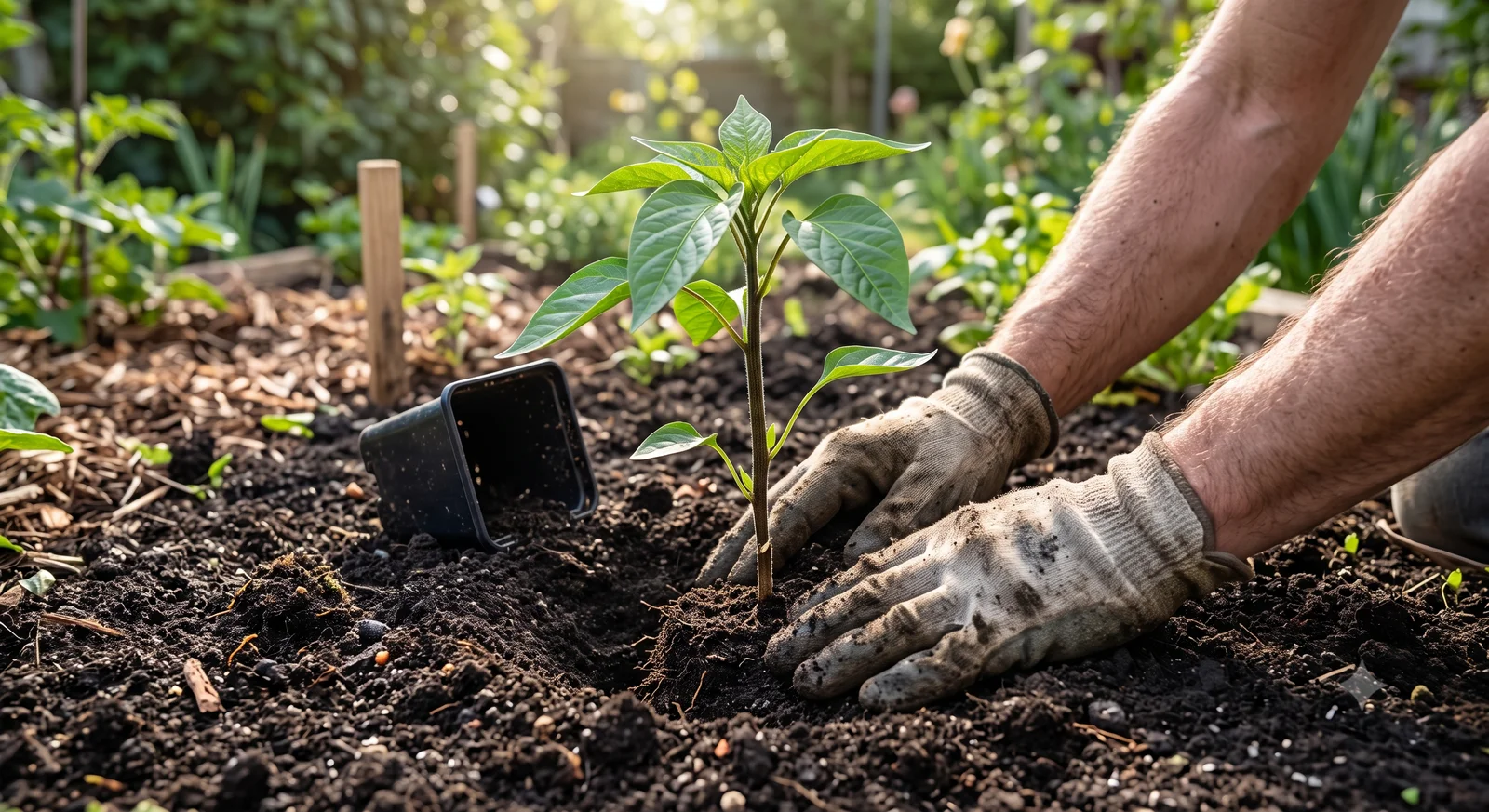
Plant pepper seedlings at the same depth they were growing at in their pot: soil line to soil line, matching how University of Minnesota Extension describes it: set the shoots at the soil line, same as before transplanting. The one exception is a seedling that’s gotten noticeably leggy; in that case, you can bury it an inch or so deeper than it was growing, but don’t go past that, and don’t treat it as the default move the way you would with a tomato.
When to Move Peppers Outside
Our Seed Starting Calculator lists pepper transplant timing at 1–2 weeks after your last frost date, the same window as tomatoes. Treat that as the earliest safe edge of the window, not the target. Peppers are pickier about soil warmth than tomatoes, and a pepper transplanted into cold soil can stall and never fully recover, even if it survives. University of Minnesota Extension puts it simply: wait until nighttime lows are consistently above 50°F, which in practice often lands closer to 2–3 weeks after your last frost date rather than right at it. If you can, wait for soil temperature to reach roughly 65°F before transplanting: a soil thermometer is a cheap, reliable way to check instead of guessing from the calendar.
Peppers are also especially prone to transplant shock, so don’t rush hardening off. Give them 1–2 weeks of gradually increasing outdoor exposure (starting with an hour or two in a sheltered, shaded spot and working up to a full day outside) before leaving them in the ground for good.
If you’re planting in the ground rather than containers, University of Minnesota Extension recommends spacing pepper plants about 18 inches apart, in rows 30–36 inches apart. See our Pepper Plant Spacing guide for how that changes by pepper sub-type. Our Plant Spacing Calculator works out exactly how many pepper plants fit your bed at that spacing, whether you’re using a traditional row layout or square foot gardening.
Growing Peppers by Variety
Pepper varieties differ more in timing than most vegetables do, and that difference matters more here than it does with tomatoes: a short growing season can rule out some hot pepper varieties entirely if you don’t account for it upfront.
Bell Peppers
Bell peppers are the baseline most seed packets and calculators are built around: typically 60 to 90 days to maturity, counted from transplant, not from the day you sowed the seed (more on that below). They’re also one of the milder, more forgiving peppers to start from seed, without the extra-long germination window some hot varieties need.
Jalapeño
Jalapeños germinate and mature faster than most other hot peppers, often 70 to 85 days to maturity, which makes them a reasonable first hot pepper to try if you’re used to growing bells.
Habanero
Habaneros take noticeably longer on both ends: germination alone can stretch past two weeks, and days to maturity typically run 90 to 100 days or more. Start these on the early side of your window if you’re growing habaneros specifically.
Serrano
Serranos sit between jalapeños and habaneros in both heat and timing, usually maturing in 75 to 90 days. They’re a reliably productive plant once established, often outproducing bells and jalapeños from the same size garden footprint.
Super-Hot Peppers
Ghost peppers, Carolina Reapers, and other super-hot varieties are the slowest of all: 120 to 150 days to maturity is common, plus a longer, less predictable germination window than any other pepper type. In a short growing season, that timeline genuinely matters: start these as early as your setup allows, and don’t expect the same reliability you’d get from a bell or jalapeño.
One genuinely common mix-up worth clearing up: the “days to maturity” number on a seed packet counts from the transplant date, not from when you sowed the seed indoors. Add your indoor start-to-transplant window (the 8–10 weeks above, plus hardening off) on top of the packet’s days-to-maturity number to get a realistic total timeline from seed to harvest.
Growing Peppers in Containers
Peppers are one of the more container-friendly vegetables to grow, and plenty of gardeners with limited bed space grow them exclusively in pots. Bell peppers and other larger varieties do best in at least a 5-gallon container, while compact or smaller-fruited varieties can get by in something closer to 3 gallons. Drainage matters more in a container than in the ground: a pot without adequate drainage holes will hold water long enough to encourage root rot, especially given peppers’ need for consistent-but-not-soggy moisture.
If you’re not sure what size pot fits a specific variety, our Pot Size Calculator works out container dimensions and soil volume based on what you’re growing.
Free book · 23 pages, PDF
Growing Peppers from Seed FAQ
How long does it take to grow peppers from seed?
From sowing to harvest, expect roughly 4 to 5 months total for most varieties: 8–10 weeks indoors before transplant, then another 60–150 days to maturity after that depending on the variety. Bell peppers and jalapeños land on the shorter end of that range; habaneros and super-hots take considerably longer.
Can you grow peppers from seeds from a store-bought pepper?
Yes, in most cases. Scoop out the seeds, let them dry fully for a few days, and they'll germinate like any other pepper seed. As with tomatoes, if the pepper was a hybrid variety the resulting plant won't necessarily grow true to the parent, so results can vary more than with an open-pollinated variety.
How do I save pepper seeds for next year?
Let the pepper fully ripen on the plant, past the color it's usually picked at, before harvesting seeds: an underripe pepper's seeds are less viable. Scoop the seeds out, rinse off any pulp, and spread them in a single layer to air-dry for about a week before storing in a paper envelope somewhere cool and dark. Peppers self-pollinate, which makes their seeds relatively reliable to save compared to many other garden vegetables.
Is it better to grow peppers from seed or buy transplants?
Buying transplants is faster and more forgiving if you're short on time or grow lights, but starting from seed gives you access to far more varieties than a garden center typically carries, especially for hot peppers, and costs a fraction as much per plant. If you're only growing a couple of bell pepper plants, transplants are a reasonable shortcut; if you want specific hot pepper varieties or a full pepper patch, seed starting usually makes more sense.
Can peppers grow in pots?
Yes, peppers are well-suited to container growing, generally needing at least a 5-gallon pot with good drainage for full-size bell peppers, slightly less for compact or smaller-fruited varieties. Container-grown peppers do need more frequent watering than in-ground plants, since pots dry out faster, especially in hot weather.
Sources & further reading
For pepper-specific timing, sowing depth, and transplant technique, see University of Minnesota Extension’s guide to growing peppers in home gardens. For variety selection, see Cornell’s disease-resistant pepper varieties guide. For more on how we source and review the facts behind every calculator and guide on this site, see our methodology page. And for more on spacing, timing, and companion planting across the whole garden, see our complete guide to spacing and planting.