The best planting calendar for my zone starts with a frost date, not a zone number. In NOAA’s 1991 to 2020 normals, as used in our frost data, the typical last spring frost runs from Jan 27 in zone 10a to May 16 in zone 3b, and the first fall frost from Sep 26 to Dec 24. Our spacing and planting guides turn those dates into sowing weeks.
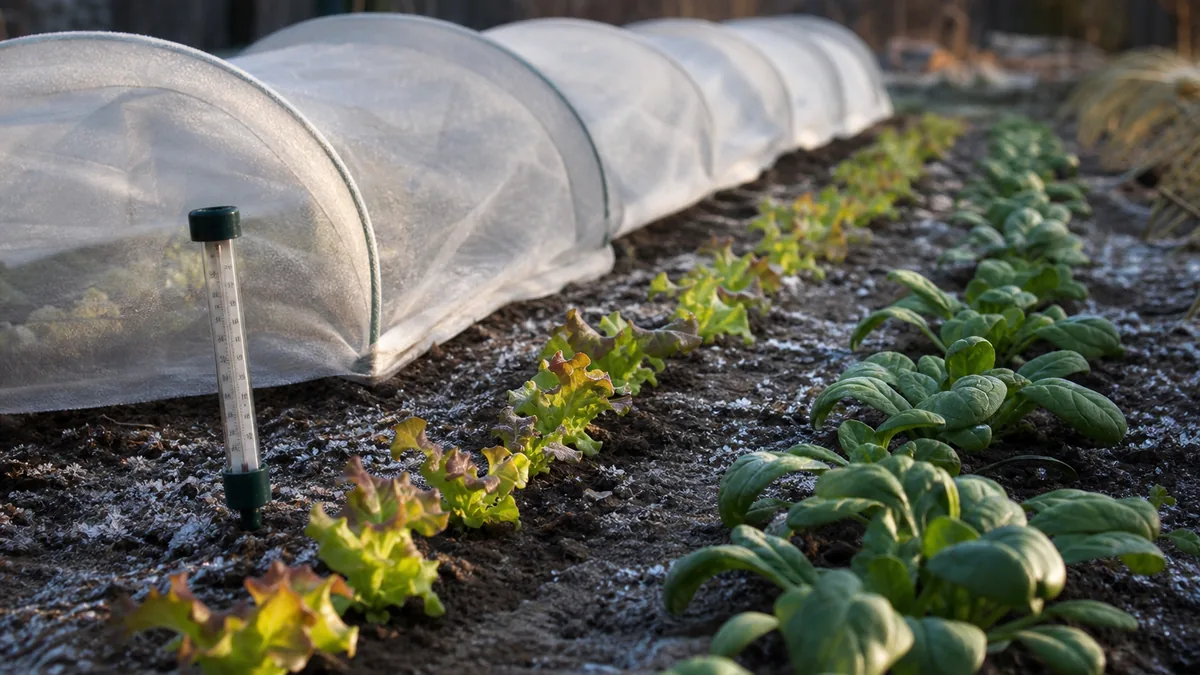
Planting Calendar by Zone: Typical Frost Dates for Zones 3b to 10a
Each row below is the median across all the ZIP codes in that zone, taken from the nearest NOAA weather station for each ZIP code. The spring range shows the 10th to 90th percentile, so one zone can cover about a month or more of spring. The last column applies the planting calendar’s rule for the cold-hardy first sowings of peas, spinach, radishes and kale, 4 to 6 weeks before the last frost. Those offsets come from the extension sources listed on our planting calendar pages: UConn for peas, Penn State and Utah State for spinach, Michigan State for radishes and University of Minnesota Extension for kale.
| Zone | Typical last spring frost | Typical first fall frost | Spring range, 10th to 90th percentile | First sowings: peas, spinach, radishes, kale | Zone page |
|---|---|---|---|---|---|
| 3b | May 16 | Sep 26 | May 8 to May 31 | Apr 4 to Apr 18 | Zone 3b frost dates |
| 4a | May 11 | Sep 28 | May 3 to May 23 | Mar 30 to Apr 13 | Zone 4a frost dates |
| 4b | May 10 | Sep 30 | May 2 to Jun 2 | Mar 29 to Apr 12 | Zone 4b frost dates |
| 5a | May 4 | Oct 4 | Apr 25 to May 25 | Mar 23 to Apr 6 | Zone 5a frost dates |
| 5b | Apr 30 | Oct 11 | Apr 19 to May 17 | Mar 19 to Apr 2 | Zone 5b frost dates |
| 6a | Apr 27 | Oct 17 | Apr 14 to May 12 | Mar 16 to Mar 30 | Zone 6a frost dates |
| 6b | Apr 23 | Oct 20 | Apr 11 to May 11 | Mar 12 to Mar 26 | Zone 6b frost dates |
| 7a | Apr 16 | Oct 25 | Apr 3 to May 2 | Mar 5 to Mar 19 | Zone 7a frost dates |
| 7b | Apr 5 | Nov 1 | Mar 28 to Apr 22 | Feb 22 to Mar 8 | Zone 7b frost dates |
| 8a | Mar 28 | Nov 7 | Mar 14 to Apr 9 | Feb 14 to Feb 28 | Zone 8a frost dates |
| 8b | Mar 19 | Nov 13 | Mar 5 to Apr 7 | Feb 5 to Feb 19 | Zone 8b frost dates |
| 9a | Mar 4 | Nov 24 | Jan 31 to Apr 1 | Jan 21 to Feb 4 | Zone 9a frost dates |
| 9b | Feb 13 | Dec 5 | Jan 12 to Apr 10 | Jan 2 to Jan 16 | Zone 9b frost dates |
| 10a | Jan 27 | Dec 24 | Jan 7 to Mar 1 | Dec 16 to Dec 30 | Zone 10a frost dates |
Source: NOAA U.S. Climate Normals 1991 to 2020, through HarvestMath’s frost data. First fall frost dates in January belong to the following winter, and zones 9a to 10a have a few frost-free ZIP codes that this table does not separate.
Read the table as a starting line, not a promise. In zones 3b and 4a the dates for the first sowings fall in early April, when the ground may still be frozen, so Utah State Extension’s advice to sow hardy crops as soon as the soil is workable beats the calendar date. In zones 9a to 10a the spring range stretches over two to three months. The state pages hold the full 19-crop tables: see the Ohio planting calendar for zone 6 and the Georgia planting calendar for a warmer example.
Does My Hardiness Zone Tell Me When to Plant?
Not directly. The USDA says its Plant Hardiness Zone Map is based on the average annual extreme minimum winter temperature, shown in 10°F zones with 5°F half zones. That is a winter-cold rating, built to answer whether a perennial survives the winter. It says nothing about the date spring warms up or fall turns cold. Our explainer on USDA hardiness zones covers how to read the map; for planting, the frost dates attached to your zone do the work.
The two ideas travel together only loosely. In our frost data, ZIP codes in zone 6b sit in 21 states, from California to Massachusetts, and zone 7a covers ZIP codes in 30 states. A zone number is useful shorthand, which is why the table above is sorted by it, but the frost dates are the input. If you only know your ZIP code, the zone finder gives the zone, and the next sections show how to get to dates.
How Different Can Frost Dates Be Within One Zone?
Weeks different. The 10th to 90th percentile spring range in the table is 30 days for zone 6b (Apr 11 to May 11), 29 days for zone 7a (Apr 3 to May 2) and 88 days for zone 9b (Jan 12 to Apr 10), all from NOAA 1991 to 2020 normals through our frost data. A garden at the early end of its zone can plant a month before one at the late end, and both are in the same zone.
Extension sources describe the same thing at state scale. University of Illinois Extension gives regional median last 32°F freeze dates of about April 1 to 8 in southern Illinois, April 8 to 15 in central Illinois and April 8 to 29 in northern Illinois. Utah State Extension reports frost-free days ranging from an average of 113 in Lewiston and Trenton to 158 on the Utah State campus. The University of Delaware adds that urban sites retain more heat and create a microclimate, while low-lying areas where cold air collects face a higher risk of late spring freezes.
One more wrinkle is that NOAA’s last-frost date is a 50 percent date. Climate.gov explains that its map shows the average date when the chance of freezing drops below 50 percent, that the date varies from year to year, and that the 40, 30, 20 and 10 percent dates exist for a more careful planter. That is why a warm-season transplant waits a week or two past the median. Our comparison of Farmer’s Almanac frost dates and NOAA normals shows median and 1-in-10 dates side by side for five cities.
How Do I Find My Own Frost Dates?
Use your own location, not your zone’s median. Enter your ZIP code in the frost date calculator for the dates from your nearest NOAA station, or open the matching zone page from the table for the zone-wide numbers. The same ZIP code also works in our planting calendar: enter your ZIP code and get this month’s list of what to sow or transplant now. Then correct for your own yard. Low spots, shaded corners and exposed hilltops run weeks away from the station’s numbers, so write down the date of your own last frost each year.
Zone 6 Planting Schedule: A Worked Example for Zone 6b (and 6a)
The zone 6b planting schedule below starts from the zone’s median last spring frost, Apr 23, and applies the planting calendar’s offsets in weeks. Zone 6b includes Chicago and Columbus in our city data, so gardeners in Illinois can compare it with their state’s table. Zone 6a is four days later at Apr 27, so shift every date below by that much. Each offset is a range from the extension source named in the last column, and none is a guarantee.
| Crop and task | Offset from last frost | Zone 6b window | Extension source |
|---|---|---|---|
| Peas, direct sow | 4 to 6 weeks before | Mar 12 to Mar 26 | UConn |
| Spinach, direct sow | 4 to 6 weeks before | Mar 12 to Mar 26 | Penn State, Utah State |
| Carrots, direct sow | 2 to 5 weeks before | Mar 19 to Apr 9 | NC State |
| Lettuce, direct sow | 2 to 4 weeks before | Mar 26 to Apr 9 | Michigan State, Utah State |
| Onion sets or transplants | 2 to 4 weeks before | Mar 26 to Apr 9 | Iowa State |
| Tomatoes, start indoors | 6 to 8 weeks before | Feb 26 to Mar 12 | UGA |
| Peppers, start indoors | 8 to 10 weeks before | Feb 12 to Feb 26 | UMN, UNH |
| Beans, direct sow | 0 to 1 week after | Apr 23 to Apr 30 | Utah State |
| Tomato transplants | 1 to 2 weeks after | Apr 30 to May 7 | UGA |
| Pepper transplants | 2 or more weeks after | May 7 and later | UMN, UNH |
Read down the table and the order of the season appears: peas and spinach first, then carrots from seed once the soil crumbles, lettuce a little later, and the warm-season crops after the frost date. Cool-season crops carry on past that point, so a second lettuce sowing every two to three weeks is the plan the calendar notes; succession planting shows how to space them. The dates for onions line up with our guide to planting onion sets.
Sources can disagree with the calendar, so check your own state. University of Illinois Extension lists central Illinois tomato transplants from May 10 to June 1, later than the calendar’s Apr 30 to May 7, and says warm-season crops must be planted well after the average last frost date. The calendar itself notes that tomatoes should wait until nighttime lows are reliably above 50°F. When the two disagree, use the later date for tomatoes, peppers and squash. Indoor starts are the easy part to schedule: growing tomatoes from seed and growing peppers from seed cover the indoor stage, and when to start seeds indoors covers the weeks.
Zone 7 Planting Schedule: Zones 7a and 7b
A zone 7 planting schedule runs about one to three weeks ahead of zone 6, depending on the half zone. Zone 7a has a median last frost of Apr 16 and a median first frost of Oct 25. Zone 7b has Apr 5 and Nov 1, which our frost data takes from NOAA 1991 to 2020 normals. Zone 7 spans 30 states in our data, so Virginia and North Carolina are good places to compare your state with the zone numbers.
| Crop and task | Zone 7a window (last frost Apr 16) | Zone 7b window (last frost Apr 5) |
|---|---|---|
| Peas and spinach, direct sow | Mar 5 to Mar 19 | Feb 22 to Mar 8 |
| Lettuce and onion sets | Mar 19 to Apr 2 | Mar 8 to Mar 22 |
| Tomatoes, start indoors | Feb 19 to Mar 5 | Feb 8 to Feb 22 |
| Beans and squash, direct sow | Apr 16 to Apr 23 | Apr 5 to Apr 12 |
| Cucumbers, direct sow or transplant | Apr 23 to Apr 30 | Apr 12 to Apr 19 |
| Peppers, transplant | Apr 30 and later | Apr 19 and later |
These use the same offsets as the zone 6b table. The warm-season crops depend on the soil more than on the date. The calendar’s own notes cite 60°F soil for beans (Utah State), about 70°F soil for squash (University of Maryland Extension) and 70°F at 1 inch deep for cucumbers (Utah State and University of Illinois). Our guide to soil temperature for planting shows how to take that reading. Crop guides such as growing beans from seed, cucumbers from seed and how to grow squash give the details for each.
Zone 7 also has a second, longer window in fall, covered below. If your zone 7 garden sits at the warm end of its range, the Utah State categories help: its hardy crops go in about 45 to 60 days before the average last frost and tender ones on the last frost date.
What Goes In First in Cold Zones and Warm Zones?
In cold zones, 3b to 5b, the first job is indoor seed starting and the first outdoor sowings are peas, spinach, radishes and kale as soon as the soil can be worked. Their median last frosts run from Apr 30 (5b) to May 16 (3b), so the 4 to 6 week offset points to mid March through mid April. Seedlings started indoors for these zones need strong light, and leggy seedlings are the usual result of a window that is too dim.
In the middle, zones 6a to 8b, the order is the one in the worked examples: hardy crops in March, tender ones in late April to May. In the warm end, 9a to 10a, the median last frost is Mar 4, Feb 13 and Jan 27, and the 10th to 90th percentile spread runs from 53 to 88 days. The offsets still work as arithmetic, but they put the first sowings in January and February, so use your ZIP code’s own dates and treat fall as the main cool-season window. The University of Delaware advises choosing dates earlier in the planting window for cool-season crops because heat can reduce their quality, which is the same reason warm zones lean on fall.
If you like to plant by the moon, the evidence is covered in our post on planting vegetables by moon phase; the frost date still comes first.
Fall Planting Calendar: Count Back From Your First Frost
North Carolina State Extension says to count backward from the first fall frost using the crop’s days to maturity. Our planting calendar does the same with a 14 day safety margin added, using NC State’s days to maturity: lettuce 40 to 50 days, kale 40 to 50, spinach 50 to 60 and broccoli 70 to 80. The sow-by windows below use the median first frost of Oct 20 for zone 6b and Oct 25 for zone 7a.
| Fall crop | Days to maturity | Zone 6b sow by | Zone 7a sow by |
|---|---|---|---|
| Broccoli | 70 to 80 | Jul 18 to Jul 28 | Jul 23 to Aug 2 |
| Spinach | 50 to 60 | Aug 7 to Aug 17 | Aug 12 to Aug 22 |
| Lettuce | 40 to 50 | Aug 17 to Aug 27 | Aug 22 to Sep 1 |
| Kale | 40 to 50 | Aug 17 to Aug 27 | Aug 22 to Sep 1 |
The first fall frost also sets the other deadlines of the year. Tomatoes still on the vine are picked green before it, and how to ripen green tomatoes covers what to do next. Garlic is a fall planting, as how to plant garlic explains, and a cover crop such as winter rye is sown about 30 days before the first frost, per the extension sources in when to plant winter rye. In warm zones the planting continues all winter: what to plant in winter lists the crops by climate.
How to Build Your Own Gardening Calendar
A gardening calendar is the frost dates plus the offsets, written on one page. The best planting calendar for a zone is the one rebuilt from your own ZIP code’s dates, and it takes six steps:
- Find your two dates. Last spring frost and first fall frost, from the table or from your ZIP code.
- Mark the soil-temperature checks. Hardy crops need workable soil; beans, cucumbers and squash need warm soil.
- Work back for indoor starts. Peppers need 8 to 10 weeks and tomatoes 6 to 8 before the last frost.
- Add the cool-season sowings. Peas, spinach, radishes and kale 4 to 6 weeks before the last frost.
- Add the warm-season crops. Beans, squash, cucumbers, tomatoes and peppers go out from the last frost onward.
- Count back from the first frost. Fall crops get days to maturity plus a margin.
For the indoor weeks in step 3, the seed starting calendar gives every crop’s start date, and how to plant a garden walks through the beds themselves. The almanac’s method has its own explainer in the Farmer’s Almanac planting calendar. If you would rather not do the arithmetic, the Season Planner puts every date for your own ZIP code in one plan.
Free book · 23 pages, PDF
Planting Calendar by Zone FAQ
What is the best planting calendar for my zone?
The best one is built from your own ZIP code's last and first frost dates, not just your zone number. The zone medians run from Jan 27 (zone 10a) to May 16 (zone 3b) for the last spring frost, per NOAA 1991 to 2020 normals in our frost data. Add extension offsets such as peas 4 to 6 weeks before that date.
What is the zone 6 planting schedule?
In zone 6b, with a median last frost of Apr 23, peas and spinach go in Mar 12 to Mar 26, lettuce and onions Mar 26 to Apr 9, beans on Apr 23 and tomato transplants Apr 30 to May 7. Zone 6a is four days later (Apr 27). The offsets come from UConn, Penn State, Michigan State and other extension sources named above.
What is the zone 7 planting schedule, and is 7b different from 7a?
Zone 7b runs about 11 days earlier. Our NOAA-based data gives a median last frost of Apr 16 for zone 7a and Apr 5 for zone 7b, so peas and spinach go in Mar 5 to Mar 19 in 7a and Feb 22 to Mar 8 in 7b. The fall frost medians are Oct 25 (7a) and Nov 1 (7b).
Does my hardiness zone tell me when to plant?
No. The USDA says its map is based on the average annual extreme minimum winter temperature, shown in 10 degree F zones. That rates winter survival of perennials. The planting date comes from your last spring frost and, for fall crops, your first fall frost.
Can two places in the same zone have different frost dates?
Yes, by weeks. In our NOAA-based data the 10th to 90th percentile spring range is 30 days in zone 6b and 29 days in zone 7a. University of Illinois Extension gives median last freeze dates of about April 1 to 8 in southern Illinois and April 8 to 29 in northern Illinois.
What should I plant first in spring?
Peas, spinach, radishes and kale, 4 to 6 weeks before the last frost, as soon as the soil can be worked. Utah State Extension puts hardy crops about 45 to 60 days before the average last frost; its range is wider than our calendar's 4 to 6 weeks, and the calendar notes that extension sources for spinach cite 2 to 8 weeks.
Sources & further reading
Frost dates and zones: NOAA climate.gov, average date of the last spring freeze, NOAA NCEI, U.S. Climate Normals and USDA Plant Hardiness Zone Map.
Extension timing and frost variation: University of Illinois Extension, When to Plant, Utah State University Extension, Plant Now or Wait, University of Delaware, Timing Spring Vegetable Planting with a Changing Climate and NC State Extension, Growing a Fall Vegetable Garden. The crop offsets and zone medians in the tables come from the site’s own planting calendar and frost data, which list an extension source for each crop.
Free book · 23 pages, PDF
The Spacing & Planting Cheat Sheet
Sent