Carrots have a reputation for being difficult, and it’s almost entirely down to one fixable problem: germination. Learning how to grow carrots from seed really comes down to solving that one problem. Everything else about growing carrots is genuinely easy. This guide covers the fix (a board, some patience, and correctly-timed watering), plus the direct-sow-only rule that trips up gardeners coming from tomatoes or peppers.
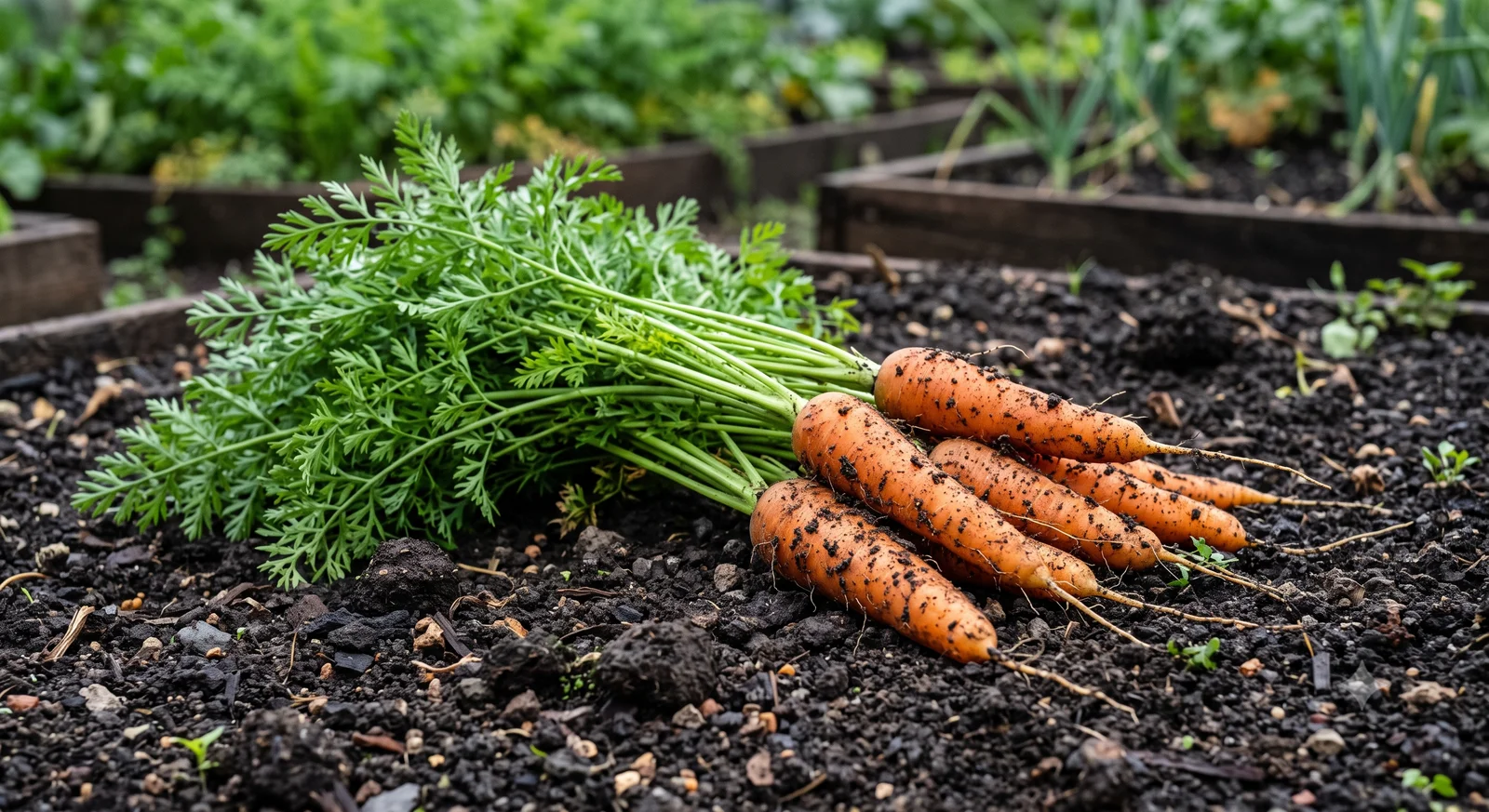
Carrots Must Be Direct Sown, Never Transplanted
Carrots are one of six distinct patterns in this seed-starting series, and the strictest one: they must be direct sown, with no transplant option at all. Unlike tomatoes and peppers, which need an indoor head start, or lettuce and cucumbers, which genuinely work either way, a carrot’s taproot forks or stunts permanently the moment it’s disturbed. Beans share the direct-sow-only rule with carrots, though for a different reason: a bean’s root system struggles to recover from transplanting rather than forking outright. Starting carrot seeds in a cell tray and transplanting the seedlings later doesn’t just risk a rough carrot: it reliably ruins the root.
That’s why HarvestMath’s own Seed Starting Calculator lists carrots as direct-sow only, with no indoor-start option at all. The seed goes straight into the garden bed it will grow in, permanently, from day one.
Prepare Deep, Loose Soil First
Straight carrots come from loose, deep, obstruction-free soil, not from anything you do after the seed germinates. Work the bed to at least 10–12 inches deep, breaking up clumps and removing rocks, roots, and other debris a growing taproot might hit. Utah State University Extension specifically calls out heavy soils as a problem for carrots, recommending they be amended with plenty of compost and double dug before planting.
A single rock or a hard clay layer a few inches down is often the entire explanation for a forked or twisted carrot later: the root splits or bends around the obstruction rather than growing through it. If you’re working with heavy clay, our Soil Type Calculator can confirm what you’re dealing with, and our Raised Bed Soil Calculator works out how much loose growing medium you’d need to build a bed deep enough to sidestep the problem entirely.
How to Germinate Carrot Seeds Fast
This is the section that actually matters for carrots. Dry soil is the single biggest cause of failed carrot germination, full stop. Carrot seeds are tiny, sit barely under the surface, and dry out fast; if the top half-inch of soil goes dry even once during the 2–3 week germination window, the seed can stall out or die.
Water the bed thoroughly before sowing, not after. Watering after sowing risks washing the tiny seeds out of position, undoing your spacing before anything even germinates. Sow seeds ¼ inch deep at most, and firm the soil gently overtop for good seed-to-soil contact.
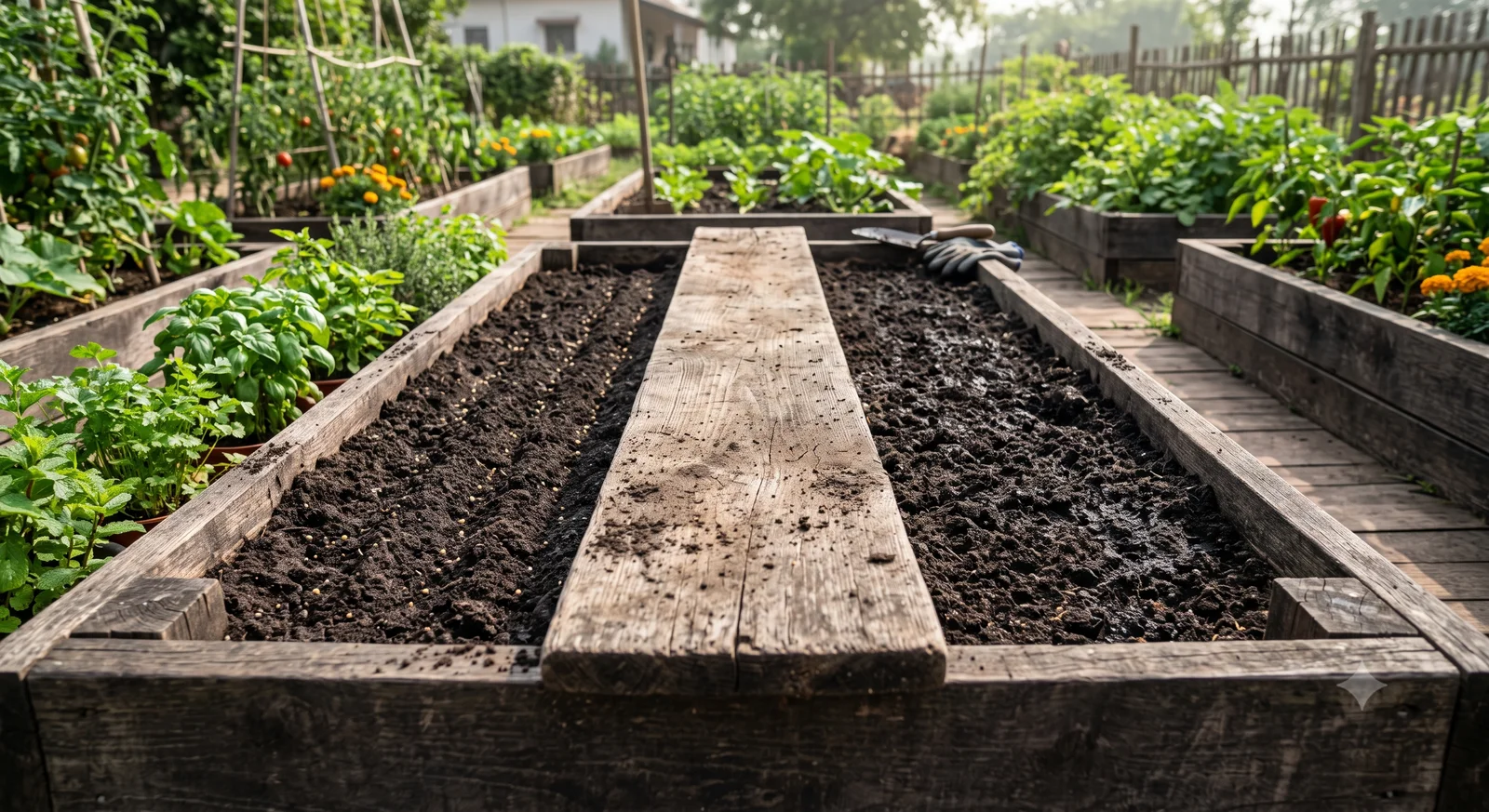
The board method is the single most effective fix for carrot germination, and it works by solving the moisture problem directly: lay a flat board over the seeded row after sowing. It traps moisture, blocks the soil from crusting over (a real problem that can physically prevent thin carrot sprouts from pushing through), and keeps the surface cool and dark while the seed does its slow work underground. Utah State University Extension recommends a related fix for the same crusting problem: covering the seed with compost or fine sand instead of soil, and interplanting a few radish seeds in the row, which germinate fast enough to break the crust for the carrots coming up behind them.
Start checking under the board daily around day 4–5, and remove it the moment you see the first sprouts. That timing matters both ways. Leave the board on too long after germination starts and the new seedlings smother in the dark; pull it too early and the soil surface dries back out before germination is complete. In hot weather, swap the board for burlap or a row cover instead. It has enough give to let seedlings push through on their own, lets some light in, and you can water directly through it without lifting it off.
If you want extra insurance before the seed ever goes in the ground, you can pre-sprout carrot seeds: seal them in a damp paper towel inside a plastic bag at around 70°F for 3–5 days until you see tiny white roots emerge, then sow carefully and gently, trying not to break the fragile new roots.
Germination Temperature and Timing
Carrot seeds germinate best at 55–65°F soil temperature, and Utah State University Extension puts the actual timeline at 14–21 days at that range, which is genuinely slower than most vegetables, tomatoes and peppers included. Below 50°F, germination slows dramatically and can stretch out for weeks; above 80°F, germination rates drop off and often fail outright.
That slow timeline is the other reason so many gardeners think their carrot seed “didn’t work”: two weeks of bare-looking soil looks like a failure when it’s actually right on schedule. Don’t give up on a row or till it under before at least three full weeks have passed.
When to Sow Carrots
Carrots are a cool-season crop and genuinely frost-tolerant once established, so timing leans early. HarvestMath’s own Seed Starting Calculator puts direct-sown carrots at 2–4 weeks before your last frost date. If you don’t already know that date, our Frost Date Calculator estimates it by ZIP code.
For a steady supply instead of one big harvest, keep sowing through the season. Utah State University Extension recommends planting a new round roughly every 4 weeks through mid-summer for season-long production, leaving enough time for a final round to mature before your first fall frost. Our Succession Planting guide covers the staggered-sowing approach in more depth.
Thinning (Don’t Skip This)
Even carrots sown at the right density need thinning. Skipping it is one of the most common reasons a whole row comes up stunted and tangled instead of as individual roots. Thin seedlings down to about 2–3 inches apart, matching the spacing our own Plant Spacing Calculator uses for carrots. See our Carrot Spacing guide for why thinning, not initial spacing, is the real skill with this crop.
Snip the extras at soil level with small scissors rather than pulling them. Pulling disturbs the roots of the seedlings you’re keeping right next to them, which risks the same forking and stunting you’re trying to avoid by thinning in the first place.
Growing Carrots in Containers
If you’re wondering how to grow carrots in containers, depth is the real constraint, not width. Our Pot Size Calculator puts carrots in the 8–12 inch depth range for containers: standard full-length varieties want the deep end of that, 12 inches or more, while short, round varieties bred specifically for containers, like Paris Market or Thumbelina, get by on as little as 8 inches.
Everything else about container growing follows the same rules as in-ground: direct sow (never start indoors and transplant), keep the soil consistently moist since containers dry out faster than garden beds, and thin to the same 2–3 inch spacing once seedlings are up.
Common Carrot Problems
Carrots generate more troubleshooting questions than most vegetables, and nearly all of them trace back to one of a handful of causes.
Forked or twisted roots. Utah State University Extension attributes this directly to damage to the primary root, commonly from rocky, stony, or heavy soil the taproot has to push through or around. Deep digging and working in compost before sowing (see the soil prep section above) is the real fix. It’s not something you can correct once a root has already started forking. Over-fertilizing with fresh nitrogen is also commonly cited as a contributing cause; our NPK Calculator can help you dose fertilizer appropriately instead of guessing.
Stunted roots. This is almost always crowding from skipped or delayed thinning. See the thinning section above.
Carrots flowering or bolting. Carrots need a period of cold to trigger flowering, so an early planting that hits an unexpected cold snap can bolt prematurely, and in some climates heat stress late in the season pushes it too. Once a carrot bolts, the root redirects its energy into the flower stalk and turns woody and bitter. Harvest immediately rather than waiting, since the root won’t improve from there.
Green shoulders. This happens when the top of the root is exposed to sunlight as it grows and develops chlorophyll, the same way a photosynthesizing leaf would. Hilling a bit of soil over the exposed shoulders as the tops start to show fixes it going forward.
Hairy roots. Utah State University Extension ties this one to over-watering specifically, alongside inconsistent watering more broadly and excess nitrogen. Keep watering even and moderate rather than swinging between soggy and dry.
Regrowing Carrot Tops Isn’t Growing Carrots
Same honest note we give in our lettuce guide about regrowing a store-bought stub: this is a different thing from actually growing carrots, and it’s worth being clear about the difference.
Set the cut top of a carrot in a shallow dish of water, and within a week or two you’ll see green, feathery growth sprout from the crown. That regrowth is real and edible (carrot tops work well in pesto or as a stock ingredient), but it’s leaf growth only. The carrot top has no way to grow a new root; all the stored energy that would have built one was already used up growing the root you ate. It’s a fun, nearly-free kitchen experiment, not a way to grow more carrots.
Free book · 23 pages, PDF
Growing Carrots from Seed FAQ
How long does it take to grow carrots from seed?
Most varieties take 70–100 days from seeding to harvest, per Utah State University Extension, though that includes 14–21 days just for germination before you'll see any growth above ground at all. Faster round or baby varieties can be ready closer to the shorter end of that range.
Why won't my carrot seeds germinate?
The most common cause by far is dry soil. Carrot seeds sit barely under the surface and dry out fast, and even one dry spell during the 2–3 week germination window can stall or kill them. Water thoroughly before sowing, keep the surface consistently moist afterward (a board or row cover over the row helps), and give it the full three weeks before assuming the seed failed, since carrots are genuinely slow to germinate.
Why are my carrots forked or twisted?
Forking happens when the taproot hits an obstruction (a rock, a hard clay layer, or compacted soil) and splits or bends around it instead of growing straight down. The fix is working the bed to at least 10–12 inches of loose, obstruction-free soil before you sow; once a root has already forked, there's no way to correct it.
Can you grow carrots from a carrot scrap?
You can regrow green tops from a carrot's cut crown in a dish of water, and they're genuinely useful in cooking, but the scrap won't grow a new root. A carrot's energy for building a root gets used up producing the root you originally harvested and ate. Growing an actual carrot requires starting from seed.
What soil do carrots need?
Deep, loose, well-drained soil, free of rocks and clay clumps, worked to at least 10–12 inches down. Heavy or compacted soil is the single most common cause of forked, stunted, or twisted carrots, so it's worth fixing before you sow rather than after.
Sources & further reading
For soil, sowing depth, thinning, and troubleshooting specifics, see Utah State University Extension’s guide to growing carrots in your garden. For soil temperature and timing guidance across vegetables generally, see Oregon State University Extension’s guide to planting by soil temperature. For more on how we source and review the facts behind every calculator and guide on this site, see our methodology page. And for more on spacing, timing, and companion planting across the whole garden, see our complete guide to spacing and planting.