Thinning Is the Real Skill -- Not Initial Spacing
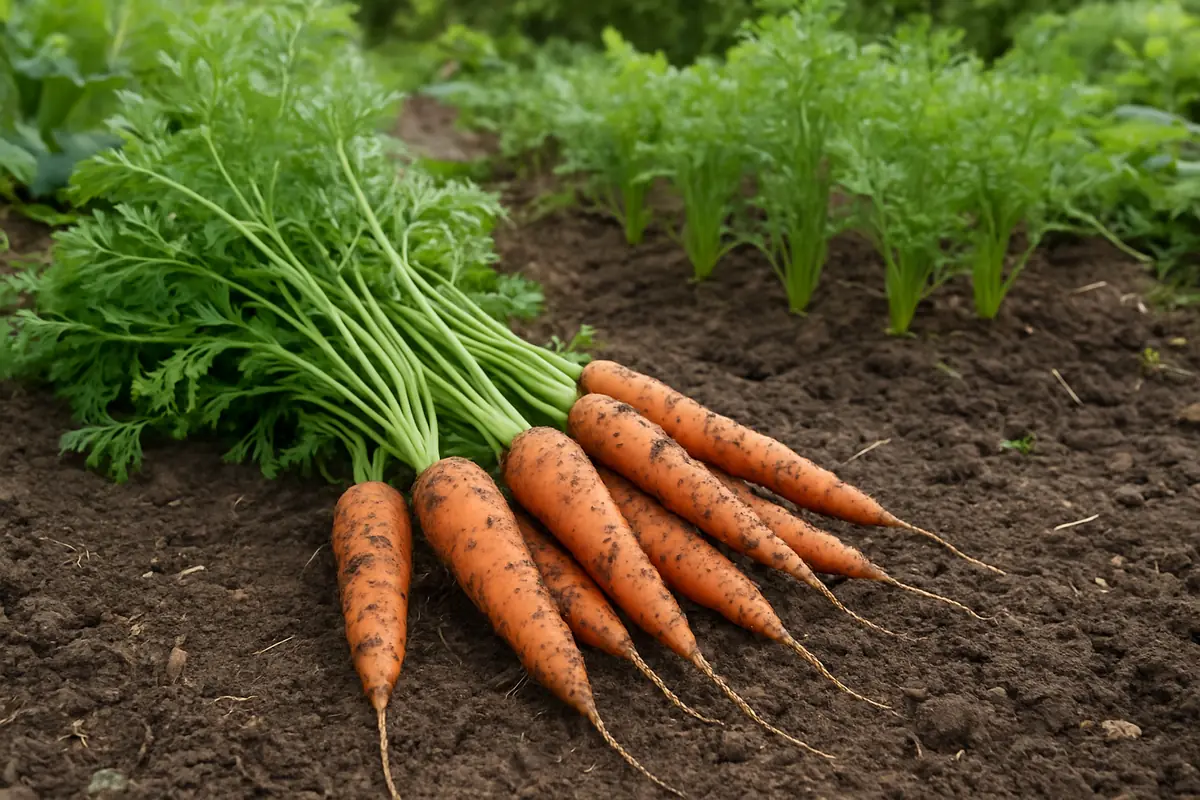
University of Illinois Extension is direct about why: "Carrot seed is small, difficult to handle, and often requires thinning to get the spacing correct." You're not aiming for perfect initial spacing at all -- you're sowing thick and then removing the surplus once seedlings are established, usually once they reach about 3 to 4 inches of foliage (SDSU Extension, Iowa State University Extension).
Skipping that step has a specific, sourced consequence: per an Ask Extension response from the Cooperative Extension System, not thinning "can result in limited root growth because of crowding and less nutrients getting to the roots" -- crowded carrots don't die, they just stay small and thin.
One genuinely useful, extension-sourced trick for a notoriously slow-germinating crop: Illinois Extension recommends sowing a single radish seed every 6 to 12 inches along the row to mark it, since radishes germinate fast and show you exactly where the carrot row is before the carrots themselves emerge.
Why Spacing (and Soil) Matters for Carrots
It's worth correcting a common assumption here: forked or twisted carrot roots are usually blamed on crowding, but Iowa State University Extension points to a different primary cause -- "compacted or heavy soils, rocky soil, and inconsistent moisture" produce stunted, forked, or twisted roots more directly than spacing does. Overcrowding and excess nitrogen cause a related but distinct problem: "plants that are all tops with lush foliage but little or no root development."
So the two failure modes aren't the same thing: crowding stunts root size and development; poor soil texture and inconsistent watering are the more likely culprits behind actual forking and splitting.