Can you plant potatoes in the winter? Only in mild-winter climates, and never into frozen or waterlogged ground. Extension calendars put winter planting between January and early March in Florida, Louisiana, Texas and the Arizona desert, while Penn State Extension says to plant when the soil warms to 45°F, so cold zones wait for spring. Our guide on how to grow potatoes has the full method.
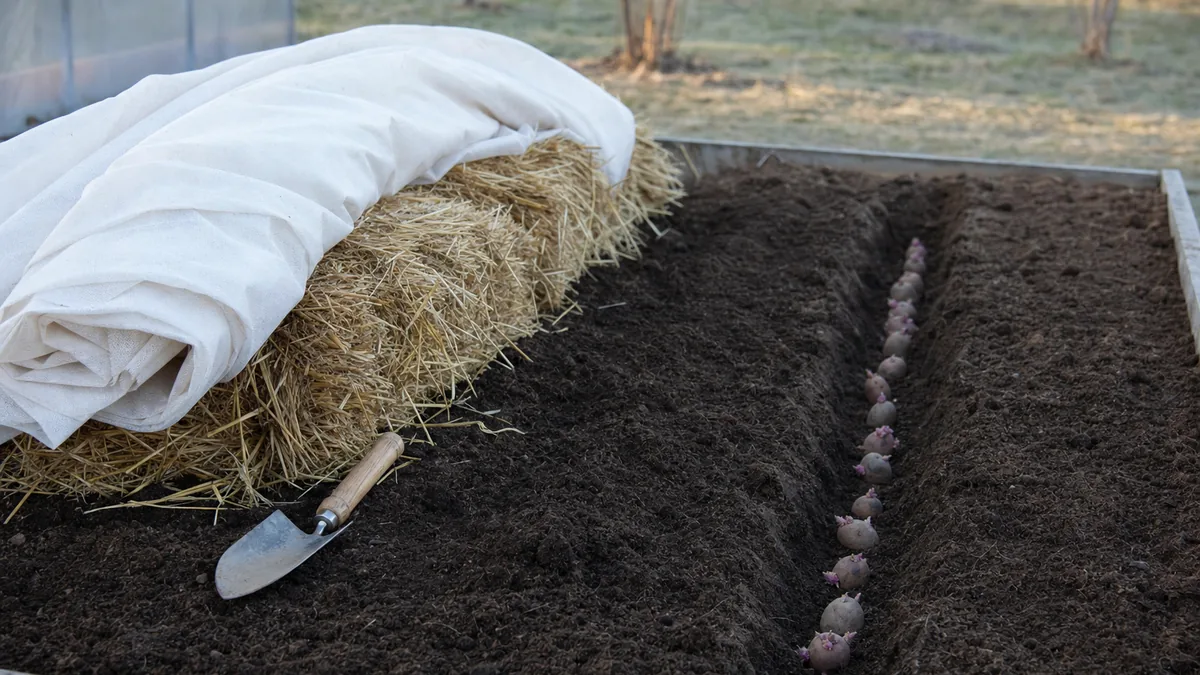
Winter Potato Planting at a Glance
The windows below come from state extension services. The spacing and planting hub collects our timing guides for other crops.
| Region or situation | Planting window | What to do | Source |
|---|---|---|---|
| North Florida | January to February (late January to mid February in north-central Florida) | Cover small plants with soil if freezes are forecast | UF/IFAS |
| Central and south Florida | November to February (central); October to January (south) | Choose early-maturing varieties | UF/IFAS |
| Louisiana | Mid-January through February | Avoid heavy, poorly drained soil | LSU AgCenter |
| Texas | February or early March in most areas; fall crop about mid-August | Plant about 3 weeks before the last spring frost | Texas A&M AgriLife |
| Georgia | February (central), up to 2 to 3 weeks earlier in extreme south Georgia; fall by about August 15 | Adjust for the year’s weather | UGA Extension |
| Arizona low desert (Maricopa County) | January 1 through March 1 | Use low tunnels or row cover on cold nights | University of Arizona |
| California desert valleys; interior valleys | December to February (desert); February to March and August (interior) | Plant 1 to 4 weeks before the last frost | UC IPM |
| Frozen or waterlogged ground, any region | Do not plant | Wait, or chit seed indoors | Maine, Maryland |
| Cold-winter zones | Spring, once soil reaches 45 to 50°F | Plant 2 to 3 weeks before the last frost | Penn State, Maine, Utah State |
Can Potatoes Be Planted in Winter? Where It Works and Where It Does Not
It works where winter is the cool, dry, mostly frost-free season. Potatoes are a cool-season crop, and heat is the reason mild climates plant early. The University of Maryland says soil above 80°F inhibits tuber development, and Illinois Extension says tubers fail to form when the soil reaches 80°F. UF/IFAS adds that growing potatoes in Florida is typically done during the drier season, winter and spring. A January planting in the Gulf states finishes before the hot weather arrives, and our guide to what to plant in winter lists other crops that use the same window.
It does not work in frozen or soggy ground. Maine Extension says seed pieces that sit in cold, wet soil are susceptible to decay, and the University of Maryland says hard frosts retard growth and seed pieces will languish or rot if planted during prolonged cold weather. Texas A&M’s gardening guide warns that planting too early risks tops frozen off by a spring frost. The same frozen-ground limit applies to nursery stock, as our guide to planting trees in winter explains.
If your ground freezes, plant in spring and use winter for preparation. Penn State, the University of Maine and Utah State give a trigger of 45 to 50°F soil, and Utah State says to plant 14 to 21 days before the last frost date. Cold-climate gardeners who want a winter-season job can plant garlic in fall, and how to plant garlic gives the timing. Early spring is also the season for onion sets.
What Is the Minimum Soil Temperature for Planting Potatoes?
Extension sources give a floor of 45 to 50°F. Penn State says to plant when the soil warms to 45°F, and the University of Maryland says the soil should be at least 45°F. The University of Georgia’s Colquitt County office also uses 45°F for early potatoes, adding that potatoes germinate and emerge best above 50°F. Maine Extension says seed can be planted as soon as the soil reaches 50°F, Utah State says at least 50°F, and Texas A&M says to plant when the soil 4 inches deep reaches about 50°F. Where the sources differ, use 45°F as the lowest limit and 50°F as the safer target.
Soil temperature and the calendar work together. Texas A&M says to plant about 3 weeks before the last spring frost, Utah State says 14 to 21 days before it, and UC IPM says 1 to 4 weeks before it depending on the soil temperature. For a worked example, our zone data puts the median last spring frost at April 23 in zone 6b, so Utah State’s 14 to 21 days points to April 2 to April 9. In zone 8b the median last frost is March 19, which points to February 26 to March 5. A thermometer in the soil beats the date, and our soil temperature guide shows how to take the reading.
What Does Frost Do to Potato Plants That Have Already Emerged?
Light frost scorches the leaves, and a hard freeze kills the tops. Iowa State Extension says potato shoots are sensitive to freezing, that minor damage shows as blackened leaf margins and that severe damage kills all above-ground growth. The University of Maryland says potatoes can withstand light frosts but not heavy frosts or freezing. Texas A&M’s gardening guide puts it simply: the tops can be frozen off by a spring frost.
The plant usually recovers if the seed piece is healthy. Iowa State says severely damaged plants will send up new growth within 10 to 14 days and that there is no need to replant. LSU AgCenter says a light frost should not hurt the plants at all and that, even with a freeze, only the tops are affected. Illinois Extension notes that March plantings may be frozen back to the ground by late frosts, yet the plants usually recover. Prolonged cold is the real danger to the seed itself, since the University of Maryland says seed pieces will languish or rot in it. Our guide to protecting plants in winter covers row covers and other options in more detail.
Can Potato Plants Survive Winter?
The tops do not, but the tubers sometimes do. A freeze kills the leaves and stems, as Iowa State describes above. What stays alive is whatever is underground, and that depends on how cold the ground gets. The University of Maine’s volunteer potato bulletin says tubers deep in the soil can be insulated enough to survive the winter, and that most volunteers are eliminated by prolonged exposure to temperatures below 27°F. It also says volunteer potatoes pose bigger threats after mild winters. In frost-free gardens, a missed tuber is likely to sprout again.
Those regrowing plants are not a free crop. Maine says volunteers can be sources of diseases such as late blight and viruses. NDSU Extension says late blight survives between seasons in infected seed tubers, cull piles and volunteer plants, including tubers missed at harvest that remain unfrozen during the winter, and it recommends destroying all cull and volunteer potatoes. In practice, dig out any strays in a mild-winter bed before you replant. Tomatoes are close relatives of potatoes, and whether tomato plants survive winter is worth reading if both crops share your garden.
When Do You Plant Winter Potatoes in Warm Regions?
January and February are the core months, with fall as the second window in the South. The windows differ by state, so start with yours, and for any other place enter your ZIP code in the planting calendar by ZIP code.
Florida and the Gulf Coast
UF/IFAS lists potato planting in north Florida as January to February, central Florida as November to February and south Florida as October to January. A UF/IFAS Columbia County note narrows north-central Florida to late January through mid February, and the Escambia County office in the Panhandle calls late January through February ideal. LSU AgCenter says potatoes in Louisiana are usually planted from mid-January through February. A light frost should not hurt them, per LSU, but heavy soil that drains poorly raises rot risk. The Florida planting calendar and the Louisiana planting calendar hold the full crop tables for those states.
Texas, Georgia and the Carolinas
Texas A&M’s gardening guide says potatoes should be planted in February or early March in most areas of Texas, and for a fall crop about 110 days before the first expected frost, or mid-August in most areas. It suggests small, uncut potatoes about 1.5 inches across for the fall planting because they resist rot in hot weather better than cut pieces. The University of Georgia’s vegetable calendar lists Irish potatoes among February plantings, says spring dates can run 2 to 3 weeks earlier in extreme south Georgia, and gives August 15 for fall planting, with dates about 2 weeks earlier in north Georgia. Clemson goes the other way on fall: it lists coastal South Carolina as February 1 to March 31 and Piedmont as March 15 to April 30, and says fall plantings are not recommended in the state because of pest and disease risk. NC State gives February 15 to March 31 for eastern North Carolina. The Texas and Georgia planting calendars show the rest of the crops for those states.
Arizona and California
The University of Arizona’s Maricopa County calendar lists potatoes with a 90 to 120 day harvest from January 1 through March 1 and lists no fall dates. UC IPM says to plant 1 to 4 weeks before the last frost, with Desert Valleys (Imperial and Coachella) from December to February and Interior Valleys (Sacramento and San Joaquin) in February to March and again in August. Dates are approximate, so UC IPM suggests checking with your local UC Master Gardener program. In Contra Costa County, UC Master Gardeners say planting starts in February in coastal parts of the county or March inland and runs through August. For the rest of the desert Southwest crop list, see the Arizona planting calendar.
How to Plant Potatoes in Winter, Step by Step
These steps cover a mild-winter planting; spring planting in cold zones follows the same order, as laid out in our complete potato growing guide, which compares the depth and spacing ranges from different climates side by side.
- Check the soil, not the calendar. Wait for soil of at least 45°F and aim for 50°F, per Penn State and Texas A&M. Do not plant into frozen soil. UC IPM’s squeeze test says that if the soil forms a clump when squeezed, it is too wet.
- Buy certified seed. Penn State says to buy certified, disease-free seed potatoes from garden centers or online distributors. UF/IFAS says only certified seed should go into a home garden.
- Cut and heal the seed. Cut large tubers so each piece has at least one eye. Clemson says to cut 3 to 5 days before planting so the surfaces heal, while UF/IFAS Columbia County suggests 1 to 2 days. Small whole tubers need no cutting.
- Dig a trench. LSU AgCenter suggests a trench about 4 inches deep with seed pieces about 12 inches apart. UF/IFAS lists 3 to 4 inches deep and 7 to 10 inches apart in rows 36 to 42 inches apart, and Texas A&M says 3 inches deep and 10 to 12 inches apart. Use the spacing that matches your variety and bed.
- Plant eyes up and cover. Set pieces in the trench and cover with soil. UF/IFAS says sprouts usually emerge about 10 to 14 days after planting, so do not worry in the first week.
- Hill as they grow. UF/IFAS Escambia County says to add 2 or 3 inches of soil to the row when the sprout emerges. UC IPM says to hill once shoots are about 8 inches long, leaving about 4 inches exposed.
- Be ready to cover. If a freeze is forecast, UF/IFAS says to cover very small plants (3 to 4 inches) with soil and larger plants with freeze protection fabric.
Can I Plant Sprouted Potatoes in Winter?
Sprouted seed potatoes yes, sprouted grocery-store potatoes only with caution. Extension sources largely say not to use store potatoes. Penn State says not to plant potatoes purchased from a grocery store, which may be treated with chemicals to prevent sprouting. The University of Maine says not to use them for seed pieces, UF/IFAS says not to plant them in a home garden, and the University of Maryland says supermarket potatoes can be infected with diseases without showing symptoms. UC Master Gardeners say grocery potatoes may carry diseases that will be added to your soil.
Not every extension note agrees. A UF/IFAS Columbia County post says pantry potatoes that have begun to sprout should work just fine and suggests slicing them with a few eyes on each piece. That is a low-cost experiment for a pot or a corner of the bed, but the disease warnings are why most guides advise certified seed for a main crop. Clemson, Iowa State and Utah State also advise against saving your own seed from last year’s crop, because viruses and diseases build up. If your potato has long, floppy sprouts, soft spots or dark rings inside, skip it. The University of Georgia’s Colquitt County office advises discarding any pieces with dark rings or discoloration inside.
Onion sets that sprout in storage are a separate question, and what to do with sprouted onion sets is covered in that guide.
How Do You Chit and Store Seed Potatoes Indoors in Winter?
Cold-zone gardeners can use late winter for this step. Chitting, which Maine Extension calls green sprouting, wakes the seed ahead of planting. Maine says the ideal conditions are 70°F with high humidity. The University of Georgia’s Colquitt County office suggests setting seed potatoes in a single layer for two to three weeks in an enclosed porch or warm room with some sun, and Texas A&M says small seed potatoes kept warm and damp for 2 weeks should have small sprouts at planting. The University of Maryland describes a two-step version: hold whole tubers in the dark at room temperature until they sprout, then expose them to light to keep sprouts short.
If you need to hold seed longer, keep it cool. Maine says to store seed at 38°F and keep it cool up to two weeks before planting. For cut pieces, Iowa State says to hold them at 60 to 70°F and 85 percent relative humidity for several days so the cut ends heal. UGA says to store cut pieces a few days at 55 to 60°F if planting is delayed. Count back from your planting date: with UGA’s two to three weeks of green sprouting, a gardener planning an early April planting would begin in mid-March.
Mulch and Frost Cover Tips for Winter Potatoes
Soil is the cheapest frost cover. UF/IFAS says to cover small plants with soil when freezing temperatures are forecast, and UF/IFAS Escambia County says plants smaller than 4 to 6 inches can be covered with more soil. Oklahoma State Extension suggests either hilling soil around the stems or covering plants with plastic milk jugs or bottles with the tops cut off. Fabric helps on bigger plants. The University of Arizona says floating row covers are lightweight fabric placed directly over plants and walls of water give a greenhouse-like effect. For low tunnels it says to remove them when temperatures rise above 55°F or when it is raining, and to vent them above 40°F.
Mulch has a different job. Utah State says heavy mulch and good watering can keep soil cooler, which matters once a warm region heats up. UC Master Gardeners describe a no-dig method with compost under a deep layer of straw mulch, 8 inches or more, and say soil, compost, mulch or straw keeps tubers from turning green. A deep mulch holds moisture, so save it for well-drained ground, given the rot warnings from Maine Extension and LSU AgCenter about cold, wet and poorly drained soil.
If you want every date for your own ZIP code in one plan, the Season Planner works out every date for your ZIP code in one plan. For spreading potato harvests over several weeks, the succession planting guide explains staggered plantings.
Free book · 23 pages, PDF
Planting Potatoes in Winter FAQ
Can you plant potatoes in winter?
Only where the ground stays unfrozen. LSU AgCenter says Louisiana potatoes are usually planted from mid-January through February, and the University of Arizona lists Maricopa County planting from January 1 through March 1. Penn State Extension says to plant when the soil warms to 45°F, so cold zones should wait for spring.
Can I plant sprouted potatoes in winter?
Certified seed potatoes with short sprouts, yes. Grocery-store potatoes are discouraged: Penn State says not to plant them because they may be treated to prevent sprouting, and the University of Maryland says they can carry disease without symptoms. A UF/IFAS Columbia County note is more relaxed about pantry potatoes.
Can potato plants survive winter?
The tops do not survive a freeze, but tubers can. Iowa State Extension says severe freezing kills all above-ground growth, and the University of Maine says most volunteer tubers die after prolonged exposure to temperatures below 27°F. Tubers left in mild ground can regrow as volunteers, which NDSU says can carry late blight.
What is the minimum soil temperature for planting potatoes?
The lowest limit is about 45°F. Penn State and the University of Maryland give 45°F, while the University of Maine, Utah State and Texas A&M give about 50°F. Use a soil thermometer at planting depth rather than the date.
When do you plant winter potatoes in Florida?
It depends on the region. UF/IFAS lists north Florida as January to February, central Florida as November to February and south Florida as October to January. A UF/IFAS Columbia County note narrows north-central Florida to late January through mid February.
What happens if frost hits my potato plants?
They usually regrow. Iowa State Extension says severely damaged plants send up new growth within 10 to 14 days and there is no need to replant. LSU AgCenter says a light frost should not hurt them and a freeze affects only the tops. Cover small plants with soil when a freeze is forecast, per UF/IFAS.
Sources & further reading
Soil temperature, frost and seed: Penn State Extension, University of Maine Cooperative Extension Bulletin 2077, University of Maryland Extension, Utah State University Extension, Illinois Extension, Iowa State Extension on freeze damage, Iowa State Extension on growing potatoes and Oklahoma State Extension.
Volunteers and late blight: University of Maine Bulletin 1090 on volunteer potatoes and NDSU Extension on late blight. Regional dates: UF/IFAS Florida Vegetable Gardening Guide, UF/IFAS potatoes in the home garden, UF/IFAS Escambia County, UF/IFAS Columbia County, LSU AgCenter, Texas A&M AgriLife Easy Gardening: Irish Potato, UGA Vegetable Garden Calendar, UGA Extension Colquitt County, Clemson HGIC, NC State Extension, University of Arizona Maricopa County planting calendar, University of Arizona Fall and Winter Gardening, UC IPM and UC Master Gardeners of Contra Costa County.
Free book · 23 pages, PDF
The Spacing & Planting Cheat Sheet
Sent