Determinate vs. Indeterminate: Why Support Method Changes the Spacing Number
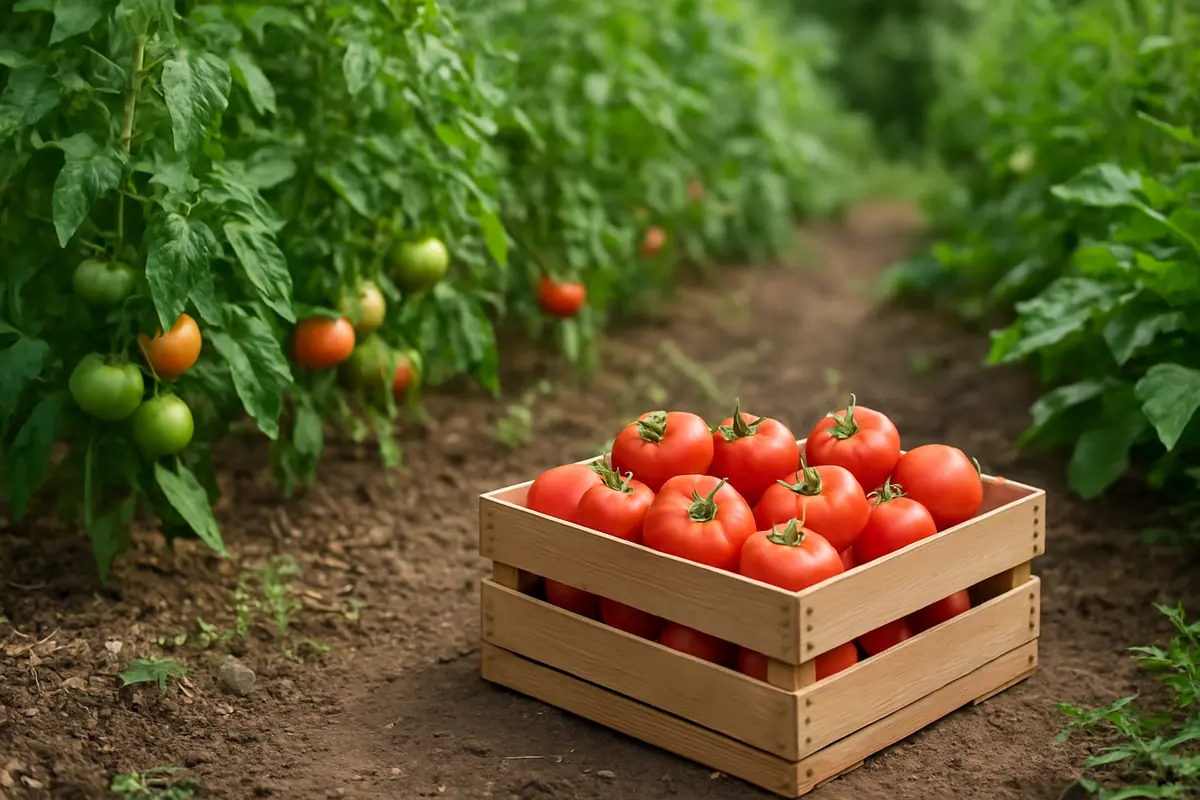
Determinate tomatoes are bred to stop growing once they set a terminal flower cluster -- they stay compact and bush-like all season, which is exactly why they get one blanket spacing figure (24 in.) that doesn't need a support-method asterisk.
Indeterminate tomatoes never stop growing until frost kills them, so the plant's actual footprint depends entirely on what's holding it up. Iowa State University Extension ties indeterminate spacing directly to support method: staked plants (trained to one or two main stems, tied vertically) need the least room at 18-24 inches; caged plants need more at 30-36 inches; and unsupported, sprawling plants need the most at 36-48 inches, since the vines simply spread across the ground in every direction instead of growing up.
The airflow argument for spacing isn't generic advice, either -- it's tied to specific, splash-borne fungal diseases. Early blight and septoria leaf spot both overwinter in soil and splash up onto a tomato plant's lowest leaves during rain or overhead watering, according to Kansas State University Research and Extension and NC State Extension. That's the actual mechanism behind "give tomatoes room to breathe": adequate spacing (and staking or caging, which lifts leaves off the ground) speeds up how fast wet foliage dries and keeps the lowest leaves further from the soil surface where those spores originate.
Why Spacing Matters for Tomatoes
Crowded tomatoes are disease-prone tomatoes. Reduced airflow keeps leaves wet longer after rain or watering, and that extra wet time is what early blight and septoria leaf spot need to establish and spread from splashed soil, per NC State Extension and the University of Wisconsin-Madison Division of Extension. Once a plant is heavily infected, it drops lower leaves and loses photosynthetic capacity right as fruit is sizing up.
Support method compounds the effect. A staked or caged plant already has better airflow than a sprawling one at the same spacing, since its foliage isn't sitting directly on damp soil -- which is part of why UGA Cooperative Extension frames staking and pruning as a disease-prevention practice, not just a tidiness one.