Bush vs. Pole: Two Different Growth Architectures, Not Just Two Numbers
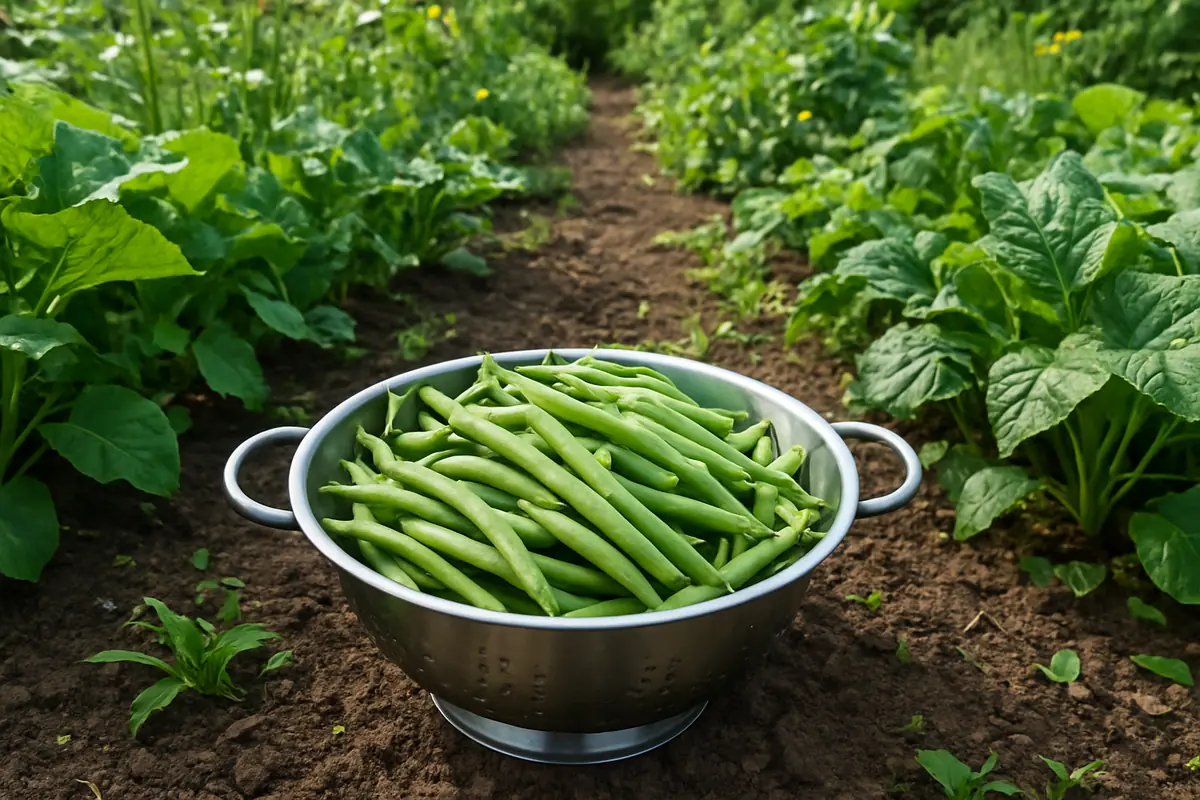
Bush beans are self-supporting, top out around 1-2 feet tall, and produce most of their crop in one concentrated flush. Their spacing constraint is purely horizontal -- how much room the roots and leaves need side to side.
Pole beans are genuine climbers that will grow 6 to 10-plus feet along a support and crop continuously over a much longer season. Clemson Cooperative Extension is specific about the mechanics: "pole beans are natural climbers but will not interweave themselves through horizontal wires" -- they need dedicated vertical structure, strong enough to survive wind and rain, not just something to lean on. Because the plant's bulk goes up instead of out, pole beans planted in teepee clusters around a single pole can sit closer together at the base (6-8 in. apart per Alabama Cooperative Extension) while still out-yielding bush beans per square foot of ground, since they're using vertical space bush beans can't reach.
Why Spacing Matters for Beans
Get bush-bean spacing too tight and you lose the single concentrated harvest window to crowding and poor airflow. Get pole-bean infrastructure wrong -- undersized trellis, or planted where a trellis can't go -- and the spacing figures don't matter, since the plant has nowhere to climb.
A widely repeated companion-planting claim is worth a real caveat here: beans do fix nitrogen in the soil via rhizobia bacteria in their root nodules, but per New Mexico State University Extension, most of that fixed nitrogen leaves the garden inside the harvested bean seeds themselves. The soil benefit mainly comes after the season, once spent bean plants and roots are tilled under -- not from beans fertilizing whatever's growing next to them this year.