Zones are from the 2023 USDA Plant Hardiness Zone Map, read at one ZIP code per place. Of Connecticut's 419 ZIP codes: 6a (51), 6b (252), 7a (113), 7b (3).
Connecticut spans USDA hardiness zone 6a to 7b across its major population centers, according to the 2023 USDA Plant Hardiness Zone Map. That's a real range, not a single number: where you fall in it depends on where in the state you actually are.
Hardiness zone for ZIP 06103 (Hartford)
Your USDA hardiness zone
Zone 6b
Avg. annual minimum (°F)
-5°F to 0°F
Avg. annual minimum (°C)
-21°C to -18°C
Nearest reference point: Hartford, CT
This is a regional estimate based on the nearest of 826 reference points, each matched to the official 2023 USDA zone map. It’s accurate to within about a half-zone across most of the country, but elevation shifts zones over short distances, so if you’re in mountainous terrain, check the official USDA map for your exact address (see Sources below).
Connecticut's USDA Hardiness Zones
The table at the top of this page lists the zone for each region and city. The University of Connecticut Home & Garden Education Center also describes Connecticut as having zones 6 and 7, each split into half zones.
Average last spring frost and first fall frost by region, from NOAA's 1991 to 2020 climate normals. Each date is the median 32°F date at the nearest NOAA station: in half of years the last spring frost comes later than the date shown, and the first fall frost earlier than the date shown.
Average last spring frost and first fall frost by region in Connecticut
Region
Last spring frost
First fall frost
NOAA station
Northwest hills (Litchfield)
May 8
Oct 5
Bakersville
Danbury
Apr 20
Oct 20
Danbury
Hartford area
Apr 17
Oct 26
Hartford Brainard Field
Northeast (Storrs, Willimantic)
Apr 28
Oct 13
Willimantic Windham Airport
Shoreline (New Haven, Bridgeport)
Apr 5
Nov 6
Bridgeport Sikorsky Mem Airport
Stamford and Greenwich
Apr 12
Oct 31
Westchester County Airport
These are averages, not guarantees. For a full vegetable-by-vegetable planting calendar already calculated from Connecticut's frost dates, see the Connecticut Planting Calendar.
Under the 2023 USDA map, Connecticut splits between two zone bands: a narrow shoreline strip along Long Island Sound (New Haven, Bridgeport, Stamford) reaches the warmer 7a/7b thanks to the Sound's moderating effect, while inland northwest areas (Litchfield County) stay in zone 6.
What Grows Well in Connecticut's Zones
A few real, zone-appropriate picks recommended by UConn Home & Garden Education Center for Connecticut landscapes: not an exhaustive list, but a genuine starting point.
Red maple 'Red Sunset' (Acer rubrum 'Red Sunset')
Littleleaf linden (Tilia cordata)
Thornless honeylocust (Gleditsia triacanthos var. inermis)
Japanese tree lilac (Syringa reticulata)
Washington hawthorn (Crataegus phaenopyrum)
Ready to find your exact zone? Use the Hardiness Zone Finder: enter your ZIP code for a precise match against the 2023 USDA map.
Connecticut Growing Zone FAQ
What is the CT hardiness zone?
Connecticut is in USDA hardiness zones 6a to 7b on the 2023 map, and 87 percent of its ZIP codes are in zone 6b or 7a. Hartford is 6b, while New Haven, Bridgeport and Stamford are 7a.
What planting zone is Connecticut in?
Most Connecticut gardens are in zone 6b (Hartford, Danbury, Storrs) or 7a (New Haven, Bridgeport, Stamford). The northwest hills around Litchfield are 6a, and a few shoreline ZIP codes such as Old Greenwich are 7b.
What growing zone is Hartford, CT?
Hartford (ZIP code 06103) is in USDA hardiness zone 6b on the 2023 USDA map, with an average annual minimum winter temperature of -5°F to 0°F. Zones within a city can differ by half a zone, so check your own ZIP code.
What growing zone is Danbury, CT?
Danbury (ZIP code 06810) is in USDA hardiness zone 6b on the 2023 USDA map, with an average annual minimum winter temperature of -5°F to 0°F. Zones within a city can differ by half a zone, so check your own ZIP code.
What growing zone is New Haven, CT?
New Haven (ZIP code 06510) is in USDA hardiness zone 7a on the 2023 USDA map, with an average annual minimum winter temperature of 0°F to 5°F. Zones within a city can differ by half a zone, so check your own ZIP code.
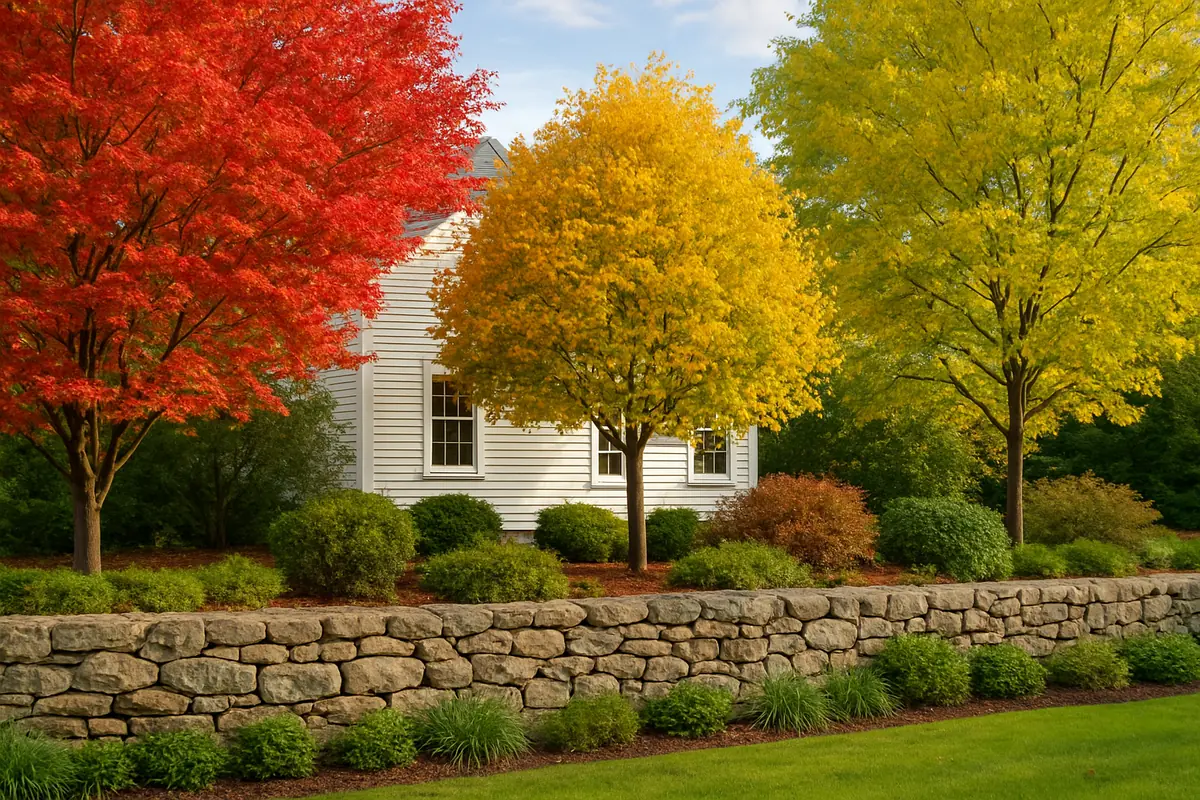
Plants that suit Connecticut: red maple 'Red Sunset', littleleaf linden and thornless honeylocust. AI-generated image.
We email the book right away, then a few short emails over the next week or two. After that, about one email a month. Unsubscribe anytime.
Privacy policy
Sent
Check your inbox
The Spacing & Planting Cheat Sheet is on its way to . The link works for 30 days. Nothing yet? Look in spam or promotions.